

Daud Olatunji
The Association of Town Planning Consultants of Nigeria, ATOPCON, Ogun State Branch, has raised concerns over mounting development pressure arising from rapid urbanisation and industrial expansion across the state, warning that inadequate planning and weak development control could produce uncoordinated physical growth with far-reaching consequences for communities.
The association said the expanding urban centres and major growth corridors were creating new economic opportunities but were simultaneously placing increasing pressure on infrastructure, housing, transportation, land use, environmental management and development control.
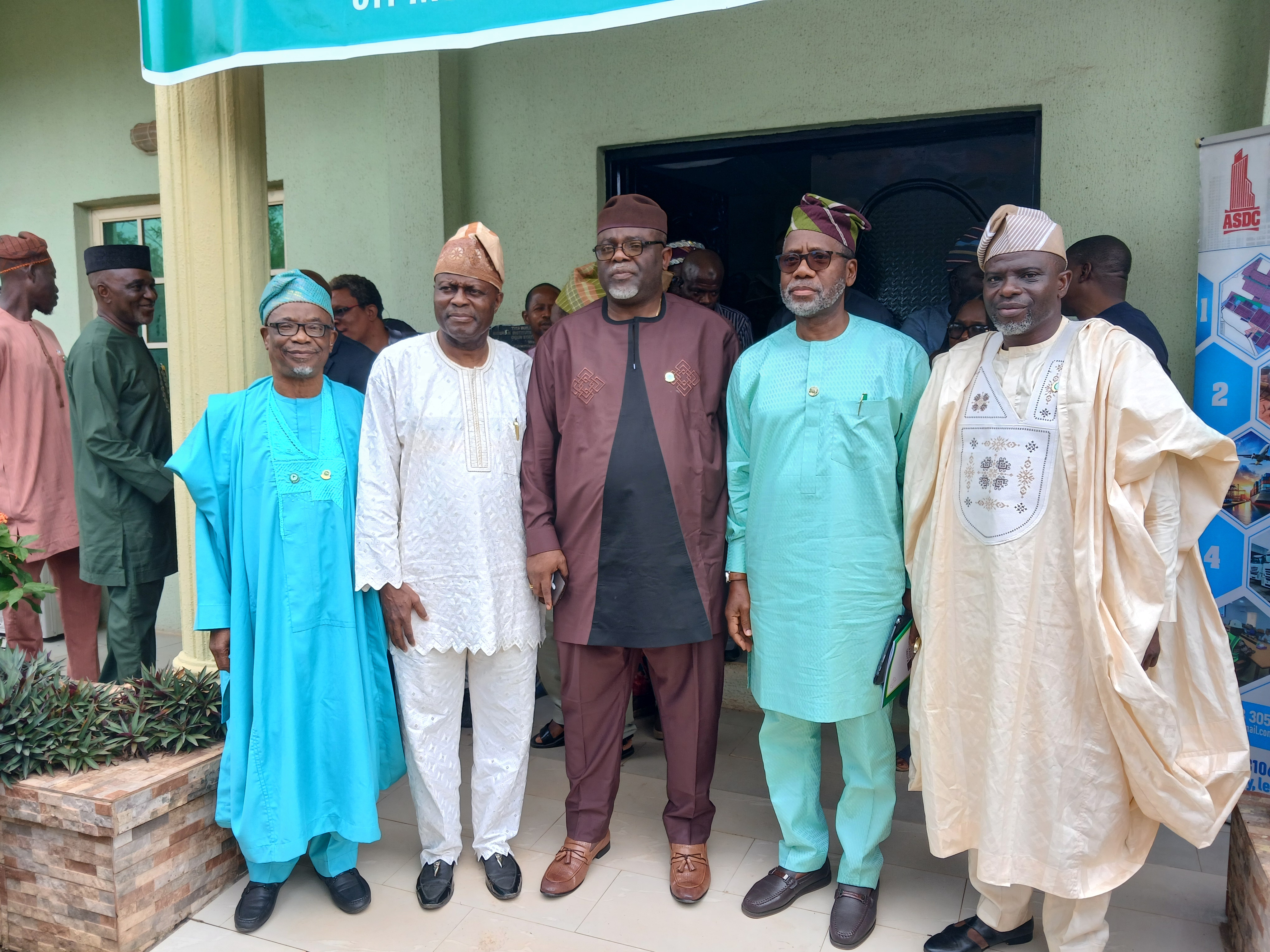
The Chairman of ATOPCON, Ogun State Branch, TPL Rauf Adebanjo, raised the concern at the association’s 2026 Annual General Meeting held in Abeokuta on Thursday, stressing the need for a more coordinated and sustainable approach to the state’s physical development.
Adebanjo said Ogun was undergoing significant transformation as a result of rapid urbanisation and industrialisation, particularly along major development corridors.
He, however, warned that the pace of development required corresponding planning interventions to prevent uncontrolled expansion and its attendant consequences.
“Ogun State is experiencing rapid urbanisation, industrial expansion and increasing development pressure, particularly along major growth corridors.
“These changes create opportunities but also present challenges relating to infrastructure, transportation, housing, environmental management, land-use conversion and development control,” he said.
The ATOPCON chairman called for urgent and sustained attention to the emerging challenges, saying effective physical planning was essential to ensuring that the state’s economic growth translated into orderly, safe and sustainable communities.
He urged town planning consultants to continuously upgrade their professional knowledge and embrace emerging technologies, including Geographic Information Systems, digital mapping, data-driven planning and climate-resilient planning approaches.
Adebanjo also called for stronger public advocacy on the consequences of uncoordinated physical development, urging town planners to take their expertise beyond professional offices and participate more actively in public education and policy discussions.
He said ATOPCON would continue to strengthen the professional capacity of its members and deepen collaboration with government and other stakeholders to ensure that town planning expertise remained central to the development process in Ogun.
Responding to the broader concerns raised at the AGM, the Commissioner for Physical Planning and Urban Development, TPL Olatunji Olusoga Odunlami, said the Ogun State Government was already taking steps to strengthen the planning framework in response to the challenges created by rapid industrialisation and urban expansion.
Odunlami, who chaired the occasion, said the government had reviewed the 2022 Physical Planning and Development Law, with the 2025 editions introduced to make the regulatory framework more responsive to emerging development realities.
He also disclosed the introduction of the Ogun State Building and Construction Code 2025, which he said was designed to promote sustainable structures and address challenges associated with inadequate planning, building collapse and flooding.
According to him, the reforms were also intended to strengthen planning input, give the town planning profession greater recognition and encourage practitioners to develop their businesses into properly structured professional consulting firms.
The commissioner urged town planning consultants operating in Ogun to obtain accreditation from the Ministry of Physical Planning and Urban Development.
He said accreditation would assist the government in identifying and tracking certified town planners and ensuring that professionals practising in the state were properly registered.
Odunlami commended firms that had already obtained ministry accreditation and urged other practitioners to regularise their practices.
‘Town planners must lead public conversation on flooding’
The commissioner also challenged town planners to become more visible in public discourse on physical development and environmental challenges.
He urged professionals to make greater use of radio, television and other public platforms to educate residents on physical planning, environmental management and the consequences of unregulated development.
He particularly identified flooding as an area requiring stronger professional advocacy.
Odunlami said dysfunctional development patterns and inadequate planning could aggravate flooding and other environmental challenges confronting communities.
The commissioner therefore urged town planners to see public enlightenment as part of their professional responsibility, particularly as the state continues to witness rapid physical expansion.
Kadiri: Collaboration must go beyond mere cooperation
The Chairman, Board of Trustees of ATOPCON, Alhaji Waheed Kadiri, called for a fundamental shift from mere cooperation to genuine professional collaboration among practitioners involved in physical planning and urban development.
Kadiri said the increasing complexity of development projects required professionals to recognise and respect the expertise of other practitioners rather than working in isolated professional silos.
He explained that cooperation could sometimes amount to accepting what another professional presented, whereas genuine collaboration required mutual respect, meaningful professional input and the integration of expertise towards achieving a common objective.
His intervention reinforced the broader message of the AGM that sustainable physical development would require stronger working relationships among town planners, architects, engineers, surveyors, environmental experts, government agencies, developers and communities.
Kadiri’s position also underscored the need for professionals to maintain high ethical and technical standards while contributing to the planning of Ogun’s rapidly expanding urban centres.
Salako: Check partners before collaboration
A former Lagos State Commissioner for Physical Planning and Urban Development, TPL Dr Idris Okanla Salako, FNITP, urged town planning consultants to embrace collaboration but cautioned them against entering into partnerships without conducting proper checks on prospective collaborators.
Salako spoke while delivering a lecture titled “Tendering, Bidding and Collaboration in Physical Planning Practice.”
He described town planning as a multidisciplinary profession requiring professionals from different fields to work together for effective project delivery.
According to him, tendering provides a transparent platform for professional opportunities, while bidding enables practitioners to demonstrate their expertise through credible and evidence-based proposals.
He, however, warned that poorly structured partnerships could expose professionals and their clients to avoidable risks.
Salako urged consultants to establish the pedigree, competence and credibility of individuals or organisations before entering into professional partnerships.
“Before collaborating with anyone, you must know the pedigree of the person or organisation you want to work with.
“Proper checks must be carried out to ensure safety and protect the integrity of the profession,” he said.
He also stressed the importance of clearly defined requirements, proper procurement procedures and compliance with relevant regulations throughout the execution of planning projects.
ATOPCON President urges innovation, professional unity
The President of ATOPCON, TPL Hakeem Olatunji Badejo, FNITP, urged members to maintain high professional standards while adapting to technological changes and emerging demands within the built environment.
Badejo said town planning consultants had an important responsibility to contribute to orderly development as Nigerian cities and communities continued to experience rapid growth and urbanisation.
“We must continue to uphold the highest standards of professionalism, embrace innovation and digital planning tools, and work constructively with the government, communities and other stakeholders,” he said.
He urged members to strengthen professional unity, promote knowledge sharing among state branches and invest in continuous professional development.
Permanent Secretary commends ATOPCON
The Permanent Secretary, Ogun State Ministry of Physical Planning and Urban Development, TPL Mrs Abiola Ayodele, described the AGM as an important platform for practitioners to review their activities, strengthen professional relationships and renew their commitment to sustainable physical development.
Ayodele commended the association for providing a forum for professional engagement and encouraged members to continue contributing their expertise to the planning and development of Ogun State.
Ogun’s development challenge
The discussions at the AGM highlighted the growing tension between Ogun’s rapid economic and physical expansion and the need to ensure that such growth remains properly planned.
With industrialisation, housing development and population growth continuing to reshape communities across the state, the town planners emphasised that sustainable development would require more than the approval of individual projects.
They called for an integrated planning system anchored on effective development control, professional accreditation, modern technology, infrastructure planning, environmental protection, public enlightenment and collaboration among government, professionals, developers and communities.
 '
' '
'Do you want to share a story with us? Do you want to advertise with us? Do you need publicity for a product, service, or event? Contact us on WhatsApp +2348183319097 Email: platformtimes@gmail.com
We are committed to impactful investigative journalism for human interest and social justice. Your donation will help us tell more stories. Kindly donate any amount HERE
