

Daud Olatunji
Security agencies in Ogun State have identified citizens’ negligence, unemployment, smuggling, illegal migration, human trafficking, porous borders and the patronage of illicit goods as factors fuelling insecurity in Nigeria.
They also warned that the security of the country could not be left solely in the hands of security agencies, stressing that citizens, families, religious organisations and communities had critical roles to play in preventing crime.
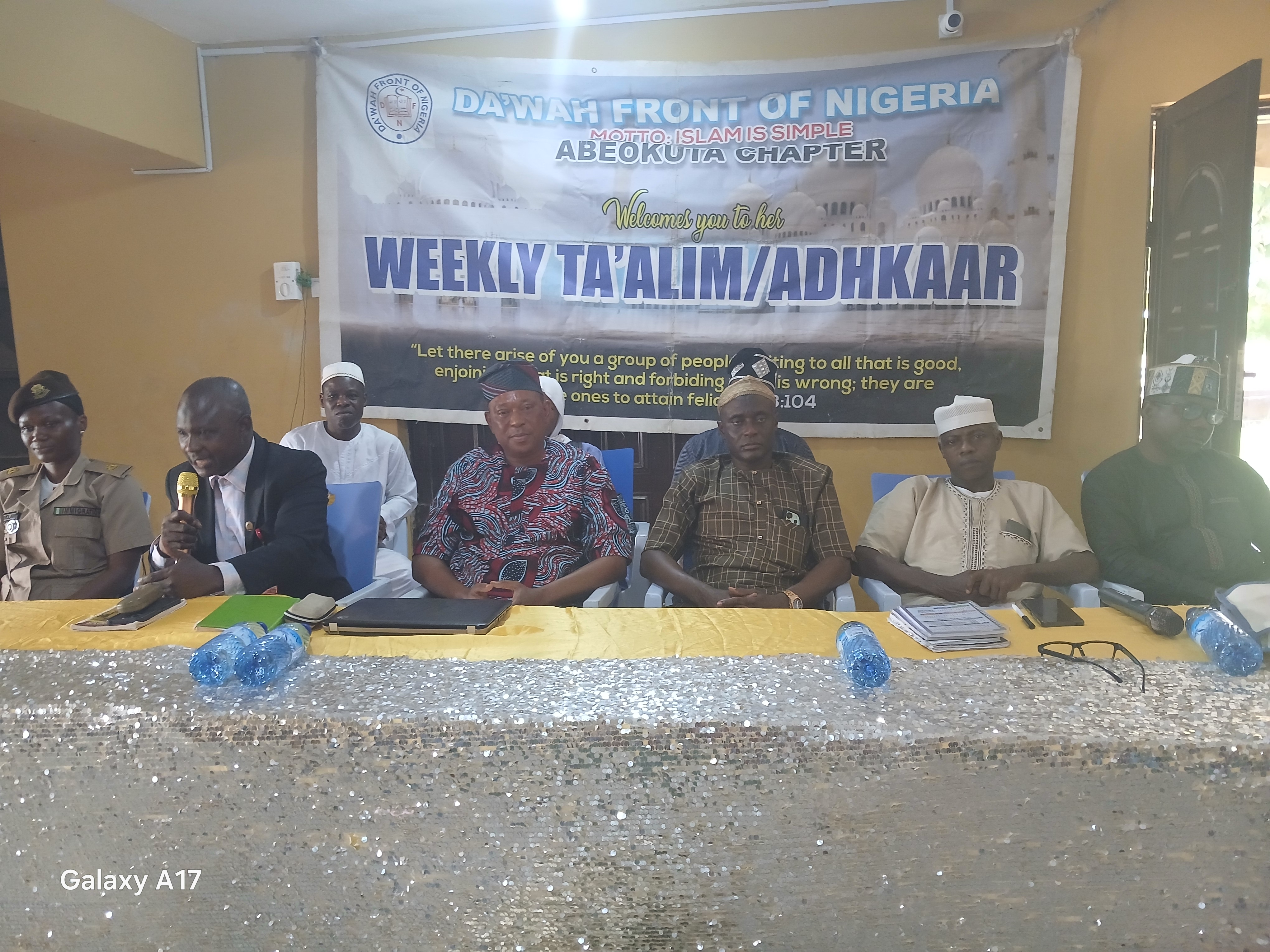
The agencies made the submissions at a security awareness seminar organised by the Abeokuta Chapter of the Dawah Front of Nigeria, held at the Dawah Front Model College, Abeokuta, Ogun State.
The programme, themed “Collaboration Among Security Agencies: The Role of Citizens,” brought together representatives of the Nigeria Immigration Service, Nigeria Customs Service, Nigeria Correctional Service, Nigeria Security and Civil Defence Corps and other security institutions.
The agencies called for stronger intelligence-sharing and closer cooperation between security personnel and members of the public, warning that failure by citizens to report suspicious activities could give criminals the opportunity to operate undetected.
Speaking at the programme, Lieutenant Colonel Adeleke Lawal, Imam of the Nigerian Defence Academy, Kaduna, said intelligence remained one of the most important tools in combating insecurity.
Lawal said the strength of any security system depended largely on the quality of information available to security agencies.
He urged Nigerians to provide genuine and timely information about suspicious persons, movements and activities in their communities.
According to him, security agencies could only effectively protect citizens when members of the public cooperated with them through credible intelligence.
The Nigeria Immigration Service representative, Mrs Khadujat Towolawi, warned that some Nigerians were contributing to insecurity by facilitating illegal immigration and smuggling.
She said the country’s borders remained porous and could be exploited by criminal elements unless citizens cooperated with immigration and other security agencies.
Towolawi, stressed that the ECOWAS protocol did not remove the requirement for proper documentation and security checks for foreigners entering Nigeria.
She also cautioned Nigerians against entering into relationships or marriages with foreigners without properly establishing their identities and backgrounds.
The immigration official identified greed and negligence as additional factors undermining national security.
She said Nigerians who aided smugglers and traffickers could inadvertently facilitate the movement of arms and ammunition as well as human trafficking.
She urged citizens to verify information and documentation before travelling abroad, assisting foreigners or facilitating cross-border movements.
The Nigeria Customs Service representative, Deputy Superintendent Gbadamosi Adewunmi, also called for greater community participation in the fight against smuggling.
Adewunmi who is the Publuc Relatikbs Officer Ogun Area II command, urged residents to report what they saw or heard to the appropriate security commands instead of ignoring suspicious activities.
He said timely information from communities could help security agencies prevent criminal activities before they escalated.
The speakers also warned Nigerians about the security implications of patronising smuggled goods and illicit drugs, saying demand for illegal products encouraged criminal networks and strengthened the underground economy.
The Nigeria Correctional Service representative, Superintendent Abdul Akeem Awesu, said security challenges also extended to correctional facilities, where some relatives and outsiders allegedly assist inmates in obtaining prohibited items.
Awesu, a welfare officer with the Ogun State Command, said the reformation and rehabilitation of inmates required collective responsibility involving the correctional service, families and the wider public.
He warned that bringing prohibited articles into correctional centres could undermine the rehabilitation process and create additional security risks.
He appealed to members of the public to shun activities capable of compromising the integrity and security of correctional centres.
The representative of the Nigeria Security and Civil Defence Corps, DSP Wallu Abioye, urged Nigerians to embrace the principle of “If you see something, say something.”
Abioye said residents should promptly report unidentified persons and suspicious activities in their communities, while also verifying information before travelling abroad to avoid becoming victims of trafficking or being used to facilitate criminal activities.
He particularly drew attention to the protection of critical national assets, warning that vandalism could have far-reaching consequences for national security and development.
He said the destruction of telecommunications infrastructure could disrupt communication, including communication among security agencies, thereby creating serious security vulnerabilities.
According to him, vandalism also imposes huge financial costs on government and undermines infrastructure development.
Abioye urged citizens to report anyone attempting to vandalise public infrastructure and assured whistleblowers that security agencies would protect the identities of those who provide credible information.
Speaking on the broader causes of insecurity, Adeleke said negligence by Nigerians, particularly parents, was contributing to the problem.
He illustrated the danger by referring to situations where students returned home from school with property that did not belong to them without their parents questioning how the items were acquired.
He argued that parents and other members of society must become more vigilant about the activities and possessions of young people.
Adeleke disclosed that insecurity and criminality were not limited to ordinary communities, recalling that even residential areas occupied by security personnel were not immune to theft.
He recounted how his apartment in a barracks was burgled while both he and his wife were away, with items, including an inverter, reportedly stolen.
He also linked some security challenges to unemployment, stressing the need to address the socioeconomic conditions that could make young people vulnerable to criminal activities.
Earlier, the coordinator of the Abeokuta Chapter of the Dawah Front of Nigeria, Dr. Shamsudeen Ayanwale, said the organisation convened the programme because of the seriousness of Nigeria’s security challenges.
Ayanwale said Nigerians were confronted with banditry, kidnapping and other forms of criminality, making it necessary to educate citizens about their responsibilities in preventing insecurity.
He said the seminar, held at the Dawah Front Model College, Abeokuta, was also designed to create an avenue for security agencies to interact directly with citizens and identify areas where collaboration could be strengthened.
He said, “We considered it necessary to educate our members and non-members alike about the issue of security and the roles they are supposed to play in mitigating the effects of the security challenges confronting us.
“We are also interested in bringing security agencies together to send the message of collaboration so that we can address the issue facing us in terms of security.”
Ayanwale expressed satisfaction with the participation of the various security agencies, saying the programme had demonstrated that there was considerable room for closer cooperation.
He said participants were expected to leave the programme better informed and more committed to taking security seriously.
 '
' '
'Do you want to share a story with us? Do you want to advertise with us? Do you need publicity for a product, service, or event? Contact us on WhatsApp +2348183319097 Email: platformtimes@gmail.com
We are committed to impactful investigative journalism for human interest and social justice. Your donation will help us tell more stories. Kindly donate any amount HERE
