

Daud Olatunji
Former Ogun Central senator and Peoples Democratic Party senatorial candidate, Iyabo Obasanjo, has raised the alarm over the omission of the party’s governorship candidate, Ladi Adebutu, from the list recently published by the Independent National Electoral Commission, warning that the development could threaten Nigeria’s democracy.
Obasanjo alleged that the circumstances surrounding Adebutu’s omission raised serious questions about the integrity of the electoral process, insisting that no political interest should be allowed to determine which candidates Nigerians can vote for.
She accused the All Progressives Congress in Ogun State of being unwilling to face a competitive election, suggesting that the controversy reflected an attempt to avoid a direct contest with the PDP candidate.
The former senator, however, expressed confidence that Adebutu’s name would eventually be restored to the list.
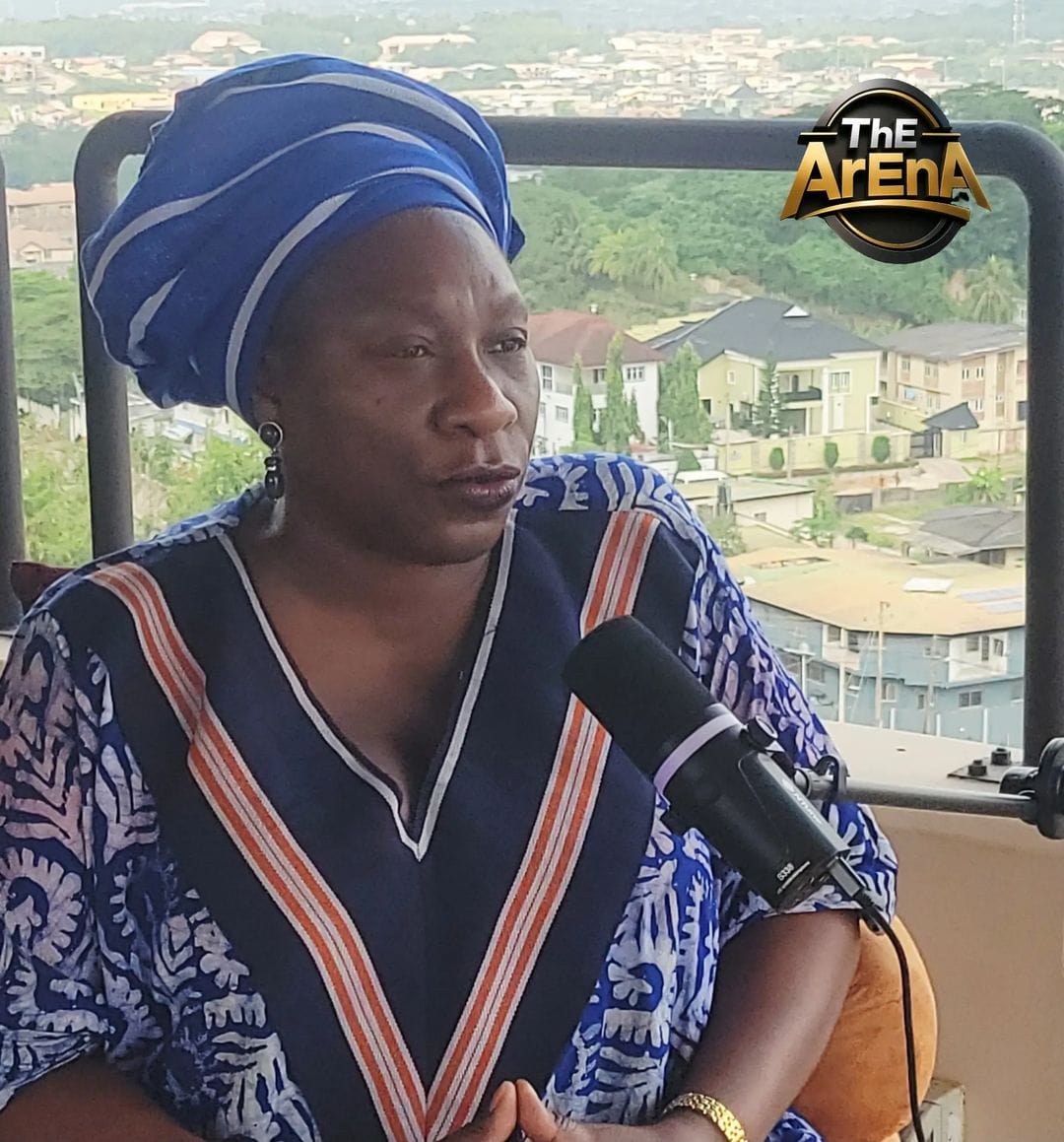
She spoke during an interview with The Arena, an Abeokuta-based multi-topic podcast, where she described the controversy as an issue extending beyond Adebutu and the PDP to the survival of democratic institutions in Nigeria.
Obasanjo, who represented Ogun Central Senatorial District between 2007 and 2011 and previously served as Ogun State Commissioner for Health, said she initially dismissed reports of Adebutu’s omission because INEC had already published the lists of candidates for senatorial and House of Representatives elections.
She said further inquiries into the matter prompted her to question why Adebutu’s name was missing when other PDP candidates had, according to her, followed the same procedures.
“What is it that Honourable Ladi did differently from what we did? And when I asked that question, I have a scientific mind. The answer was, he did the exact same thing that we all did,” she said.
She added, “The next question is then why is his name not in the list?”
The PDP candidate alleged that political opponents might have taken steps to influence the situation, describing any attempt to manipulate the electoral process to exclude a rival as unacceptable.
However, she did not establish publicly, in the interview excerpts available, the specific evidence supporting the allegation of political interference.
Obasanjo maintained that Adebutu’s name would be restored, expressing confidence that the controversy would not derail the PDP’s preparations for the next governorship election.
“His name is going to be back,” she said.
The former senator warned that allowing powerful politicians to influence the exclusion of opponents from electoral contests could undermine the credibility of elections and weaken public confidence in democratic institutions.
She argued that the controversy should concern Nigerians regardless of their political affiliations because the consequences of manipulating electoral procedures could extend beyond one candidate or political party.
“If this happens, then a democracy will crash because everybody that is a money bag will go to Abuja and give the neutral institution money to remove anybody they think can beat them,” she said.
“And so the idea is that, can one man’s desperation to be governor, can we allow us to kill our democracy?”
Obasanjo insisted that the issue was not merely about Adebutu’s ambition or the PDP’s chances of winning the election, but about protecting the rules governing Nigeria’s democratic system.
“It is not even about Honourable Adebutu, it’s not about PDP, it’s about the democracy Nigeria runs,” she said.
She warned that the repeated violation of democratic rules could eventually destroy the system those rules were designed to protect.
“But every time you keep breaking rules, it eventually leads to the end of that experiment. And you don’t know which rule will break it,” she added.
The allegations have placed renewed attention on the need for transparency in the publication of candidates’ lists and the importance of providing clear explanations where disputes arise over the inclusion or exclusion of candidates.
For Ogun State, the controversy could further intensify political tension ahead of the 2027 governorship election, particularly as political parties position themselves for what is expected to be a competitive contest.
Obasanjo’s allegations against the APC, however, remain her claims. An explanation from INEC on the circumstances surrounding Adebutu’s omission, alongside a response from the Ogun State APC, would be necessary to establish the facts.
Despite the controversy, Obasanjo dismissed suggestions that Adebutu’s omission could weaken the PDP’s electoral prospects in Ogun State.
She said party members remained committed to their political objectives and expressed confidence that the party would perform strongly in the state.
According to her, the PDP’s historical appeal and the record of the administration of former Ogun State governor, Gbenga Daniel, popularly known as OGD, could help the party reconnect with voters.
Obasanjo claimed that some residents were beginning to appreciate Daniel’s administration more, arguing that the party’s record of governance remained an important part of its political appeal.
She also expressed the view that the country’s political system, rather than the character of ordinary Nigerians, was responsible for encouraging behaviour that undermined public service.
“Our people are not bad. The political system has made people become what we believe is this crass system, but if we are able to elevate our political system, the people will go along with us,” she said.
The former senator described the affection and respect she had received from constituents as some of the most rewarding aspects of her political career.
Obasanjo also said she had no regrets about her brief membership of the APC before returning to the PDP, explaining that she joined the ruling party in good faith.
She cited her relationship with President Bola Tinubu and their previous political interactions as part of the considerations behind her decision to join the party.
“I joined APC in good faith. So I have no regrets,” she said.
However, she criticised the APC’s candidate-selection process in Ogun State, arguing that its approach to consensus-building had alienated some aspirants and party members.
She maintained that genuine consensus should involve all aspirants in discussions and ensure that those affected understand and collectively accept the eventual decision.
 '
 '
Do you want to share a story with us? Do you want to advertise with us? Do you need publicity for a product, service, or event? Contact us on WhatsApp +2348183319097 Email: platformtimes@gmail.com
We are committed to impactful investigative journalism for human interest and social justice. Your donation will help us tell more stories. Kindly donate any amount HERE
 '
