

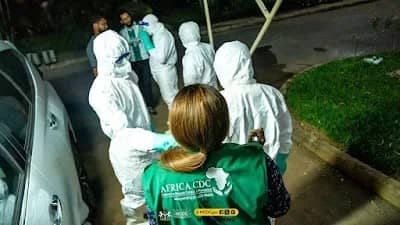
…Agency says laboratory tests ongoing, cautions against treating suspected infections as confirmed cases
…Affected individuals isolated as health authorities intensify surveillance
Daud Olatunji
The Nigeria Centre for Disease Control and Prevention (NCDC) has identified two suspected cases of Ebola Virus Disease (EVD) in Nigeria’s North-East region, triggering isolation measures and contact-tracing efforts.
The agency disclosed this in a statement on Saturday, October 31, 2026, noting that both individuals had been isolated while public health officials commenced investigations to determine whether they were infected with the deadly viral disease.
According to the NCDC, contact identification and listing are ongoing, alongside laboratory investigations to establish the status of the suspected cases.
The agency, however, cautioned Nigerians against interpreting the identification of the two suspected cases as confirmation of an Ebola outbreak, stressing that only laboratory results could establish whether the individuals had contracted the virus.
“Being classified as suspected cases does not mean they are confirmed Ebola cases; confirmation is subject to laboratory results,” the agency stated.
The development comes amid heightened public health concerns over the potential spread of infectious diseases, with the NCDC urging Nigerians to maintain strict personal and environmental hygiene.
It advised members of the public to observe regular handwashing, practise enhanced sanitation and comply with preventive guidelines issued by public health authorities.
The agency also urged Nigerians to rely on verified information from official health institutions rather than circulate unconfirmed reports that could trigger unnecessary panic.
The NCDC assured the public that further information would be released as verified findings from the ongoing investigations become available.
Ebola Virus Disease is a severe and often fatal illness in humans. It can spread through direct contact with the blood, secretions, organs or other bodily fluids of infected people, as well as contaminated materials.
Symptoms may include fever, weakness, muscle pain, headache, sore throat, vomiting, diarrhoea and, in severe cases, internal or external bleeding.
Meanwhile, the NCDC has yet to disclose the identities of the affected individuals, their specific locations within the North-East or the circumstances surrounding their classification as suspected cases.
The agency’s ongoing laboratory investigations and contact-tracing exercise are expected to provide further clarity on the situation.
 '
 '
Do you want to share a story with us? Do you want to advertise with us? Do you need publicity for a product, service, or event? Contact us on WhatsApp +2348183319097 Email: platformtimes@gmail.com
We are committed to impactful investigative journalism for human interest and social justice. Your donation will help us tell more stories. Kindly donate any amount HERE
 '
