

Firdaus Obiremi
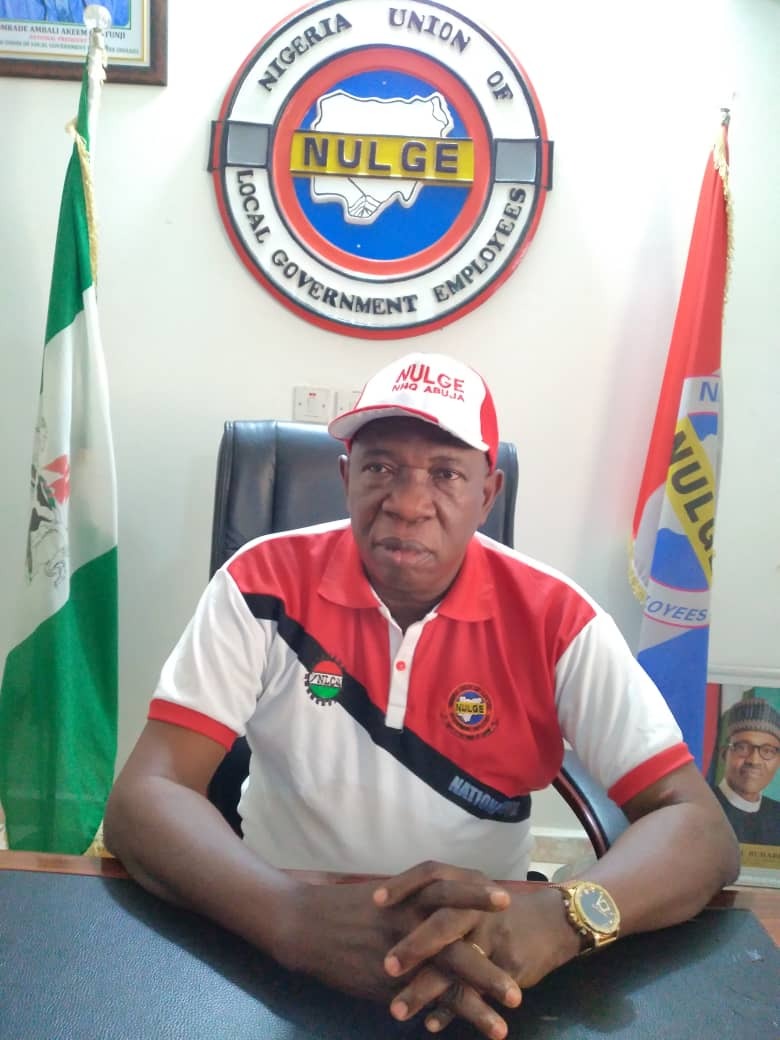
Former National President of the Nigeria Union of Local Government Employees, Comrade Akeem Ambali, has warned that the growing division between the Nigeria Labour Congress and the Trade Union Congress, coupled with the continued weakness of local governments, is threatening workers’ welfare and grassroots development in Nigeria.
Ambali, a former treasurer of the NLC and former Ogun State chairman of the Congress, said the disagreement between the two labour centres over the Federal Government’s proposed N70,000 transport allowance could undermine organised labour’s collective bargaining power at a time workers were battling rising inflation, transportation costs and declining purchasing power.
He also lamented that local governments remained largely ineffective despite the Supreme Court judgment affirming their financial autonomy, insisting that the failure to translate the ruling into functional grassroots administration had denied Nigerians the benefits of government policies and programmes.
The former labour leader spoke on Tuesday during an interview on Frontline, a current affairs programme on Eagle 102.5 FM, Ilese-Ijebu, Ogun State, where he examined the NLC-TUC disagreement, workers’ economic challenges and the state of local government administration.
On the labour dispute, Ambali described the disagreement between NLC President, Comrade Joe Ajaero, and his TUC counterpart, Comrade Festus Osifo, as an unnecessary distraction, arguing that the two organisations should concentrate on improving workers’ welfare rather than allowing differences over representation and negotiations to escalate into public confrontation.
The disagreement followed a Memorandum of Understanding signed between the NLC and the Federal Government on the N70,000 transport allowance without the TUC’s participation. Osifo subsequently rejected the arrangement, insisting that his organisation had not been carried along and retained the right to pursue its own negotiations.
Ambali, however, said the NLC should have properly briefed the TUC leadership on the circumstances surrounding the negotiations and allowed the other labour centre to understand the agreement before making it public.
Recalling his participation in the negotiations that produced the N70,000 national minimum wage in 2024, he said the established practice was for the NLC, TUC and Joint Negotiating Council to participate in discussions affecting workers generally.
He explained that although the two congresses had independent structures and the right to negotiate on behalf of their respective members, cooperation was essential when agreements were intended to cover the wider workforce.
He said the presence of both Ajaero and Osifo during the 2024 minimum wage negotiations demonstrated the importance of collective participation in labour negotiations.
Ambali maintained that the NLC should not treat the TUC as a junior partner because of differences in membership strength, stressing that both organisations were registered labour centres with recognised responsibilities.
He said, “What are we hiding? Are we not defending the interests of workers? You need to key the president of TUC in. You need to tell him the intricacies of that agreement, what happened. You must tell him.”
The former NULGE president also acknowledged the TUC’s apprehension over the Federal Government’s history of failing to implement some labour agreements, particularly the previous N30,000 wage award.
According to him, the TUC had legitimate reasons to demand assurances before accepting another government commitment, especially given the distinction between minimum wage, living wage and wage award.
He, however, cautioned against directing workers to reject the N70,000 transport allowance, arguing that the additional payment, despite its inadequacy, could provide some relief amid rising living costs.
“It will be suicidal for TUC to direct that its members will not take it. They will take it. No worker sees money and forgets about money,” he said.
Ambali described the allowance as insufficient, noting that its equivalent of slightly more than N2,000 daily could hardly address the increasing cost of transportation and other household expenses.
He said the removal of fuel subsidy, inflation and the floating of the naira had significantly eroded workers’ earnings, leaving many unable to meet their basic needs despite the implementation of the N70,000 minimum wage.
He added that transportation and electricity costs had become major drains on household incomes, while businesses were equally struggling with rising production expenses, making goods and services increasingly unaffordable.
The former labour leader argued that improving workers’ purchasing power was also essential to strengthening the domestic economy because workers spent their earnings in local markets and businesses.
“Workers cannot exist in a vacuum. They exist within society. And they are the medium of circulating wealth in the country because it is only workers who collect their salaries and go to local markets like Oke-Aje and Ijebu-Imushin,” he said.
He urged organised labour to broaden its demands beyond salary increases to include minimum pensions for retirees, accessible healthcare, affordable social services and improved working conditions.
Ambali also proposed that the next national minimum wage should not be less than N400,000, insisting that workers’ earnings must reflect the rising costs of housing, transportation, electricity and other essential needs.
He called on the NLC and TUC to begin preparations ahead of the next minimum wage negotiations, expected to commence in April, by engaging economists, technocrats, professors and other specialists to develop a comprehensive negotiating position.
According to him, labour organisations must undertake research, internal consultations and technical preparations before negotiations begin rather than waiting for government to convene the process.
He further urged the labour centres to ensure that any agreement reached at the national level was extended to state governments and the private sector to prevent disparities in workers’ welfare.
On the implications of the disagreement for industrial relations, Ambali recalled an experience during his tenure as Ogun NLC chairman when he had to suspend a planned strike after discovering that his TUC counterpart had reached a separate understanding with the government.
He explained that because both labour centres had jointly declared the trade dispute, he could not proceed independently without considering the implications for the other organisation.
Ambali said he subsequently informed the TUC leadership of the NLC’s decision to pursue the matter independently, stressing that consultation remained necessary even when one organisation decided to take a different course.
He argued that the current disagreement should be resolved through dialogue and mutual respect rather than public exchanges capable of weakening the labour movement.
The former labour leader consequently called for a review of Nigeria’s labour laws to establish clearer rules governing negotiations and agreements affecting workers across different labour centres.
He maintained that registered labour organisations should not be excluded from negotiations on issues affecting their members.
Turning to local government administration, Ambali lamented that the Supreme Court judgment on financial autonomy had yet to produce the expected improvements in grassroots governance, describing the situation as a major gap in the delivery of government policies.
He commended President Bola Tinubu for pursuing local government autonomy, recalling that the issue was among the commitments associated with his political agenda before assuming office.
Ambali said the President adopted a different approach to achieving the objective and eventually secured a Supreme Court judgment, adding that he also recognised the administration’s efforts to establish Local Council Development Areas to bring governance closer to the people.
However, he questioned why the expected benefits of the autonomy initiative had not translated into visible development in communities.
“But why Nigerians are not happy is that the issue of local government, which is the neighbourhood government, that is supposed to service the grassroots to make the impact of Tinubu administration more positive, is missing in action,” he said.
He argued that local governments constituted the closest tier of administration to the people and should serve as the first point of contact for basic public services, particularly in rural communities.
According to him, no matter the efforts of federal and state governments, meaningful development would remain difficult without functional, people-driven local councils.
“Local government has been crippled. Local government is missing in action. No matter the effort of any state government or federal government, without a functional local government, without a people-centred local government, whatever they do may not have the expected impact on the people,” he said.
Ambali urged Nigerians to make the implementation of the Supreme Court judgment a major issue in assessing political parties and candidates ahead of the 2027 general elections.
He said voters should demand clear commitments on how candidates intended to restore the financial and administrative independence of local councils rather than being carried away by political promises.
“So, Nigerians, what we are supposed to be asking whoever is coming, apart from the three I’ve mentioned, is: where is our local government? Or simply put, implementation of the Supreme Court judgment. That is it,” he said.
The former NULGE president said functional councils should be capable of maintaining rural roads, supporting agricultural production, providing basic infrastructure and strengthening community-level security.
He lamented that deteriorating rural roads had made it difficult for farmers to transport their produce to markets, recalling that local governments previously possessed graders, excavators and other equipment for maintaining community infrastructure.
“The roads are not passable. Farmers cannot bring back farm produce. Local government in the past had graders, boilers, excavators and so many equipment that easily a community can afford,” he said.
He also called for proper identification of farmers through reliable databases at the local government level to ensure that agricultural interventions, including tractors, fertilisers and other support, reached genuine beneficiaries.
Ambali further advocated the revival of community policing arrangements at the grassroots, arguing that local councils should have the institutional capacity to respond to security challenges within their jurisdictions.
He stressed that local government autonomy should not be reduced to the transfer of funds but must also involve restoring the administrative capacity and operational structures necessary for effective service delivery.
The former local government administrator questioned why communities continued to experience poor infrastructure despite the substantial allocations reportedly accruing to local councils.
He argued that even relatively modest resources could produce visible improvements if properly managed and directed towards the needs of residents.
Responding to concerns about the performance of local government employees, Ambali cautioned against judging their productivity solely by whether they were physically present at council secretariats.
He explained that many local government workers, particularly agricultural officers and community development personnel, performed their responsibilities in rural settlements, hospitals and other public facilities outside their offices.
Drawing from his experience as a former director of community development, he recalled visiting communities including Iloti, Irawo, Obete, Abule Sikiru and Alabata in the course of his duties.
He maintained that assessing workers’ performance without considering the resources, equipment and administrative support available to them would produce an incomplete picture of the challenges confronting local government administration.
He argued that political interference and years of financial restrictions had weakened the councils, insisting that grassroots administration was capable of delivering results if allowed to function independently.
Ambali also maintained that government programmes could fail to achieve their intended impact without effective local structures to connect them with beneficiaries.
Citing the distribution of Compressed Natural Gas buses as an example, he argued that functional local governments would help ensure that such interventions reached communities and were put to productive use.
He said, “Tinubu has a good vision for the country. He has a good programme. But how to connect the people is missing. And that is a function of local government.”
Despite his criticisms, Ambali expressed sympathy for Tinubu over his local government autonomy initiative, insisting that the President should be held accountable for completing the process he had initiated.
He said the ultimate test of the autonomy judgment should be improved roads, functioning public facilities, agricultural support, community security and accessible services rather than political declarations.
A caller on the programme, Prince Suleiman Hassan, also urged the NLC and TUC to resolve their differences, arguing that workers were more interested in receiving the benefits negotiated on their behalf than in disagreements among union leaders.
Ambali urged the leadership of both labour centres to put aside personal and institutional differences, warning that prolonged division could weaken their capacity to negotiate better conditions for workers.
He maintained that both organised labour and local governments must return to their fundamental responsibilities of protecting citizens’ interests and delivering tangible benefits, warning that Nigerians would ultimately judge political and labour leaders by the impact of their decisions on ordinary people.
 '
 '
Do you want to share a story with us? Do you want to advertise with us? Do you need publicity for a product, service, or event? Contact us on WhatsApp +2348183319097 Email: platformtimes@gmail.com
We are committed to impactful investigative journalism for human interest and social justice. Your donation will help us tell more stories. Kindly donate any amount HERE
 '
