

Daud Olatunji
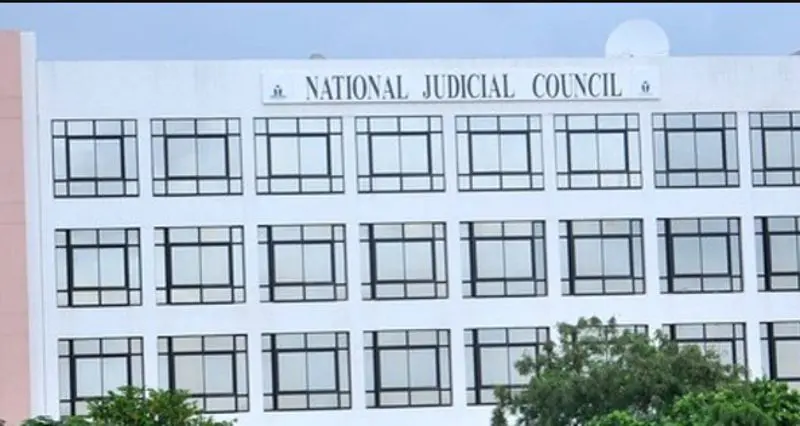
Two pro-democracy organisations, the Coalition Against Corruption and Bad Governance and the Campaign for Democracy and Justice, have called on the National Judicial Council to investigate the circumstances surrounding a Federal High Court judgment which reportedly nullified the leadership of the African Democratic Congress led by former Senate President, David Mark.
The organisations described the judgment delivered by Justice Peter Odo Lifu on November 5, 2026, as controversial, alleging that it contradicted an earlier ruling by another judge of the same court which affirmed the legitimacy of the Mark-led leadership.
They warned that allowing conflicting decisions from courts of coordinate jurisdiction to stand could undermine public confidence in the judiciary, destabilise the opposition and threaten Nigeria’s multi-party democratic system ahead of the 2027 general elections.
In a joint statement issued on Friday and signed by the Acting Secretary of the Campaign for Democracy and Justice, Kolawole Bello, and the Chairman of the Coalition Against Corruption and Bad Governance, Toyin Raheem, the groups urged the NJC, under the leadership of the Chief Justice of Nigeria, Justice Kudirat Kekere-Ekun, to investigate what they described as a dangerous development within the judiciary.
The groups said Justice Lifu’s decision in Suit No. FHC/ABJ/CS/1819/2025 purportedly nullified the leadership of the David Mark-led National Working Committee of the ADC and questioned the validity of actions taken by the party under the leadership.
They further argued that the ruling had far-reaching implications for the party’s political activities, including the emergence of former Vice-President Atiku Abubakar as its presidential candidate for the 2027 general election.
According to the organisations, the November 5 judgment was in conflict with an earlier decision delivered on July 2, 2026, by Justice Musa Liman of the Federal High Court, Abuja, in Suit No. FHC/ABJ/CS/1637/2025.
They claimed that Justice Liman had dismissed a challenge against the Mark-led ADC leadership on grounds bordering on jurisdiction, locus standi and failure to exhaust the party’s internal dispute-resolution mechanisms.
The groups also maintained that the earlier judgment had directed the Independent National Electoral Commission to recognise the Mark-led leadership and had neither been overturned by the Court of Appeal nor set aside by the Supreme Court.
Questioning the legal basis for the subsequent ruling, the organisations accused Justice Lifu of assuming appellate powers over a decision delivered by a judge of equal jurisdiction.
“How then could Hon. Justice Peter Lifu, a judge of equal powers, on November 5, 2026, turn himself into a Court of Appeal and upturn the judgment of Hon. Justice Musa Liman? This is an invitation to judicial anarchy,” the statement read.
They argued that a Federal High Court judge could not sit on appeal over the decision of another judge of the same court, citing established judicial principles and previous Supreme Court decisions, including Madukolu v. Nkemdilim, Odi v. Osafile, Skenconsult v. Ukey and CBN v. Ahmed.
The organisations also invoked the doctrines of stare decisis, res judicata and issue estoppel, arguing that instituting another action over a dispute already determined by a court of competent jurisdiction could amount to an abuse of court process.
They further referenced Section 173 of the Evidence Act, 2011, Section 36 of the 1999 Constitution, Article 7 of the African Charter on Human and Peoples’ Rights and Article 14 of the International Covenant on Civil and Political Rights.
The groups warned that conflicting judicial pronouncements on the same political dispute could create uncertainty, weaken the authority of the courts and give the impression that judicial processes were being deployed to undermine opposition parties.
They questioned the implications of allowing such decisions to stand, saying, “If this is allowed, what stops another judge of the Federal High Court tomorrow from sacking the APC leadership? This conflicting judgment, if not reversed, will set Nigeria on fire.”
The organisations also expressed concern over what they described as attempts by some political office holders to undermine democratic pluralism through judicial interventions capable of frustrating opposition parties and their political ambitions.
Recalling Nigeria’s pro-democracy struggles, they referenced the contributions of activists and political figures, including Gani Fawehinmi, Balarabe Musa, Tunji Braithwaite, MKO Abiola, Ayo Adebanjo and Yinka Odumakin.
They said the sacrifices of those who endured persecution, imprisonment, intimidation and death in the struggle for democratic governance should not be allowed to go to waste.
The groups also cited the position attributed to former United States Supreme Court Justice Hugo Black that the judiciary should remain a refuge for vulnerable, disadvantaged and politically outnumbered citizens.
They subsequently made four demands, beginning with a call on the NJC to investigate the circumstances surrounding the two judgments and examine allegations of forum shopping and abuse of judicial processes.
They also demanded an open, free and fair political environment ahead of the 2027 elections, insisting that opposition politicians must not be prevented from participating in the democratic process through questionable judicial interventions.
Among the political figures they identified as potential contenders in the forthcoming elections were Atiku Abubakar, Prince Adewole Adebayo, Omoyele Sowore, Hashim Olawepo-Hashim, Seyi Makinde and Peter Obi.
The organisations further urged Atiku and the ADC leadership to immediately approach the Court of Appeal to challenge and seek the reversal of Justice Lifu’s November 5 judgment.
They also called on the United Action for Democracy and other pro-democracy organisations to mobilise against what they described as emerging threats to Nigeria’s multi-party democracy.
“We who built this house cannot watch it collapse,” the organisations declared.
They insisted that the judiciary must protect democratic institutions, uphold the rule of law and ensure that opposition parties are allowed to participate freely in the electoral process.
 '
 '
Do you want to share a story with us? Do you want to advertise with us? Do you need publicity for a product, service, or event? Contact us on WhatsApp +2348183319097 Email: platformtimes@gmail.com
We are committed to impactful investigative journalism for human interest and social justice. Your donation will help us tell more stories. Kindly donate any amount HERE
 '
