

… Defence Headquarters dismisses reports of truce with Bakura Doro’s faction
….Military says troops remain on offensive, neutralising terrorists, rescuing abductees
…Alleged secret deal reportedly linked to release of over 300 civilians abducted in Borno
Daud Olatunji
The Nigerian military has vehemently denied entering into a ceasefire agreement with Boko Haram, insisting that its counter-terrorism operations against insurgents and other criminal groups across the country remain ongoing.
The Defence Headquarters described reports of a truce with the terrorist group as untrue, declaring that the military had neither suspended nor relaxed its offensive against insurgents operating in the North-East.
The military’s position comes nearly two months after an international news organisation, The New Humanitarian, published an investigative report alleging that the Federal Government had secretly negotiated a ceasefire agreement with a faction of Boko Haram led by Bakura Doro.
The Defence Headquarters spokesperson, Samaila Uba, made the denial on Thursday during a joint security press briefing at the National Counter Terrorism Centre, an agency under the Office of the National Security Adviser.
Uba, who directly addressed questions surrounding the alleged agreement, said there was no ceasefire arrangement between the Nigerian military and Boko Haram.
“On the issue of whether there is a ceasefire with Boko Haram, I want to make it clear that there is nothing like a ceasefire,” he said.
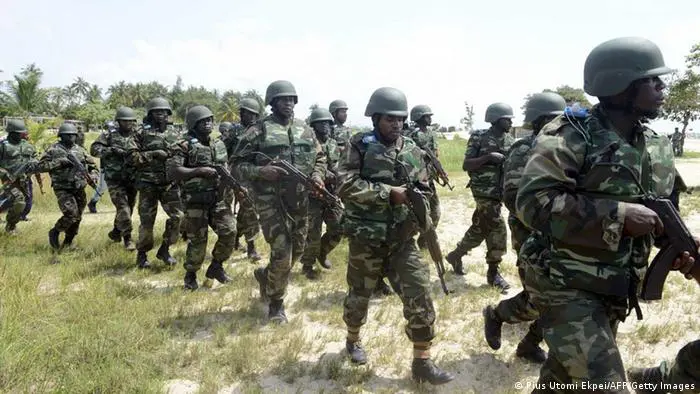
The military spokesman maintained that troops were sustaining pressure on terrorist groups, pointing to the number of insurgents neutralised, suspects arrested and victims rescued during ongoing military operations.
“Considering the terrorists neutralised, suspects arrested, victims rescued and other successes recorded across our operations, it is clear that we are not relenting.
“We will continue to sustain pressure on these criminal elements,” Uba added.
He explained that the military’s operations were not restricted to Boko Haram and the Islamic State West Africa Province but also covered kidnappers and other criminal elements threatening the safety of Nigerians.
However, the military’s categorical denial has brought renewed attention to the circumstances surrounding reports of a possible secret understanding between the Federal Government and a faction of the insurgent group.
The New Humanitarian had, in a September 7 report, claimed that the Nigerian government reached a secret ceasefire arrangement with the Bakura Doro-led Boko Haram faction, which reportedly helped to keep some communities in the North-East relatively calm for about three months.
According to the report, the alleged truce had been in operation since June 2026 and was expected to be extended.
The arrangement was reportedly connected to efforts to secure the freedom of more than 300 civilians abducted in March from Ngoshe, a community in Gwoza Local Government Area of Borno State.
The report further indicated that the alleged ceasefire did not cover the Islamic State West Africa Province, ISWAP, which reportedly continued to launch attacks on military formations and civilian communities around the Lake Chad region.
Meanwhile, another media investigation by HumAngle raised questions about the extent of the alleged agreement, reporting that a Boko Haram judge had publicly rejected the reported ceasefire and ransom arrangement in a video.
The publication also cited sources familiar with the development who suggested that a small team within the insurgent group might have accepted the government’s proposal without first obtaining approval from its leadership.
Nigeria’s Boko Haram insurgency has also become increasingly complicated by internal divisions and competing factions operating across parts of the North-East and North-Central regions.
Available security assessments cited in previous reports identify several factions associated with Jama’atu Ahlis-Sunna Lidda’awati wal-Jihad, commonly known as Boko Haram.
Among the groups reportedly linked to the factional structure are those led by Ali Ngulde, Alhai Kale and Mallam Sadiku, while Bakura Doro is believed to operate from islands around Lake Chad.
Doro reportedly consolidated his influence in the Lake Chad area, where the difficult terrain and limited security presence have provided operational advantages for insurgent groups.
Despite the military’s latest denial, the reported negotiations, the fate of the more than 300 abducted civilians and the conflicting positions attributed to elements within Boko Haram continue to raise questions about the circumstances surrounding the alleged truce.
The military, however, insists that its campaign against terrorism remains active and that there is no ceasefire agreement with Boko Haram.
 '
 '
Do you want to share a story with us? Do you want to advertise with us? Do you need publicity for a product, service, or event? Contact us on WhatsApp +2348183319097 Email: platformtimes@gmail.com
We are committed to impactful investigative journalism for human interest and social justice. Your donation will help us tell more stories. Kindly donate any amount HERE
 '
