

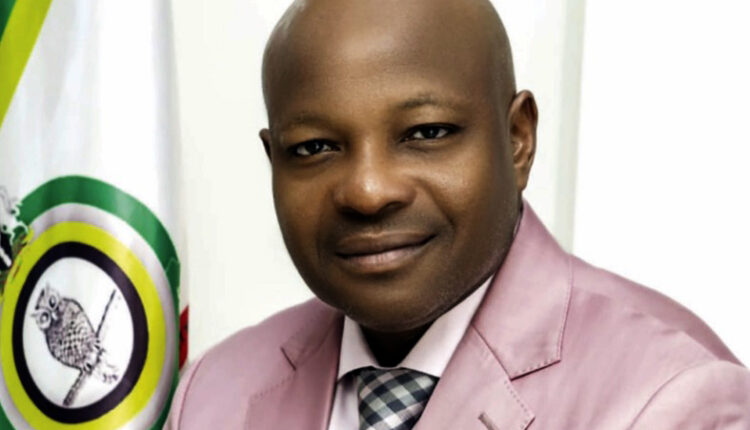
Zainab Abioye
The Director-General of the Department of State Services, Oluwatosin Ajayi, has ordered operatives of the agency to stop arresting people over civil disputes, saying such matters should be handled through the courts.
Ajayi said the directive formed part of reforms introduced under his leadership to strengthen the rule of law, improve accountability and protect human rights within the secret police.
The DSS boss disclosed this during a media interview on Thursday, where he outlined reforms in the agency covering law enforcement, inter-agency cooperation, accountability, human rights, as well as infrastructural and administrative development.
He said the reforms had also brought about a clearer distinction between civil and criminal matters, acknowledging that the DSS had in the past sometimes conflated the two.
Ajayi stressed that the use of force was inappropriate in civil disputes and should not be used as a means of resolving such cases.
“You cannot apply the use of force in civil matters. Even some criminal matters don’t require force,” he said.
The DSS director-general said the agency was increasingly relying on judicial processes to resolve disputes instead of making arrests where no criminal offence had been established.
He cited the case involving political economist, Prof. Pat Utomi, over allegations relating to an attempt to establish what was described as a “shadow government.”
Ajayi said the DSS decided to approach the court for judicial interpretation rather than arrest Utomi.
He said the court subsequently ruled that the alleged initiative was unconstitutional, illegal and constituted a threat to national security.
The DSS chief also cited a case involving the Socio-Economic Rights and Accountability Project, SERAP, which had gone to court over allegations that two DSS operatives invaded its premises.
According to him, the agency chose to defend its position through the judicial process rather than resorting to arrests.
He said the court eventually awarded more than N100m in favour of SERAP.
Asked whether the DSS had now adopted the courts as the preferred avenue for dealing with civil disputes, Ajayi answered in the affirmative.
He reiterated that he had specifically instructed operatives not to make arrests in civil cases.
“I have told my people that there should be no arrest in any civil case,” he said.
Ajayi also said the DSS would prefer to approach the courts in cases involving journalists, describing members of the media as “professional colleagues.”
“I call you guys our professional colleagues. The only difference is that, while you inform the public, we inform the government,” he said.
He explained that information gathered by the DSS was classified because it was primarily meant to assist the government, adding that such information could only become public after the agency declassified it.
The directive comes amid longstanding concerns over alleged abuses of security powers in civil disputes and growing calls for security agencies to operate strictly within the confines of the law.
Ajayi said the reforms were intended to strengthen professionalism within the DSS and ensure that its operations were guided by legality, accountability and respect for fundamental human rights.
 '
' '
'Do you want to share a story with us? Do you want to advertise with us? Do you need publicity for a product, service, or event? Contact us on WhatsApp +2348183319097 Email: platformtimes@gmail.com
We are committed to impactful investigative journalism for human interest and social justice. Your donation will help us tell more stories. Kindly donate any amount HERE
