

Daud Olatunji
A medical doctor, Dokun Adedeji, has recounted the agonising final moments of renowned investigative journalist and founding editor-in-chief of Newswatch magazine, Dele Giwa, revealing how the journalist desperately sought reassurance that he would survive after a parcel bomb tore through his body.
Adedeji, who treated Giwa following the explosion, said the journalist remained conscious despite suffering devastating injuries and repeatedly asked whether he would die.
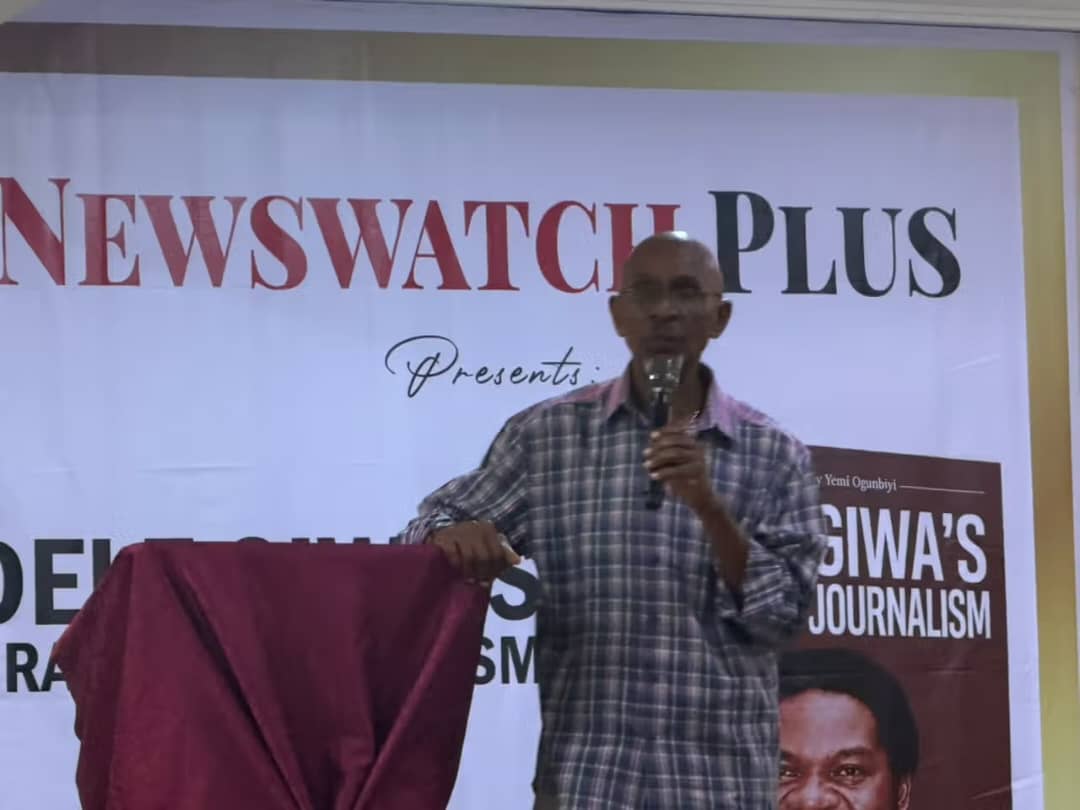
The doctor recounted the incident on Monday during the launch of Dele Giwa’s Granite Journalism, a book documenting the late journalist’s writings for Daily Times, Sunday Concord and Newswatch magazine, held at the Nigerian Institute of Journalism (NIJ), Lagos State.
Giwa was assassinated on October 19, 1986, when a parcel bomb delivered to his residence in Ikeja, Lagos, exploded, killing him at the age of 39.
The incident occurred during the military administration of former Head of State, General Ibrahim Babangida.
Recounting the horrifying scene at the hospital, Adedeji said Giwa was rushed to First Foundation Medical Centre, Opebi, Ikeja, shortly after the explosion.
The doctor, who was on duty at the time, said the journalist was critically injured but remained conscious enough to speak to him.
“It was about 12:30 in the afternoon when a company bus was driven into First Foundation Medical Centre, Opebi, Ikeja. I was the doctor on duty for the weekend. I saw people running, saying, ‘They brought Dele Giwa’,” he recalled.
He added, “So, we took Uncle Dele to the emergency room. What I saw, I have never seen again since in my practice. He was shattered. His two limbs were open, and he was bleeding.
“But he was still talking. He said, ‘Dokun, se mi o ni ku sha? (I hope I will not die?).’ I said, ‘I don’t know’.”
Adedeji said Giwa died at about 1pm, barely 30 minutes after arriving at the hospital, despite the efforts to save him.
Reflecting on the severity of the injuries, the doctor said the journalist would have faced an extremely difficult survival even if he had lived through the immediate aftermath of the bombing.
“One thing was sure. I think it was better that he died. There was no way Uncle Dele would have lived with that injury even if he lived,” he said.
The doctor disclosed that Giwa’s blood stained his clothes and shoes, which he kept for five years as a painful reminder of the tragedy.
“His blood was on my clothes and my shoes. I hung them for five years in the corner of my room, so that every time I saw them, I would remember,” Adedeji said.
Describing his relationship with the late journalist, he added, “Uncle Dele was not just my patient. He was like a brother. He treated me like a brother.”
GIWA’S LAST CONCERNS WERE HIS FAMILY
Beyond the physical pain he suffered, Adedeji said Giwa remained concerned about the safety and whereabouts of his family members as he battled for his life.
According to the doctor, the journalist repeatedly asked about his wife, Funmi, and their last daughter, Aisha, who had reportedly crawled into the dining area after the parcel bomb exploded.
Adedeji recalled that Giwa repeatedly asked, “How is Aisha? Do you know anything about Aisha?”
The account offers a glimpse into the final moments of a journalist whose death remains one of the most disturbing assassinations in Nigeria’s media history.
Giwa’s killing occurred against the backdrop of heightened tensions surrounding his journalistic work and reported interactions with security and military intelligence officials.
Two days before his assassination, the journalist had been questioned by officials of the then-State Security Service (SSS).
He had also been interrogated by Halilu Akilu of the then-Directorate of Military Intelligence over an allegation that he had been heard discussing arms importation with some individuals.
Giwa appeared at the SSS headquarters on October 16, 1986, two days before he was killed.
Around the same period, he had written an article examining the Second-Tier Foreign Exchange Market (SFEM), a policy introduced by the Central Bank of Nigeria to determine the naira’s exchange rate and allocate foreign exchange based on market forces.
In the article, Giwa reportedly warned that Nigerians could stone their leaders in the streets if the policy failed.
The journalist’s reported exchanges with intelligence officials in the days preceding his death have remained an important part of the circumstances surrounding his assassination.
On October 18, Akilu reportedly telephoned Giwa’s residence and spoke with his wife, Funmi, asking for directions because he intended to visit the house on his way to Kano.
On the day of the bombing, the military intelligence official reportedly told Giwa over the telephone that the matter under investigation had been resolved after the journalist questioned the frequency of the calls.
Not long afterwards, a package was delivered to Giwa’s residence. The parcel exploded, leaving him critically injured.
Kayode Soyinka, the London bureau chief of Newswatch, was reportedly with Giwa when the bomb went off but narrowly escaped the explosion after excusing himself to visit the restroom.
Giwa was subsequently rushed to the hospital, where he died from his injuries.
Giwa’s assassination on October 19, 1986, sent shockwaves through Nigeria’s journalism community and became a defining moment in the country’s press history.
Widely respected for his fearless investigative reporting and willingness to scrutinise those in positions of power, he had built a reputation as a journalist prepared to confront sensitive political and public-interest issues.
His death also became a lasting symbol of the dangers faced by journalists operating under authoritarian rule.
Monday’s book launch, held on the 40th anniversary of his assassination, provided an opportunity to revisit his work and reflect on the enduring importance of courageous journalism.
Giwa would have turned 79 in 2026.
Four decades after his death, his legacy continues to resonate within Nigeria’s media industry, while the circumstances surrounding the parcel-bomb assassination remain a painful chapter in the nation’s history of press freedom.
 '
 '
Do you want to share a story with us? Do you want to advertise with us? Do you need publicity for a product, service, or event? Contact us on WhatsApp +2348183319097 Email: platformtimes@gmail.com
We are committed to impactful investigative journalism for human interest and social justice. Your donation will help us tell more stories. Kindly donate any amount HERE
 '
