

…Insists AD Govs mLMisunderstood Behind-The-Scenes Political Negotiations
…Says Alliance With Opposition Was Driven By National Unity, Not Weakness
Daud Olatunji
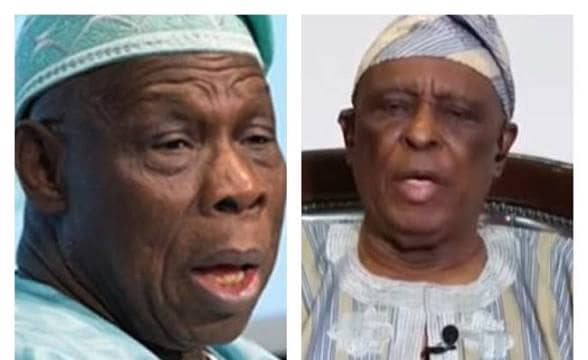
Former President Olusegun Obasanjo has launched a blistering response to former Ogun State Governor, Chief Olusegun Osoba, rejecting allegations that he deceived leaders of the Alliance for Democracy during the political events leading to the 2003 general elections.
In a lengthy letter dated July 23, 2026, and titled “Reply to Your Inaccurate Posture: ‘How Obasanjo Deceived Us in 2003’,” the former President described Osoba’s account as inaccurate, misleading and based on incomplete knowledge of the political realities of the period.
Obasanjo was responding to an article reportedly written by Osoba and published in The Legal Observer on July 20, in which the former governor accused him of deceiving Yoruba leaders and the six AD governors before the 2003 elections.
Rejecting the allegation, Obasanjo declared, “I take strong and serious objection to your calling me a deceit because I deceived nobody. I always presented my case and all issues as I had them and as I understood them, no matter whose ox is gored.”
The former President argued that several crucial political developments were unknown to Osoba because, according to him, they were handled by senior Afenifere leaders rather than the Southwest governors.
“There were issues you did not know or understand because, as you pointed out, they were above your head,” Obasanjo wrote.
Obasanjo traced the events preceding his emergence as President, revealing that after his release from prison, several groups separately urged him to return to politics.
According to him, delegations led by Lawan Katsina, the late Chief S.M. Afolabi and Martins Kuye visited him at his Ota farm to persuade him to contest for the presidency.
He said he subsequently consulted prominent political figures across the South-West, North and South-East before deciding to join the Peoples Democratic Party.
Among those he said he consulted were Chiefs Richard Akinjide and Meredith Adisa Akinloye, the late Chief Bola Ige, Prof. Oyeleye Oyediran, Sunday Awoniyi, Adamu Ciroma, Prof. Anezi Okoro and Arthur Mbanefo.
Obasanjo disclosed that during one of his meetings with the late Afenifere leader, Chief Abraham Adesanya, he was urged to abandon the PDP and join the Alliance for Democracy.
However, he said he rejected the suggestion.
He stated, “He asked me to join AD and I told him that AD, as essentially a tribal party, was in a cul de sac.”
Despite political disagreements, Obasanjo said he maintained cordial relations with Adesanya.
“There was no time I called on Papa Adesanya that I was not well entertained… Yet Papa stood on no vote for me and I stood on my respect and what was due to him,” he added.
Obasanjo dismissed claims that he sought an alliance with the AD because he was politically weak after winning the presidency in 1999.
He insisted that bringing opposition politicians into government was aimed at promoting national unity.
He said, “Bringing PDP and AD to join me for a sort of national government was not out of weakness; rather, it was out of strength and the unity and progress of the country.”
The former President explained that after the 1999 elections, he immediately appointed defeated PDP governorship candidates from the South-West into federal positions to strengthen the party’s presence in the region.
According to him, he also visited several opposition-controlled South-West states to build relationships across party lines.
“I believe that in politics, as in life, you must never stop communicating and widening your circle of friends,” he wrote.
One of the most explosive revelations in the letter was Obasanjo’s allegation that his then Vice-President secretly sponsored a plot to impeach him and prevent him from seeking a second term.
He alleged that while he was away from office one Friday, the Vice-President invited then Speaker of the House of Representatives, Ghali Na’Abba, and provided him with N5 million to commence impeachment proceedings.
Obasanjo wrote, “He gave him N5 million to begin his impeachment work. It was all noted, recorded and reported to me by my Chief of Staff, a professional intelligence officer.”
He further alleged that the Vice-President had simultaneously begun campaigning for the presidency from his first day in office.
According to Obasanjo, the alleged plan was for him to serve only one term before handing over power.
The former President also accused the Vice-President of striking what he described as an anti-democratic understanding with the six AD governors.
He alleged that the governors were persuaded not to face serious political opposition in the 2003 elections with the expectation that they would, in turn, support the Vice-President’s presidential ambition in 2007.
“You were all convinced of this anti-democratic plan and you all fell for it,” Obasanjo told Osoba.
He maintained that he neither authorised nor supported such an arrangement.
Obasanjo also rejected suggestions that he manipulated the defeat of the six AD governors during the 2003 elections.
According to him, the losses were largely genuine.
He wrote, “Your loss or defeat in 2003 was genuine in all the six states except the one where the figures were successfully and murderously changed.”
He claimed that intelligence available to him showed that the PDP mounted an aggressive and successful campaign across the South-West before the elections.
He also alleged that Osoba scarcely campaigned and eventually apologised publicly to voters for what he described as his arrogant disposition.
Throughout the letter, Obasanjo repeatedly criticised what he described as ethnic politics.
He argued that his political philosophy had always been national rather than regional.
“I have never believed in tribal politics,” he declared.
He further asserted that Afenifere never evolved beyond what he described as a “tribal cul de sac.”
According to him, politics should be driven by ideas, tolerance and national interest rather than ethnic loyalty.
Despite the strongly worded rebuttal, Obasanjo praised Osoba for allocating the land on which the Olusegun Obasanjo Presidential Library was built.
He described the library as one of Abeokuta’s most significant landmarks.
“The greatest service you rendered for me and for Abeokuta is the land allocated by you for Olusegun Obasanjo Presidential Library,” he wrote.
He added that the allocation was made in the best interest of Ogun State without political considerations.
Obasanjo concluded by urging Osoba to embrace humility and appreciate the value of relationships over political rivalry.
He wrote, “Politics may end; relationships may live till life’s end… There is no end to humility and thanksgiving.”
 '
' '
'Do you want to share a story with us? Do you want to advertise with us? Do you need publicity for a product, service, or event? Contact us on WhatsApp +2348183319097 Email: platformtimes@gmail.com
We are committed to impactful investigative journalism for human interest and social justice. Your donation will help us tell more stories. Kindly donate any amount HERE
 '
'