

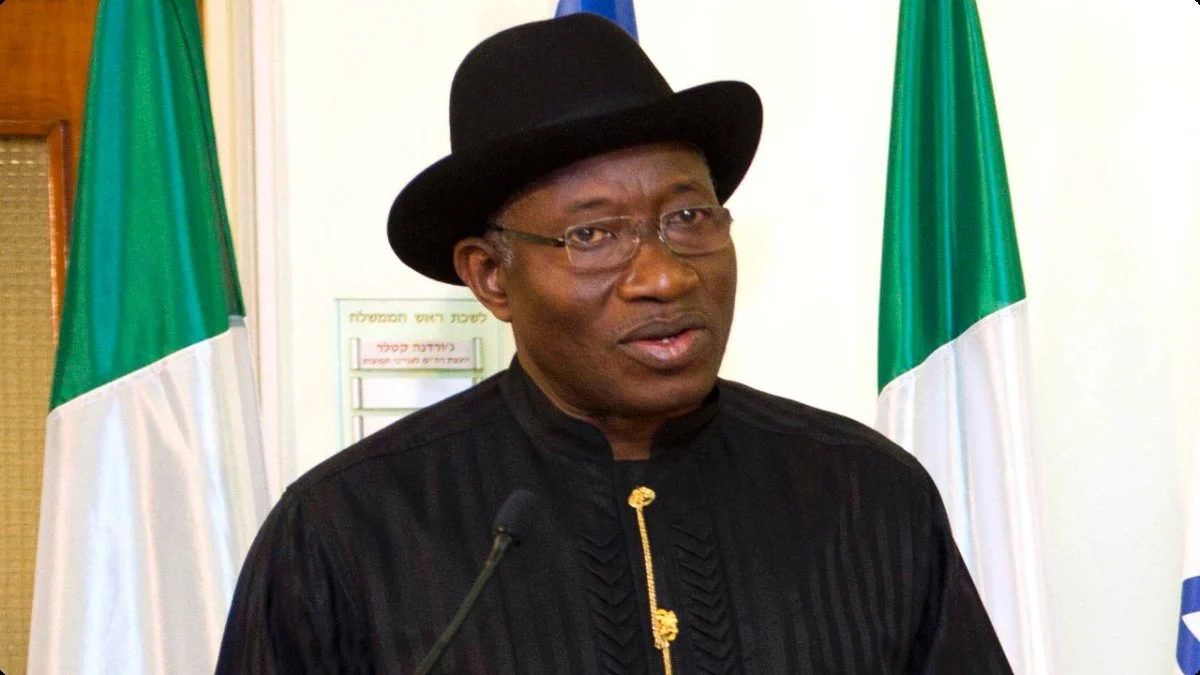
Former President Goodluck Jonathan has urged serving governors, senior government officials and powerful political actors to stay away from states holding off-cycle elections, warning that their growing presence could undermine Nigeria’s fragile democracy.
Jonathan made the call in a statement personally signed by him on Tuesday in Abuja, following the recent governorship election in Osun State.
He also called on the National Peace Committee to convene an urgent national stakeholders’ meeting to establish clear boundaries for political conduct during elections.
The former President said the practice of governors, party leaders and other influential politicians converging on election states with large entourages and heavy security details had become an emerging threat that required national attention.
He cited the recent governorship elections in Osun, Ekiti and Ondo states as examples of what he described as an “unusual” political practice that should not be allowed to become normal in Nigeria’s democracy.
Jonathan, however, commended the Independent National Electoral Commission, security agencies, political parties and the people of Osun State for the peaceful conduct of the latest governorship election.
He said while political parties had the legitimate right to campaign, mobilise supporters and deploy their structures, such activities should not create an atmosphere of intimidation, apprehension or undue pressure.
“The growing practice whereby serving governors, senior political office holders, party leaders and other influential government functionaries, accompanied by large numbers of aides and heavy security details from outside a state, converge on states where elections are being conducted raises an issue that demands national attention,” he said.
Jonathan recalled that similar situations occurred during the 2013 Anambra and 2014 Ekiti governorship elections when he was President.
According to him, he ordered party leaders and senior government officials to leave the affected states after receiving reports of their presence and activities during the elections.
He warned that if the current trend continued unchecked, elections could increasingly become contests for political survival rather than peaceful competitions for the mandate of voters.
Jonathan also raised concerns about the precedent such conduct could create, asking what would happen if governors from rival political parties began mobilising against one another in every state conducting a competitive election.
He said such a development could trigger a cycle of political mobilisation, counter-mobilisation and the deployment of governmental influence, thereby increasing tensions around elections.
The former President stressed that the issue should not be treated as a partisan dispute arising from the Osun election, but as a national question concerning the future of Nigeria’s electoral democracy.
“Those of us who have occupied public offices must recognise that our conduct carries a greater responsibility. The power and influence attached to public office should be used to strengthen democratic institutions, not to create apprehension among political opponents or citizens,” he said.
Jonathan therefore urged the National Peace Committee to bring political parties and other key stakeholders together for a national conversation on acceptable conduct during elections.
He listed INEC, registered political parties, security agencies, the National Assembly, the Nigerian Bar Association, the Nigeria Governors’ Forum, civil society organisations and the media among those who should participate in the proposed engagement.
He said the National Peace Committee was well positioned to lead the process because of the confidence and moral authority it had built in bringing political leaders together during periods of national tension.
Jonathan said an early national dialogue would help establish clear expectations for political conduct before practices currently regarded as unusual became accepted as normal.
He added that Nigeria must ensure that political competition did not become a struggle in which electoral victory was pursued “at all costs.”
The former President’s intervention comes against the backdrop of heightened political mobilisation surrounding off-cycle governorship elections, which have increasingly attracted political heavyweights from across the country.
He maintained that Nigeria’s democratic institutions could only gain public confidence when elections were conducted without intimidation, excessive political influence or the overwhelming presence of powerful actors.
 '
' '
'Do you want to share a story with us? Do you want to advertise with us? Do you need publicity for a product, service, or event? Contact us on WhatsApp +2348183319097 Email: platformtimes@gmail.com
We are committed to impactful investigative journalism for human interest and social justice. Your donation will help us tell more stories. Kindly donate any amount HERE
