

...Fourth Outbreak Since April Sparks Panic Across Ijebu-Ode, Ijebu-Igbo, Ago-Iwoy
…Students Faint, Schools Shut As Parents Demand Urgent Government Action
…Govt Blames Geological Fault Lines, Promises Lasting Solution
Daud Olatunji
Fear gripped parts of Ogun State on Wednesday as a fresh outbreak of suspected methane gas emissions reportedly left more than 100 secondary school students requiring medical attention across Ijebu-Ode, Ijebu-Igbo and Ago-Iwoye.
The latest incident, which affected several schools, forced some institutions to suspend academic activities as students and staff reportedly experienced breathing difficulties, fainting spells and other symptoms after inhaling an offensive gaseous substance.
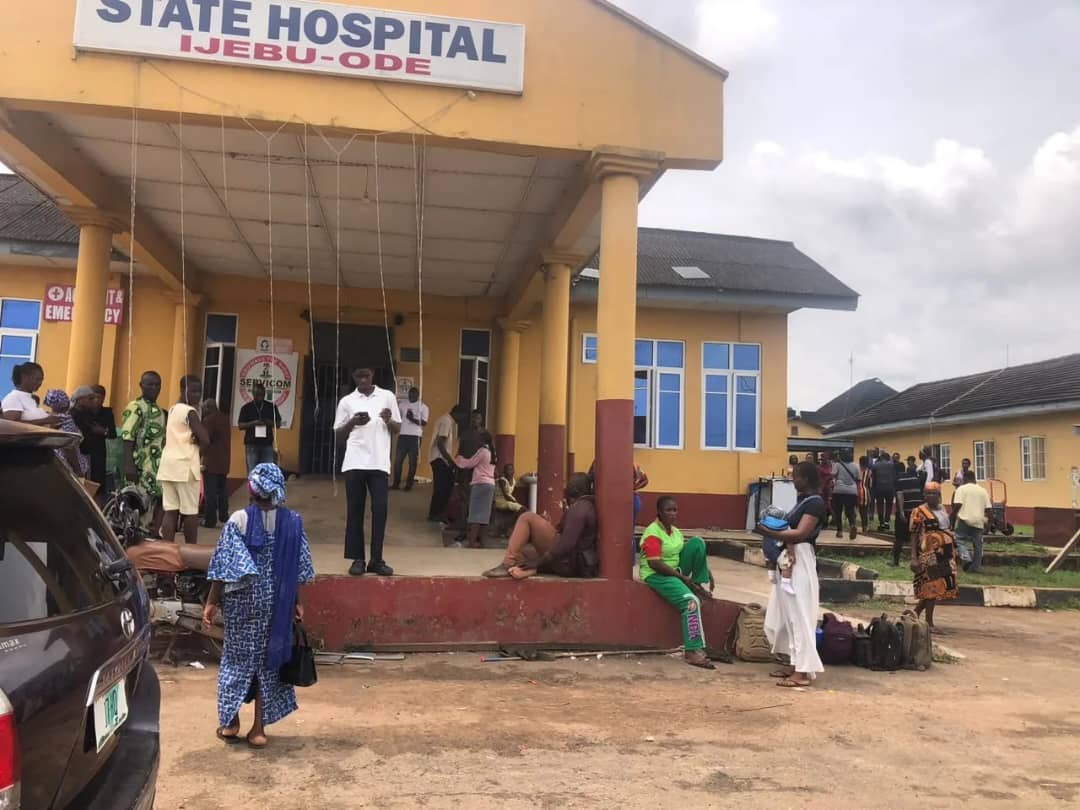
PLATFORM TIMES gathered that affected students were taken to the State Hospital, Ijebu-Ode, the General Hospital, Ijebu-Igbo, and other healthcare facilities for treatment.
Among the worst-hit institutions were Ijebu-Igbo Girls Grammar School, Anglican Girls Grammar School in Ijebu-Ode and Itamerin Comprehensive High School in Ago-Iwoye.
The incident triggered panic among parents and guardians, some of whom reportedly rushed to schools to evacuate their children amid fears over the potential health consequences of the recurring emissions.
A viral video circulating on social media reportedly showed some students fainting and being rushed to hospitals following exposure to the substance.
A teacher at one of the affected schools, who described the incident as frightening, said the emission began at about 10am on Wednesday.
“The students and staff started inhaling the gas and began having difficulty breathing. Some fainted and were subsequently rushed to hospitals,” the teacher said.
The teacher added that the situation became unbearable in some schools in Ago-Iwoye, forcing their managements to send students home around 11am.
According to the teacher, the recurring nature of the incident has heightened anxiety among school staff, students and residents, particularly because of the uncertainty surrounding when and where the emissions might occur again.
“We are all anxious about our health and that of our students. I think it is taking the government too long to get to the root of this mysterious and potentially deadly gas leak. The government has to act quickly to address the situation before it is too late,” the teacher said.
The teacher also expressed concern that the emissions had reportedly been recurring since April, with hundreds of students affected in previous incidents.
However, the precise number of students who received medical attention during Wednesday’s incident could not be independently established by PLATFORM TIMES as of the time of filing this report.
…Fourth Outbreak Since April
The latest incident has renewed concerns over the safety of students in the affected communities, with reports indicating that Wednesday’s occurrence was the fourth major episode since April 2026.
Previous incidents have reportedly sent dozens of students to hospitals, raising questions about the effectiveness of measures taken to prevent further exposure.
In April, about 40 students were reportedly affected by the emissions.
Another occurrence in May reportedly resulted in more than 120 students being hospitalised, while at least 69 students were said to have required medical attention following a fresh incident on June 1.
Schools affected during previous outbreaks included Our Lady of Apostles Secondary School, Epe Garage, Ijebu-Ode; Anglican Girls Grammar School, Ijebu-Ode; and St. Anthony Grammar School, Ijebu-Imusin.
The repeated incidents have turned what initially appeared to be isolated cases into a persistent environmental and public health concern for communities in Ijebu land.
Despite previous government investigations and the installation of gas analysers in some affected schools, the recurrence has raised fresh questions about whether sufficient measures have been implemented to protect students and school workers.
Government: Emissions Linked To Geological Fault Lines
The Ogun State Government has attributed previous occurrences to underground geological processes, particularly emissions escaping through fractures associated with geological fault lines.
The General Manager of the Ogun State Environmental Protection Agency, Kehinde Bello, who visited affected locations in Ijebu-Ode and Ijebu-Igbo on Wednesday, said preliminary investigations indicated that the latest incident was linked to underground gas emissions previously recorded in the area since April.
Bello said the phenomenon was believed to be a natural occurrence associated with geological and tectonic fault lines rather than sabotage or a gas pipeline leak.
He disclosed that more than 30 students had received medical attention at the General Hospital in Ijebu-Ode, with some requiring oxygen to stabilise their conditions.
“We left the General Hospital earlier, where over 30 students were attended to for common symptoms, according to the doctor, and the findings from the affected students include shortness of breath, stomach disorder, drowsiness, among others,” Bello said.
“While some of them needed oxygen to be stabilised, others just needed minor medical attention. As at the time we were leaving the hospital, most of the students had been discharged, but a few are still under monitoring.”
Bello added that the offensive odour was not confined to school premises, noting that residents in surrounding communities had also been affected.
He said the chairman of Ijebu North Local Government had confirmed perceiving the odour at the council secretariat.
The OGEPA chief assured residents that the state government was working towards finding a lasting solution, urging them to remain calm as further assessments continued.
He also advised residents exposed to the odour to cover their noses and mouths with wet handkerchiefs rather than wear nose masks.
However, the advice did not immediately address concerns over what residents should do if the emissions intensify or recur while students are in classrooms.
Abiodun Orders Investigation Into Earlier Outbreaks
The recurring incidents have previously drawn the attention of Governor Dapo Abiodun, who said in June that the state government was working with relevant agencies and experts to establish the source of the emissions.
According to the governor, the Ministries of Environment and Health were collaborating with the Nigerian Midstream and Downstream Petroleum Regulatory Authority and the Department of Geology at Olabisi Onabanjo University to investigate the phenomenon.
Abiodun said gas analysers had been installed in affected schools following earlier occurrences to determine the nature and concentration of the substances.
He disclosed that the emissions had been confirmed to contain methane, while preliminary findings suggested that geological factors, including possible fault lines, could be responsible.
“Following the first occurrence, we installed gas analysers across the schools to determine the nature and concentration of the gas, which has now been confirmed to be methane,” the governor said in June.
He added that the government was awaiting the final report from professionals handling the investigation.
When contacted over Wednesday’s incident, the Commissioner for Environment, Ola Oresanya, reportedly said the government was on top of the situation.
In June, Oresanya also attributed previous incidents to methane and sulphide gases escaping through underground fractures along established fault lines.
He identified the affected areas as lying along the Ifewara-Zungeru Trans-Atlantic fault line, which stretches from Mojoda through Ijebu-Ode towards parts of Osun and Niger states.
Fresh Questions Over School Safety
Wednesday’s recurrence has intensified calls for the government to move beyond preliminary explanations and ensure that students and residents are adequately protected from further exposure.
Although the government has linked the phenomenon to natural geological processes, the repeated hospitalisations and disruption of school activities underscore the need for a comprehensive response.
Such measures could include sustained environmental monitoring, transparent publication of investigation findings, emergency response plans for schools and clear guidance on when affected institutions should suspend activities or evacuate students.
The government also faces the challenge of reassuring parents who have watched successive incidents disrupt their children’s education while raising fears about their health.
For affected communities, the immediate concern remains whether the emissions will recur and whether schools have adequate arrangements to respond if they do.
Until the underlying cause is conclusively established and effective preventive measures are implemented, the recurring gas scare is likely to remain a source of anxiety for students, parents, teachers and residents across the affected parts of Ogun State.
 '
 '
Do you want to share a story with us? Do you want to advertise with us? Do you need publicity for a product, service, or event? Contact us on WhatsApp +2348183319097 Email: platformtimes@gmail.com
We are committed to impactful investigative journalism for human interest and social justice. Your donation will help us tell more stories. Kindly donate any amount HERE
 '
