

…Citizens Acknowledge Gains In Education, Technology, Democracy, Demand Better Leadership, Opportunities
Zainab Abioye & Mujeeb Akundoyin
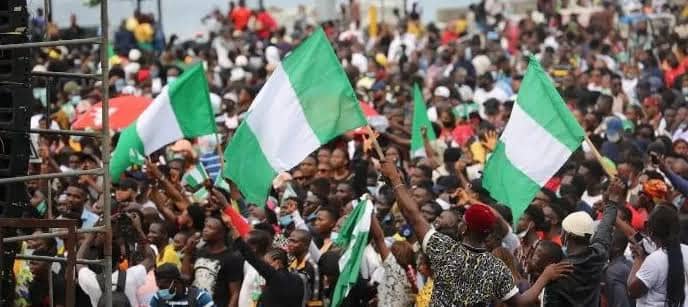
As Nigeria prepares to mark its 66th Independence Anniversary, citizens have expressed mixed feelings about the country’s journey since 1960, acknowledging progress in some sectors while lamenting worsening economic hardship, insecurity, unemployment, poor healthcare and weak public services.
Nigeria became independent from Britain on October 1, 1960, ushering in decades of political transitions, economic expansion and setbacks, democratic experiments and social development.
But 66 years after independence, the experiences of citizens interviewed by PLATFORM TIMES suggest that the promise of independence remains a work in progress, with many Nigerians struggling to reconcile pockets of progress with the realities of daily life.
For Adebisi, a journalist, the country’s development remains “not yet balanced,” with corruption and the conduct of some public officials among the issues requiring urgent attention.
He criticised what he described as the attitude of some people in authority who behave as though they are superior to the citizens they were elected or appointed to serve.
Despite his reservations, Adebisi said he supported virtually all the policies of the present administration, arguing that some of the measures could yield benefits for younger Nigerians in the long run.
According to him, while older Nigerians may be bearing a heavier burden from some of the current policies, younger people could eventually benefit from reforms.
“I think it’s paving ways for us coming behind,” he said.
However, he identified the rising cost of petrol as one of the most significant challenges confronting Nigerians, noting that fuel price increases have a ripple effect across the economy.
“With petrol affected, every other sector is affected,” he said, recalling that he previously bought a litre of petrol for between N140 and N145, compared with the significantly higher prices Nigerians now face.
Despite the economic difficulties, Adebisi said he remained hopeful about Nigeria, particularly because of the resilience and aspirations of younger Nigerians.
“For young people like me, I see hope in Nigeria; for older ones, I don’t think they do. They’ve seen a lot already,” he said.
‘Nigeria has potential’
An engineer, Abdurahman, also described Nigeria as a country with enormous potential but said persistent economic and social problems were preventing citizens from fully experiencing that potential.
He acknowledged developments in education, technology, infrastructure and democratic governance but said the gains had been undermined by poverty, insecurity, unemployment and weak public services.
According to him, the high cost of living, unemployment, insecurity, unreliable electricity, poor infrastructure and limited access to quality public services remain major concerns.
He said many young Nigerians still believed in the country’s future but added that economic hardship and uncertainty had weakened public confidence.
“Many people remain optimistic about Nigeria’s potential while demanding better leadership and opportunities,” he said.
Insecurity threatens Education gains
The mixed assessment of Nigeria’s development is also reflected in the education sector, where citizens pointed to initiatives aimed at expanding access but raised concerns over insecurity and the difficulty of translating education into employment.
Nafeesah, a student, said Nigeria had made progress in education, citing free education initiatives in some states and Federal Government efforts to expand access to tertiary education.
She cited Oyo State, where she said she benefited from free education at the primary and secondary school levels.
She also mentioned the Nigerian Education Loan Fund as an initiative aimed at improving access to tertiary education.
However, she said insecurity remained one of the biggest threats to the education sector, arguing that physical access to schools means little if students and teachers cannot feel safe.
“It’s a different thing to have access to education, it’s a different thing entirely to feel safe in the school environment,” she said.
For AbdulAzeez, another student, the problem extends beyond gaining admission or obtaining academic qualifications.
He described the sector as making “progression” but raised concern over the lack of assured opportunities after graduation, particularly employment.
His concern reflects a broader challenge facing Nigerian youths: whether years spent acquiring educational qualifications can translate into sustainable jobs and economic independence.
Healthcare Remains Unaffordable
The healthcare sector also featured prominently in the citizens’ assessment of Nigeria at 66.
Nafeesah described the state of healthcare as unsatisfactory, citing inadequate public health facilities, shortages of equipment and personnel and increasing dependence on private hospitals.
She said the high cost of treatment in private hospitals had made healthcare particularly difficult for low-income families.
AbdulAzeez shared a similar view, describing the healthcare system as “unfortunately not so good” and stressing that medical treatment remains unaffordable for many ordinary Nigerians.
Their concerns highlight a recurring challenge in Nigeria: access to healthcare does not always guarantee access to affordable and quality treatment.
Hope amid hardship
As Nigeria approaches another Independence Day, the views of the citizens reflect a nation caught between measurable progress and persistent challenges.
Developments in education, technology, infrastructure and democratic governance have provided grounds for optimism, but rising living costs, insecurity, unemployment, poor healthcare and inadequate public services continue to shape citizens’ everyday experiences.
For many young Nigerians, however, frustration has not completely extinguished hope.
The resilience of the younger generation, coupled with expectations of better opportunities and accountable leadership, continues to sustain belief in Nigeria’s potential.
 '
' '
'Do you want to share a story with us? Do you want to advertise with us? Do you need publicity for a product, service, or event? Contact us on WhatsApp +2348183319097 Email: platformtimes@gmail.com
We are committed to impactful investigative journalism for human interest and social justice. Your donation will help us tell more stories. Kindly donate any amount HERE
 '
'