

….Health workers raise alarm over two-month stock-out, say preventive drugs unavailable nationwide
Daud Olatunji
Nigeria is facing a worsening tuberculosis drug crisis, with health workers warning that patients across the country are at risk of death and further transmission of the disease following widespread shortages of essential medicines.
The shortage, which has reportedly persisted for nearly two months, has left healthcare facilities struggling to provide treatment, while supplies currently available in some centres may not last beyond December.
Particularly alarming is the reported nationwide unavailability of Tuberculosis Preventive Therapy (TPT), a medication administered to people exposed to TB and vulnerable groups, including people living with HIV, to prevent the development of active tuberculosis.
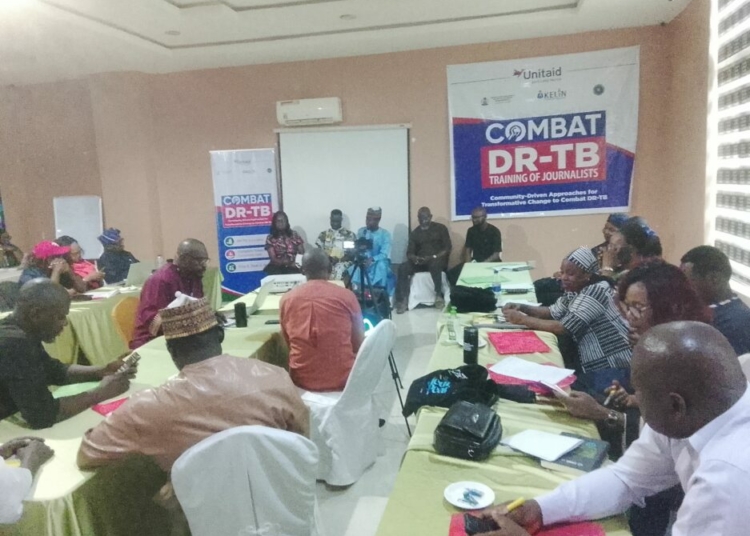
Health workers raised the alarm during a training for journalists on drug-resistant tuberculosis (DR-TB) reporting organised by the COMBAT DR-TB Project of the Civil Society for the Eradication of Tuberculosis in Nigeria, also known as TB Network, in Abuja.
One of the health officials at the training disclosed that the shortage had become so severe that facilities were struggling to manage the growing number of patients presenting for treatment.
“We have a stock-out of TB medications nationwide. The drugs we have now cannot take us up to December,” the official said.
Another health worker described the situation surrounding preventive medication as particularly disturbing.
“There is no single TPT anywhere in this country. All the TPT we have are expired,” the official disclosed.
The situation has reportedly forced some healthcare workers to ration available drugs among patients, despite concerns that such practices could undermine treatment outcomes.
One of the participants explained that facilities were distributing limited treatment kits among a larger number of diagnosed patients in anticipation of fresh supplies.
“You have 20 drugs, but you diagnosed 50. They are dividing the drugs for these 20 to these 50, thinking more drugs will come. I have 50 patients but 20 kits. Why watch these 50 die?” the official queried.
The development has raised concerns about the consequences of delayed treatment for a highly infectious disease that spreads through the air and can affect people in homes, workplaces, schools, markets and other crowded environments.
Findings from the Network of People Living with HIV/AIDS in Nigeria (NEPWHAN) have also pointed to the scale of the shortage.
At a press briefing in Abuja on June 12, 2026, the organisation called on the Federal Government to declare the TB drug shortage a national public health emergency.
Its first-quarter community-led monitoring report, which assessed 2,135 health facilities across the 36 states and the Federal Capital Territory, found that 64.2 per cent of the facilities experienced stock-outs of at least one essential tuberculosis commodity.
The report further revealed that 58.2 per cent of the monitored facilities recorded shortages of GeneXpert cartridges and sputum collection materials, which are essential for diagnosing tuberculosis.
NEPWHAN warned that some patients diagnosed with the disease were being asked to return weeks later because treatment drugs were unavailable.
The organisation said such delays could leave infected individuals spreading the disease within their communities while waiting for medication.
The shortage has also raised questions about the Federal Government’s commitment to its earlier promise to release $54m for the procurement of tuberculosis and HIV commodities.
At the 2026 Pre-World TB Day briefing organised by Stop TB Partnership Nigeria in Abuja on March 17, the Director of Public Health at the Federal Ministry of Health and Social Welfare, Dr Charles Nzelu, announced that $54m had been approved to procure essential drugs and prevent supply disruptions.
Nzelu said the intervention was part of the government’s strategy to strengthen the health sector and ensure uninterrupted availability of essential medicines.
He explained that the decision followed projections that some tuberculosis medicines previously supported by the Global Fund could run out, necessitating alternative procurement arrangements.
According to him, the ministry had initiated processes to procure the commodities using part of the $200m sector-wide allocation announced the previous year.
He also announced the planned nationwide rollout of the Pluslife Mini Dock, a near-point-of-care diagnostic platform, alongside the deployment of more than 1,000 molecular diagnostic equipment units.
However, seven months after the announcement, health workers and TB advocates say the promised intervention has yet to translate into adequate drug supplies at treatment centres.
The Coordinating Minister of Health and Social Welfare, Prof. Muhammad Ali Pate, had also pledged $52.3m as counterpart funding for the 2023–2026 Global Fund Round 7 cycle, part of which was earmarked for tuberculosis commodities.
TB Network had earlier warned that failure to accelerate procurement could expose the country to significant drug shortages by June 2026.
The organisation said the situation had now deteriorated into the crisis previously projected.
National Coordinator of TB Network, Olayide Akanni, said Nigeria’s growing dependence on donor funding for tuberculosis interventions had exposed serious weaknesses in the government’s domestic financing of the programme.
Akanni explained that international donors, which historically supported the procurement of TB medicines, were increasingly demanding that the Nigerian government take greater responsibility for funding the programme.
He disclosed that under the next three-year funding cycle, the Global Fund would provide support for only one year, leaving the government responsible for financing the remaining two years.
According to him, Nigeria currently faces a funding gap of about 70 per cent in its tuberculosis response, with only six per cent of the national TB budget coming from domestic sources.
Although the government reportedly earmarked approximately ₦73.4bn for tuberculosis drugs in the 2026 budget, advocates said the funds had yet to be released.
Akanni lamented that government announcements and international commitments had not translated into medicines reaching patients.
“Nigerian government needs to wake up! It’s not enough to make promises outside the country. One year down the line, funds have not come, drugs have not been procured,” he said.
He added that Stop TB Partnership had listed Nigeria among 10 countries facing the most urgent tuberculosis funding needs, with an estimated $85.4m required for 2025/2026.
In a letter dated October 10, 2026, with reference number TBN/ADM/101/001/0943, TB Network formally appealed to the Minister of Health for immediate procurement of essential tuberculosis medicines and the introduction of accelerated mechanisms to prevent future disruptions.
The shortage is particularly troubling given Nigeria’s position among countries with the highest tuberculosis burden globally.
According to the World Health Organisation’s 2025 Global Tuberculosis Report, Nigeria records an estimated 510,000 new TB cases annually, including approximately 61,000 children.
The country ranks first in Africa and sixth globally among countries with high tuberculosis and TB/HIV burdens.
Nigeria also recorded approximately 8,200 cases of multidrug-resistant or rifampicin-resistant tuberculosis in 2024, but only 3,090 patients were commenced on treatment.
The Head of Training at the National Institute of Public Health and Infectious Diseases, Dr Eunice Jiya Chitumu, warned that the consequences of the drug shortage could be devastating.
She identified prolonged illness, increased mortality, the emergence of drug-resistant tuberculosis and accelerated community transmission as major dangers associated with treatment interruptions.
“First, it prolongs illness and increases the risk of death. Nigeria recorded 71,000 TB-related deaths in 2023, according to WHO,” she said.
“Second, it forces treatment interruption, which breeds drug-resistant TB that is harder, longer and more expensive to treat. Third, it fuels community spread,” Chitumu added.
Meanwhile, Nigeria’s tuberculosis case notifications have increased significantly, rising from 106,533 in 2018 to 405,324 in 2024 and 458,534 in 2025.
Although the increase reflects improvements in case detection and reporting, health advocates warn that identifying more patients without ensuring access to medicines could undermine the country’s efforts to control the disease.
Tuberculosis diagnosis and treatment are officially provided free of charge at government-approved Directly Observed Treatment, Short-course (DOTS) centres.
However, health workers say the policy means little to patients who arrive at treatment centres only to discover that the medicines needed to save their lives are unavailable.
One of the participants at the Abuja training warned that unless the government urgently addresses the funding and procurement challenges, the country could face a worsening public health emergency.
“The important thing is we don’t have drugs, and we risk an epidemic if funding is not released,” the participant said.
 '
 '
Do you want to share a story with us? Do you want to advertise with us? Do you need publicity for a product, service, or event? Contact us on WhatsApp +2348183319097 Email: platformtimes@gmail.com
We are committed to impactful investigative journalism for human interest and social justice. Your donation will help us tell more stories. Kindly donate any amount HERE
 '
