

Grace Adeleke
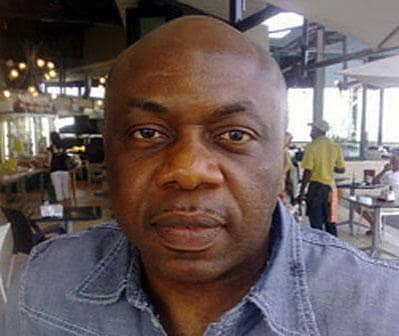
Jailed Nigerian former militant, Henry Emomotimi Okah, has accused officials of the South Gauteng High Court in South Africa of frustrating his attempt to correct what he described as a factual error in the record of his trial.
Okah, who is serving a 24-year prison sentence in South Africa over his conviction for terrorism-related offences linked to the October 1, 2010 Independence Day bombings in Abuja, alleged that the disputed record was subsequently relied upon by the Constitutional Court in dismissing his final appeal.
The former militant, who is currently detained at the Zonderwater Maximum Correctional Centre in Cullinan, Pretoria, has been representing himself, saying he lacks the financial resources to engage a lawyer.
Court documents show that Okah has, for about two weeks, attempted to file an urgent constitutional application under Section 173 of the South African Constitution, which empowers courts to regulate their own processes and correct their records.
He is not asking the court to overturn his conviction or sentence.
Instead, his application seeks an order correcting what he considers an inconsistency between an oral ruling delivered by the trial court in November 2012 and its subsequent written judgment.
At the centre of the dispute is the absence of defence witnesses from Nigeria during his trial.
In an ex tempore ruling delivered on November 21, 2012, the trial court reportedly found that there was a lack of cooperation from the Nigerian government and that the obstacles to obtaining the witnesses were almost insurmountable.
However, in its written judgment delivered on March 20, 2013, the same court reportedly stated that the absence of the defence witnesses resulted from Okah’s decision not to call them.
Okah argues that the contradiction became crucial when the Constitutional Court considered his final appeal in 2018.
According to his court papers, the Constitutional Court relied on the trial court’s finding that Okah had received some assistance from Nigerian authorities as the decisive reason for rejecting his argument.
Okah is therefore asking the South Gauteng High Court to correct its record to accurately reflect what transpired during the proceedings.
His Heads of Argument stated that he was not seeking to appeal, review or rescind any judgment of the High Court or Constitutional Court.
“The limited relief sought is the correction of the record of this Court to reflect accurately what was placed before it,” the document stated.
Filing Dispute
Okah alleged that his attempts to have the application accepted by the court have repeatedly been frustrated.
According to documents contained in the application, the CaseLines electronic filing system rejected the application on July 30, 2026, with a notice directing that inmate applications be submitted physically at Office 002.
Okah’s representative subsequently took the application to the Gauteng Division of the High Court in Johannesburg on August 6.
He alleged that the registrar, identified in the documents as Malvin Moila, refused to accept or stamp the application and did not provide written reasons for the refusal.
Okah said he was instead verbally informed that the matter had become a civil case and that the Minister of Justice and the Registrar of the Constitutional Court would have to be joined as respondents.
He disputed the interpretation, maintaining that his application arose from the criminal case, SS94/11, and was not a civil action.
In a letter dated August 7, Okah reportedly appealed to the Criminal Registrar, Mr Mahlaule, to accept the application.
He followed up on August 10 by writing to the Deputy Judge President, R. Sutherland, seeking urgent intervention to compel the acceptance and enrolment of the application.
Court documents indicate that the matter had been listed for hearing on the urgent roll on August 11.
Brother alleges assault
Separately, Okah’s brother alleged that the former militant was assaulted and moved to solitary confinement on Monday.
The brother claimed the action was intended to prevent Okah from pursuing his court application and to leave him unable to challenge an alleged attempt by the South African Revenue Service to seize his property.
“The registrar tried to deceive him into filing a wrong application, and when he refused, this happened,” the brother alleged.
He further claimed that prison authorities were relying on an allegation that a phone had been found on Okah a month earlier to justify the action.
The allegations of assault, solitary confinement and the alleged property seizure could not independently be verified from the material available.
Okah was convicted by the South Gauteng High Court on January 21, 2013, in case SS94/11 on terrorism, conspiracy and related charges arising from the October 2010 bombings in Abuja.
His appeals to the Supreme Court of Appeal and the Constitutional Court were subsequently dismissed.
The Constitutional Court delivered its final judgment in the matter on February 23, 2018, in case CCT 193/17.
In a separate development, Okah had also written from the isolation unit of Zonderwater prison on July 5, 2026, asking the Deputy Judge President to authenticate an unsigned November 2012 ruling.
He said he needed the certified ruling for proceedings he claimed to have instituted before the ECOWAS Court of Justice.
The latest application, however, is focused on correcting the South African trial record rather than reopening his conviction or sentence.
 '
' '
'Do you want to share a story with us? Do you want to advertise with us? Do you need publicity for a product, service, or event? Contact us on WhatsApp +2348183319097 Email: platformtimes@gmail.com
We are committed to impactful investigative journalism for human interest and social justice. Your donation will help us tell more stories. Kindly donate any amount HERE
