

….Over 60 laws Streamlined Into One
Revenue Hits N28.7tn Amid Reforms
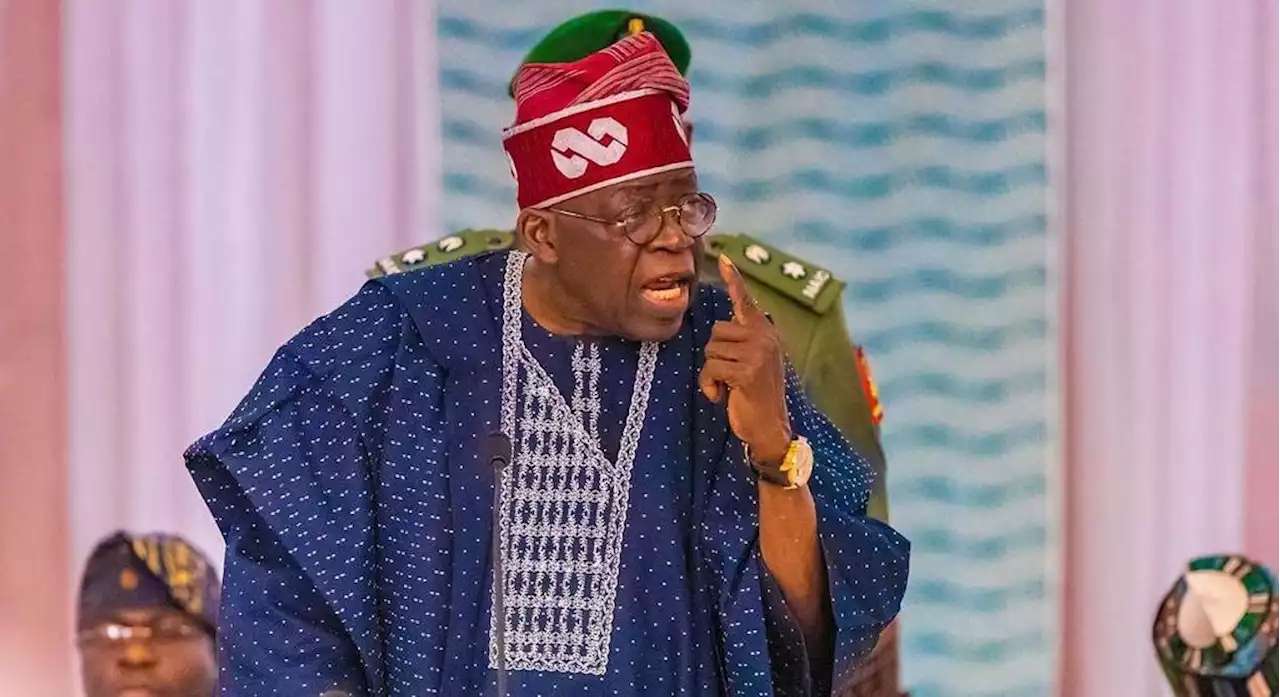
President Bola Ahmed Tinubu on Tuesday said archaic tax laws inherited from the colonial era contributed to widespread poverty in Nigeria, stressing that his administration’s sweeping fiscal reforms are aimed at driving prosperity, equity and investor confidence.
Tinubu stated this during the commissioning of the 16-storey headquarters of the Nigeria Revenue Service in Abuja, where top government officials, including Senate President Godswill Akpabio and Speaker of the House of Representatives Tajudeen Abbas, were in attendance.
The President said the old tax regime was characterised by fragmentation, multiplicity and inconsistencies, which weakened revenue generation and undermined economic growth.
According to him, the newly introduced tax system, which became fully operational in January, is designed to be people-oriented and investment-friendly, while positioning Nigeria for global competitiveness.
He said, “No serious nation can achieve lasting prosperity on a weak and fragmented revenue system. No government can demand trust from its citizens when taxation is opaque, inefficient or unjust.”
Tinubu noted that his administration’s reforms were targeted at simplifying the tax structure, eliminating distortions and ensuring fairness and transparency.
He added that early indicators showed improved fiscal stability, stronger foreign reserves, a more efficient trade system and rising investor confidence.
The President also commended the Executive Chairman of the Nigeria Revenue Service, Zacch Adedeji, for overseeing the completion of the headquarters building within 30 months, more than two decades after its foundation was laid.
Describing the edifice as symbolic, Tinubu said it represented a renewed commitment to professionalism, efficiency and accountability in public institutions.
He charged the agency to go beyond revenue collection by building public trust and ensuring fairness in its operations.
Also speaking, Akpabio urged Nigerians to be patient with ongoing economic reforms, noting that the removal of fuel queues across the country signalled progress in the petroleum sector.
“There was a time Nigerians were ready to pay as much as N10,000 per litre without availability, but today, there are no fuel queues,” he said.
On his part, Abbas said the reforms had addressed longstanding structural challenges in Nigeria’s revenue framework, including overlapping mandates and incoherent policies that previously resulted in poor returns.
In his remarks, Adedeji described the reforms as one of the most significant in Nigeria’s history, noting that over 60 fragmented tax laws had been streamlined into a unified and coherent framework.
He disclosed that revenue collections rose from N6.8tn five years ago to N28.7tn in 2025, attributing the increase to improved compliance, transparency and governance.
Adedeji added that funds available to the federation grew from N711bn in May 2023 to N3.6tn by September 2025, representing a 400 per cent increase.
He further highlighted the launch of the National Single Window initiative, aimed at modernising trade processes, reducing inefficiencies and boosting government revenue.
The NRS boss maintained that the reforms were not about increasing tax burden but about building a more efficient system that broadens coverage and strengthens fiscal governance.
 '
' '
'Do you want to share a story with us? Do you want to advertise with us? Do you need publicity for a product, service, or event? Contact us on WhatsApp +2348183319097 Email: platformtimes@gmail.com
We are committed to impactful investigative journalism for human interest and social justice. Your donation will help us tell more stories. Kindly donate any amount HERE
