

By Dave Agboola
Nations are often remembered through the leaders they elect. Just as often, however, they are shaped by the entrepreneurs they produce.
The story of modern Nigeria cannot be told without its great business builders. Aliko Dangote redefined industrial production. Tony Elumelu transformed banking and democratized entrepreneurship. Femi Otedola expanded his influence in energy while elevating the culture of strategic philanthropy.
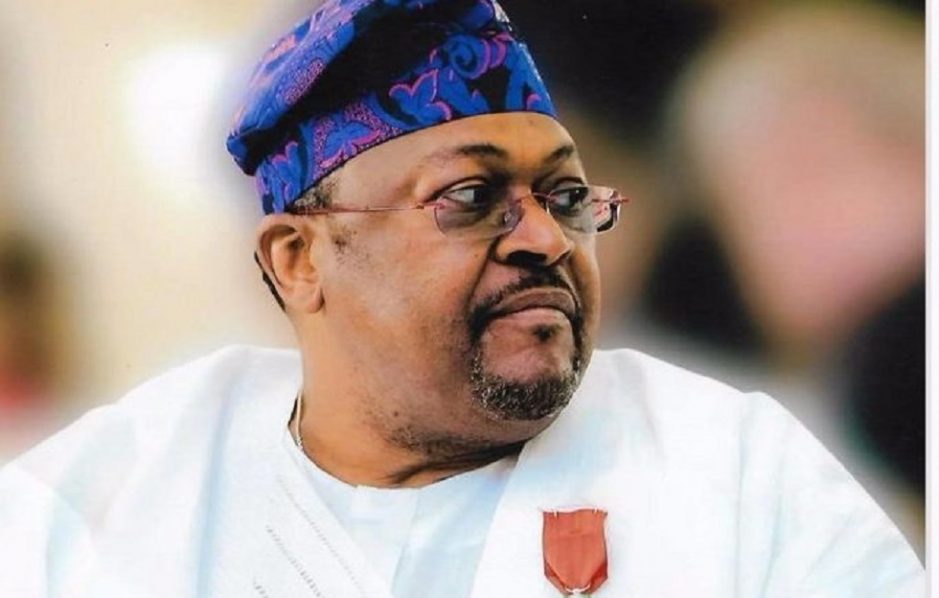
Among them stands Mike Adenuga Jr., one of the most consequential yet least understood figures in Nigeria’s economic history.
Known as both the “Gentle Giant” and “The Bull,” Adenuga has spent more than four decades reshaping Nigeria’s economy while avoiding the spotlight. He grants few interviews, makes even fewer public appearances, and appears to have concluded long ago that publicity is overrated. Instead, he lets his businesses do the talking.
They have been remarkably chatty.
From telecommunications and oil to banking, real estate, aviation, sports, and entertainment, Adenuga has built enterprises that touch virtually every strategic sector of the Nigerian economy. His companies have done more than create wealth. They have challenged monopolies, expanded access, created jobs, and strengthened indigenous participation in industries long dominated by foreign interests.
Nowhere is that more evident than in telecommunications.
When Globacom entered Nigeria’s telecom market in 2003, mobile communication remained too expensive for many Nigerians. A few operators dominated the industry and consumers had limited options. Adenuga recognized something simple but powerful: telecommunications could not drive national development if ordinary people could not afford to use it.
His introduction of per-second billing changed the game.
Competitors were forced to rethink their pricing models, and millions of Nigerians suddenly gained more affordable access to communication. It was not merely a clever marketing strategy. It reshaped an industry.
But Adenuga was never interested in winning today’s battle and ignoring tomorrow’s war. Through investments such as the Glo-1 submarine cable and an extensive fiber-optic network, Globacom helped lay the infrastructure for Nigeria’s digital future.
More than two decades later, Globacom remains Nigeria’s only wholly indigenous telecommunications giant. In a capital-intensive industry dominated by global players, that achievement is both commercial and symbolic. It demonstrates that Nigerian-owned companies can compete at the highest level and win.
His success in oil and gas tells a similar story.
Through Congas and Conoil Producing, Adenuga built one of Nigeria’s leading indigenous energy companies in a sector historically controlled by multinational corporations. At a time when many assumed only foreign firms possessed the expertise and financial strength to operate at scale, Conoil proved otherwise.
Long before “local content” became a policy buzzword, Adenuga was already practicing it. His success challenged the notion that world-class energy companies had to come from somewhere else.
His influence extended into banking as well, although that chapter receives far less attention.
Through his early investment in Equitorial Trust Bank, Adenuga supported efforts to expand access to modern financial services during a critical period in Nigeria’s economic development. His philosophy was straightforward: people cannot build wealth, grow businesses, or participate fully in the economy if they remain outside the financial system.
That vision outlived the institution itself. Equitorial Trust Bank later became part of Sterling Bank during the banking consolidation era, helping create a stronger institution with wider reach and greater capacity. While often overshadowed by his achievements in telecoms and energy, Adenuga’s contribution helped advance financial inclusion and strengthen Nigeria’s banking landscape.
Yet his ambitions were never confined to balance sheets and boardrooms.
Across Nigeria’s cities, his real estate investments have helped shape the physical spaces where economic activity occurs. Telecom networks may connect people and banks may finance growth, but somebody still has to build the offices, commercial hubs, and developments where that growth happens.
Real estate rarely enjoys the glamour of a telecom revolution or an oil discovery. Innovation gets magazine covers. Buildings get security guards and parking attendants. Yet cities do not grow on headlines. They grow because investors are willing to commit to concrete, steel, and long-term confidence.
Adenuga understood that.
The same logic explains his presence in aviation.
Private jets are easy targets in a country where inequality remains a concern. But managing an enterprise that spans telecom networks, oil assets, banking interests, commercial properties, and multiple markets is not exactly a work-from-home arrangement.
For Adenuga, aviation is less about luxury than efficiency.
It is the difference between waiting and moving, between delay and execution. His aircraft serve as business tools that keep executives, engineers, and decision-makers connected across complex operations.
More importantly, every flight supports an ecosystem of pilots, engineers, maintenance specialists, airport operators, and service providers. In classic Adenuga fashion, what appears at first glance to be a personal asset often turns out to be part of a larger economic machine.
The man buys a plane; an entire value chain clocks in for work.
Perhaps the most revealing aspect of Adenuga’s career is that he rarely speaks about national development while consistently investing in it.
His support for football, entertainment, and culture has helped project Nigerian talent beyond the country’s borders. Through sponsorships and strategic investments, he has backed not only businesses but also something economists often struggle to quantify: national confidence.
Successful nations export more than products. They export culture, talent, stories, and identity.
Long before “soft power” became fashionable policy language, Adenuga appeared to understand its value. His investments in sports and entertainment have amplified Nigeria’s voice globally while creating opportunities for artists, athletes, and creative professionals at home.
Perhaps that perspective comes from his own journey.
Before becoming one of Africa’s richest businessmen, Adenuga worked as a taxi driver in New York while pursuing his education. His rise from modest beginnings to the summit of African business has become part of Nigerian entrepreneurial folklore.
Yet the significance of his story is not simply the wealth he accumulated.
Many people make money. Far fewer redefine industries.
What distinguishes Adenuga is his repeated willingness to enter sectors where Nigerians were told they could not compete and then proceed to prove the skeptics spectacularly wrong.
Most business leaders are remembered for the companies they build. A much smaller group are remembered for changing entire industries.
Mike Adenuga belongs firmly in the latter category.
Today, his influence is woven into the fabric of modern Nigerian life. Millions communicate through networks he built. Businesses operate within systems he helped shape. Entire industries became more competitive because he challenged assumptions others accepted as permanent.
Mike Adenuga is more than a billionaire. He is a nation-builder, a disruptor, a patron of culture, and a powerful symbol of indigenous enterprise. His legacy extends far beyond market valuations and rich lists.
The ultimate measure of his contribution may be the idea he has spent decades proving: that Nigerian-owned companies can innovate, compete, and succeed on the global stage.
In a country that has often wrestled with doubts about its own potential, that is no small achievement.
Indeed, it may be his greatest legacy of all.
*Dave Agboola is Chief Press Secretary to the Speaker, Lagos State House of Assembly.*
 '
' '
'Do you want to share a story with us? Do you want to advertise with us? Do you need publicity for a product, service, or event? Contact us on WhatsApp +2348183319097 Email: platformtimes@gmail.com
We are committed to impactful investigative journalism for human interest and social justice. Your donation will help us tell more stories. Kindly donate any amount HERE
 '
'