

Daud Olatunji
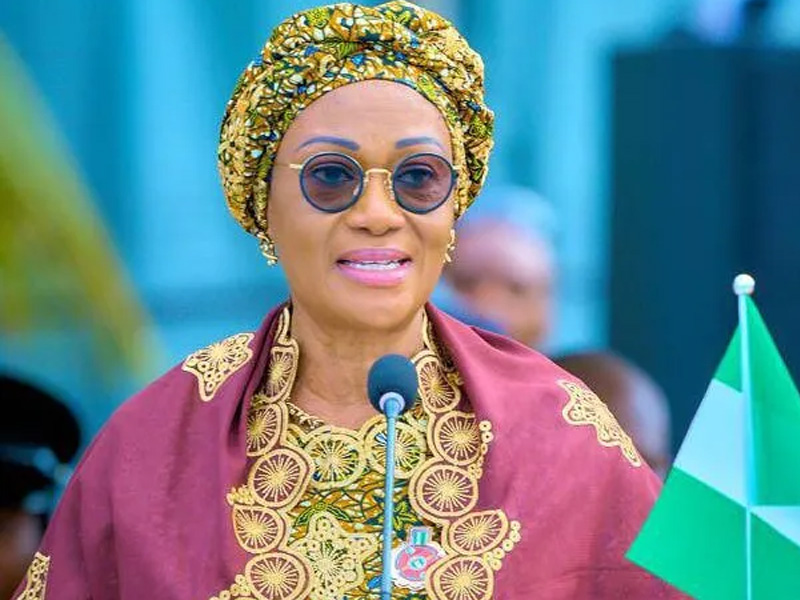
Fresh questions have emerged over the source of funds powering the multi-billion-naira humanitarian interventions of Nigeria’s First Lady, Senator Oluremi Tinubu, after an analysis of publicly available records showed that she announced or facilitated more than N15 billion in donations through the Renewed Hope Initiative (RHI) between July 2023 and July 2026.
The donations, which cut across humanitarian relief, women empowerment, healthcare, agriculture, education, disability support and disaster response, have triggered renewed calls from civil society organisations, policy analysts and governance advocates for greater transparency and accountability regarding the funding structure of the initiative.
The concerns stem from the fact that the Office of the First Lady is not recognised by the 1999 Constitution and does not receive a direct appropriation under the national budget.
An analysis of official statements and public records indicates that the First Lady publicly announced donations worth about N2.18 billion in 2023, N3.75 billion in 2024, N6.15 billion in 2025 and over N2.12 billion between January and July 2026, bringing the total to more than N15 billion within three years.
The figure excludes food donations distributed across the country as well as over N25.5 billion reportedly raised through the Oluremi @65 Education Fund for the completion of the National Library project in Abuja.
Among the latest interventions was a N2 billion donation to support the Akwete weaving industry in Abia State, while another N50 million was distributed to 1,000 women in Osun State to boost small businesses.
Other interventions under the initiative include grants to flood victims, widows of fallen military personnel, elderly citizens, persons with disabilities, women farmers, petty traders and victims of violent attacks in Plateau, Benue and Niger states.
In 2026, the RHI also launched the National Community Food Bank Programme and secured over N66 billion in pledges from the Federal Government, corporate organisations, philanthropic foundations and other donors.
The pledges included N20 billion from the Aliko Dangote Foundation in kind over five years, N10 billion from the Nigerian National Petroleum Company Limited, N17 billion through the Federal Government’s Social Action Fund, N500 million from the Emeka Offor Foundation and 500,000 dollars from anonymous donors.
The First Lady also pledged N500 million personally toward the programme.
Responding to recurring questions over the source of the funds, the First Lady has repeatedly maintained that none of the donations came from government coffers.
Speaking during previous donation ceremonies, Mrs Tinubu said the funds were raised from private individuals, corporate organisations and well-meaning Nigerians through the governing board of the Renewed Hope Initiative.
“I am not spending government money. I am spending money donated to me by different people,” she said during one of the interventions.
She added that the initiative had earlier launched a National Nutrition Intervention Fund with N3 billion raised through donations, noting that businessman Tony Elumelu later contributed an additional N1 billion.
Her Special Adviser on Media, Busola Kukoyi, had also explained that the initiative is funded by reputable Nigerians and members of its governing board who believe in its humanitarian objectives.
However, governance experts insist that the explanation does not sufficiently address public accountability concerns.
Executive Director of the Civil Society Legislative Advocacy Centre, Auwal Musa Rafsanjani, also called for public disclosure of the funding sources and accountability framework guiding the donations.
He said while the interventions support vulnerable Nigerians, they should be governed by constitutional principles of transparency, accountability and responsible public financial management.
Similarly, Nigeria Country Director of Accountability Lab, Friday Odeh, said the scale of the donations raises legitimate questions because the Office of the First Lady is not a statutory institution with clearly defined oversight mechanisms.
He argued that public confidence would be strengthened if the funding arrangements, disbursement processes and independent auditing mechanisms were made public.
Also weighing in, Chancellor of the International Society for Social Justice and Human Rights, Comrade Omenazu Jackson, maintained that asking questions about the source of the funds should not be interpreted as an allegation of wrongdoing.
He said Nigerians have a constitutional right under the Freedom of Information Act and the Fiscal Responsibility Act to demand clarity whenever substantial financial commitments are announced by offices associated with public institutions.
Jackson noted that if the interventions are funded entirely through private donations and legitimate charitable contributions, publicly disclosing the funding framework would enhance credibility and eliminate speculation.
Despite the growing scrutiny, the Renewed Hope Initiative has continued to expand its nationwide interventions, positioning itself as one of the largest humanitarian platforms associated with any Nigerian First Lady in recent history.
Its programmes have reached thousands of beneficiaries across all 36 states and the Federal Capital Territory, covering healthcare, education, agriculture, nutrition, disaster relief and economic empowerment.
Source : Daily Trust
 '
' '
'Do you want to share a story with us? Do you want to advertise with us? Do you need publicity for a product, service, or event? Contact us on WhatsApp +2348183319097 Email: platformtimes@gmail.com
We are committed to impactful investigative journalism for human interest and social justice. Your donation will help us tell more stories. Kindly donate any amount HERE
