

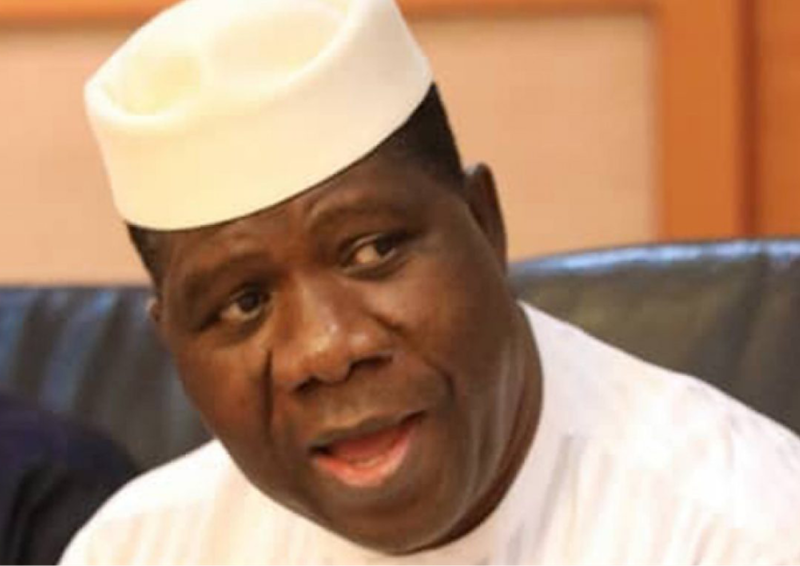
The Senate Leader and Vice Chairman of the Senate Committee on the Review of the 1999 Constitution, Senator Opeyemi Bamidele, has said the proposed state police system can only succeed if its funding is entrenched in the Constitution as a first-line charge, warning that failure to guarantee its financial independence could expose it to manipulation by governors, politicians, business interests and criminal groups.
Bamidele, who represents Ekiti Central Senatorial District, stated this on Wednesday in Abuja while addressing concerns over the ongoing constitutional amendment seeking to establish state police across the country.
In a statement issued by his Directorate of Media and Public Affairs, the lawmaker acknowledged widespread fears that state police could be abused for political purposes but argued that the threats extended far beyond politics.
According to him, the National Assembly is working on a constitutional framework that will guarantee the operational, institutional and financial independence of state police services to prevent undue influence from any individual or interest group.
He said the proposed legislation would ensure that funding for state police becomes a constitutional first-line charge, similar to the financial arrangement currently enjoyed by the judiciary.
Bamidele explained that such a funding model would prevent governors from using financial control to influence or weaken state police commands.
“The Commissioner of Police and the State Police Service Commission must have a guaranteed source of funds provided for in the 1999 Constitution in such a way that the police chief will not be subject to the whims and caprices of a state governor,” he said.
He noted that under the existing constitutional arrangement, the judiciary enjoys financial autonomy, allowing the Chief Justice of Nigeria to access constitutionally guaranteed funds without requiring presidential approval for routine expenditures.
Applying the same principle to state policing, Bamidele said each state should be constitutionally mandated to allocate a specific percentage of its budget to police operations.
“If a state police service is not responding well to the directives of a governor, he may decide not to fund it. We must prevent such a situation,” he said.
“We are, therefore, under the obligation to make provision for a certain percentage of a state’s budget specifically for the operations of state police services. Access to those funds must also be clearly spelt out.”
The Senate Leader said lawmakers had taken seriously concerns expressed by stakeholders, many of whom cited the experiences of Nigeria’s First Republic when regional governments controlled police forces under the 1960 and 1963 Constitutions.
He assured Nigerians that the National Assembly was designing safeguards to ensure discipline, accountability and transparency in the operations of state police.
According to him, the ongoing constitutional review seeks to move policing from the Exclusive Legislative List to the Concurrent Legislative List, thereby empowering states to establish and manage their own police services.
Bamidele stressed that without adequate and independent funding, the proposed security architecture would be ineffective.
“A poorly funded police service cannot effectively discharge its constitutional responsibilities,” he said.
Warning against narrow perceptions of the dangers associated with state police, Bamidele said the institution could become vulnerable not only to political interference but also to influence from wealthy individuals, organised criminal networks and powerful interest groups.
“Those who expressed concerns only talked about political abuse. But it is more than political abuse.
“The business class can also abuse it. Some other organisations, even criminals or cabals, can abuse state police service because it is a question of ‘he who pays the piper dictates the tune.’
“If a state police service is not well funded by any means, it may become a highway to nowhere. That is one thing all of us must prevent,” he added.
He reiterated the commitment of the National Assembly to delivering a state police framework that would strengthen internal security while remaining accountable to the Nigerian people.
 '
' '
'Do you want to share a story with us? Do you want to advertise with us? Do you need publicity for a product, service, or event? Contact us on WhatsApp +2348183319097 Email: platformtimes@gmail.com
We are committed to impactful investigative journalism for human interest and social justice. Your donation will help us tell more stories. Kindly donate any amount HERE
