

Zainab Abioye
A professor at Obafemi Awolowo University, Ile-Ife, Osun State, Tunji Ogunyemi, has warned that restoring petrol subsidy could trigger a severe revenue crisis, potentially leaving more than 15 northern states unable to sustain their operations within three months.
Ogunyemi said a return to the subsidy regime would reduce revenue accruing to the Federation Account, from which most state governments depend heavily on monthly allocations to finance salaries, pensions and other recurrent obligations.
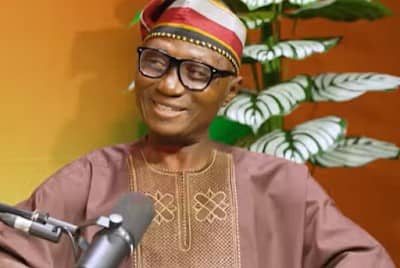
The university don made the assertion while speaking on Open Forum 360, a podcast hosted by Dare Adekanmbi.
His warning followed a proposal by former Vice-President and African Democratic Congress presidential candidate, Atiku Abubakar, to restore petrol subsidy if elected President.
Ogunyemi described the proposal as economically dangerous, arguing that reducing government revenue through subsidy payments could worsen the already difficult financial position of states and the Federal Government.
“I think it is calamitous, to say the least, if we reverse the subsidy regime in Nigeria in favour of returning the subsidies,” he said.
According to him, a reduction in the funds available for distribution through the Federation Account would have immediate consequences for states that lack sufficient internally generated revenue to meet their obligations.
“The Federation Account is the jugular of more than 30 states in the federation. Only about four states in Nigeria can survive without the Federation Account,” Ogunyemi said.
He identified Lagos, Delta and Rivers among states he said could cope better without relying heavily on federal allocations, while citing Taraba as an example of a state heavily dependent on allocations from the Federation Account.
He added, “So if you now say reduce the accrual from account, I tell you more than about 15 states in the north will collapse. They will collapse within three months.”
Ogunyemi further warned that states could return to the period when governments struggled to pay workers’ salaries and pensioners.
“The second is that states will return to a regime of incapacity to pay salaries, let alone pensions,” he said.
The professor argued that the consequences would not be limited to state governments, saying a decline in national revenue would equally constrain the Federal Government’s ability to finance its obligations.
He noted that a substantial proportion of federal expenditure goes into recurrent spending, leaving less room for capital projects when government revenue declines.
“Between 60 and 70 per cent of the Federal Government’s total expenditure goes to recurrent expenditure,” he said.
“That is consumption expenditure. You reduce the revenue in that respect, you will see a situation in which government will not be able to support its minimum expenditure, let alone go for capital expenditure.”
The professor also warned that a significant reduction in government revenue could undermine Nigeria’s ability to meet its debt obligations.
“The fourth and the final one is that Nigeria will not be able to meet its debt obligations,” he said.
According to him, failure to meet such obligations could damage the country’s financial standing and creditworthiness, with broader implications for access to financing.
‘Atiku playing to the gallery’
Ogunyemi also criticised Atiku’s proposal to restore subsidy, suggesting that the former Vice-President’s position could be politically motivated.
He argued that, given Atiku’s experience in government, he should provide Nigerians with clearer details on the financial implications of returning to the subsidy regime.
“I think it is playing to the gallery, with due respect to him. He should be a little less opaque about his policy,” Ogunyemi said.
“You don’t want to get political support through votes or more votes by wanting to cut the jugular of your country.”
The professor’s comments have added another dimension to the growing debate over petrol subsidy, which remains one of the most contentious economic and political issues ahead of the 2027 general elections.
While proponents of subsidy restoration have argued that it could ease the burden of high fuel prices on Nigerians, critics have maintained that the policy could place significant pressure on public finances and limit funds available for other government priorities.
.
 '
' '
'Do you want to share a story with us? Do you want to advertise with us? Do you need publicity for a product, service, or event? Contact us on WhatsApp +2348183319097 Email: platformtimes@gmail.com
We are committed to impactful investigative journalism for human interest and social justice. Your donation will help us tell more stories. Kindly donate any amount HERE
 '
'