

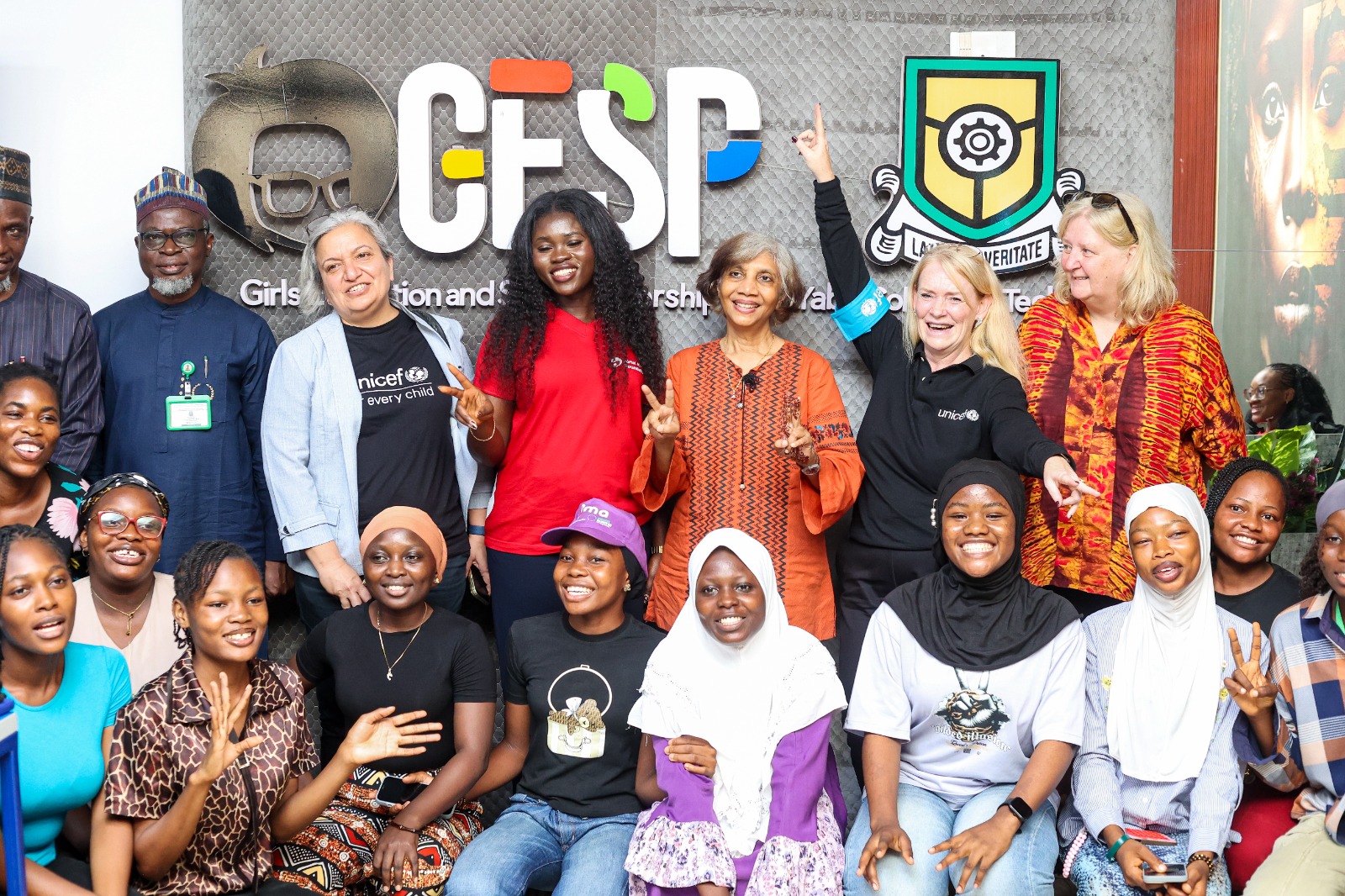
….UNICEF, Airtel Africa Commit $57m To Digital Education Across 13 African Countries
Daud Olatunji
The United Nations Children’s Fund has called for an urgent review of Nigeria’s education curriculum, warning that outdated teaching methods and learning content are leaving graduates without the practical and digital skills required by employers.
The organisation said the disconnect between what students learn in schools and the competencies demanded by the labour market was undermining young people’s employment prospects and ability to achieve economic independence.
UNICEF Deputy Representative in Nigeria, Dr Rownak Khan, made the call during a joint visit by UNICEF and Airtel Africa to schools in Agege, Lagos, and Yaba College of Technology to showcase initiatives aimed at expanding digital learning and youth skills development.
Khan said Nigeria’s education system needed to move beyond conventional classroom instruction and embrace a curriculum that reflects the changing demands of the workplace and the digital economy.
She lamented that many young people discovered the inadequacies of their education only after graduation, when they were confronted with employers’ expectations and the realities of the labour market.
“In many countries, and to some extent broadly in Nigeria, the education is there, but the curricula that have been followed are quite decades old. When these children come out into the real world, they are in shock because there is a mismatch between what they have learnt and what the market is asking for,” she said.
The UNICEF official stressed that addressing the problem required stronger collaboration among governments, educational institutions, development organisations and private sector players to ensure that classroom learning translated into practical competencies.
She added that digital skills programmes must be linked to employment opportunities and sustainable livelihoods rather than stopping at the provision of training.
Khan described the UNICEF-Airtel partnership as a flagship initiative designed to equip young people with the skills and opportunities needed to navigate the changing world of work.
She also commended Yaba College of Technology for its commitment to skills development, particularly its efforts to integrate digital competencies into its programmes and create pathways towards economic independence for young people.
The initiative, according to her, demonstrated the importance of combining institutional expertise and private sector resources to improve learning outcomes and prepare young people for the future.
Speaking on the partnership, the Chief Field Office and Head of the Private Sector Partnerships Unit, Celine Lafoucriere, said Airtel had supported UNICEF’s digital education initiatives for five years by providing connectivity to young people seeking to acquire relevant skills.
She explained that the collaboration had expanded access to digital learning platforms, including the Learning Passport and the Youth Agency Marketplace, which provide opportunities for young people to acquire knowledge, develop competencies and improve their employability.
Lafoucriere said Airtel initially focused on supporting access to the Learning Passport following its entry into a pan-African partnership with UNICEF.
However, discussions between both organisations subsequently led to the expansion of the arrangement to accommodate additional digital platforms serving children, adolescents and young adults.
She said Airtel agreed to whitelist the platforms, enabling beneficiaries to access the learning resources without the usual data constraints.
Lafoucriere described the telecommunications company’s contribution as critical to expanding access to digital education in Nigeria, noting that partnerships remained essential to reaching young people who might otherwise be excluded from learning opportunities.
“The only reason why we are able to drive digital learning in Nigeria today is thanks to Airtel,” she said.
She added that sustained collaboration among development agencies, technology companies and educational institutions was necessary to ensure that children and young people were not left behind as digital learning continued to expand.
Also speaking, the Head of Programmes at Airtel Africa Foundation, Esi Asare Prah, reaffirmed the foundation’s commitment to bridging the digital divide and expanding access to skills development across the continent.
Prah disclosed that the foundation’s partnership with UNICEF was backed by a $57m investment across 13 African countries to expand access to digital education and skills training, particularly for young people with limited opportunities to participate in the digital economy.
She said the initiative was particularly important in Nigeria, where many graduates possess academic certificates but lack the practical competencies required by employers.
“Many young people graduated from schools with certificates but lacked the competencies required by employers, creating a mismatch between educational qualifications and labour market demands,” she said.
Prah explained that education was the foundation’s foremost priority, followed by digital inclusion, adding that the partnership with UNICEF aligned with its commitment to reducing educational inequalities and expanding opportunities for young people.
“Our mission is to bridge that digital divide across the continent because our mother company drives the digital education agenda, and there are still a lot of young people who are left behind in that regard,” she said.
She described the engagement with Yaba College of Technology as an opportunity to develop a practical skills-development model that could be adapted and replicated in other African countries where Airtel operates.
According to her, the Nigerian initiative stood out because of its emphasis on practical training and technical expertise to ensure that participants acquired competencies relevant to employers’ needs.
Prah stressed that digital inclusion should go beyond providing internet access or enrolling young people in training programmes, insisting that the ultimate objective must be to equip beneficiaries with skills that could translate into jobs and sustainable income.
She added that the approach would help young people turn digital learning opportunities into tangible economic benefits.
Meanwhile, the Rector of Yaba College of Technology, Dr Ibraheem Abdul, represented by his deputy, Dr Ismaila Badmus, said the institution remained committed to building strategic partnerships and strengthening relations between academic institutions and industry.
He expressed appreciation to UNICEF and Airtel for supporting initiatives aimed at improving digital education and preparing young people for the demands of the modern workplace.
 '
 '
Do you want to share a story with us? Do you want to advertise with us? Do you need publicity for a product, service, or event? Contact us on WhatsApp +2348183319097 Email: platformtimes@gmail.com
We are committed to impactful investigative journalism for human interest and social justice. Your donation will help us tell more stories. Kindly donate any amount HERE
 '
