

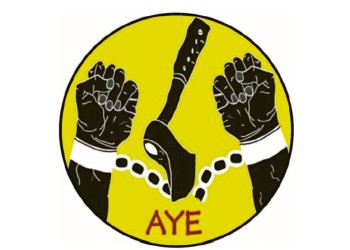
No fewer than 10 Nigerians are among 34 suspected members of the notorious Black Axe confraternity arrested in a sweeping joint operation by Spanish and German security agencies, with the backing of Europol.
The arrests followed a coordinated crackdown led by the Spanish National Police in collaboration with the Bavarian State Criminal Police Office, targeting what investigators described as the “core leadership” of the transnational criminal network operating across Europe.
Police said 28 suspects were arrested in Seville, three in Madrid, two in Málaga and one in Barcelona during simultaneous raids carried out across multiple locations.
Authorities disclosed that the suspects are believed to be linked to large-scale fraud schemes that caused financial losses estimated at over €5.9 million.
During the operation, investigators froze €119,352 in several bank accounts connected to the suspects and seized an additional €66,403 in cash from homes and other locations linked to the network.
Europol, in a statement on January 9, described Black Axe—also known as the Neo-Black Movement of Africa—as one of the most organised and sophisticated criminal organisations operating across borders.
The group, European law enforcement agencies said, is involved in cyber-enabled fraud, drug trafficking, human trafficking, prostitution, kidnapping and armed robbery.
According to Europol, the organisation is structured into about 60 zones within Nigeria and 35 zones abroad, with an estimated 200 members in each zone.
In total, the group is believed to have roughly 30,000 registered members, in addition to numerous affiliates, including money mules and facilitators.
Investigators further revealed that the network routinely recruits “money mules” from economically vulnerable communities with high unemployment rates—many of them Spanish nationals—to move illicit funds and shield top members from direct exposure to law enforcement.
The group is also said to enforce strict internal codes, violent and ritualistic initiation processes, and spiritual practices, which have helped it maintain tight control over its members.
As part of the operation, German and Spanish authorities engaged in extensive intelligence sharing and joint operational planning.
Two German officers were deployed to Spain during the action day, while Spanish investigators received analytical and operational support from their German counterparts.
Europol said it played a central role in the crackdown by providing intelligence analysis, hosting a data sprint in Madrid and offering real-time support during the arrests.
The agency added that its involvement helped connect crimes that often appeared to be isolated, low-level offences across different countries.
Authorities said investigations are ongoing, warning that more arrests and asset seizures may follow as European law enforcement agencies intensify efforts to dismantle the group’s international networks.
 '
' '
'Do you want to share a story with us? Do you want to advertise with us? Do you need publicity for a product, service, or event? Contact us on WhatsApp +2348183319097 Email: platformtimes@gmail.com
We are committed to impactful investigative journalism for human interest and social justice. Your donation will help us tell more stories. Kindly donate any amount HERE
