

…23bn Spent On Palm Oil Despite Local Production Strength
…. Sunshades, Shoes, Umbrellas Gulp ₦20.4bn In Three Months
Daud Olatunji
Nigeria’s dependence on foreign goods has taken a new turn, with fresh trade data revealing that the country spent about ₦43 billion on umbrellas, sunshades, footwear, headgear, whips and crude palm oil imports within the first quarter of 2026, despite its vast agro-industrial potential and repeated policy drives for local substitution.
Figures obtained from the Foreign Trade Statistics for Q1 2026 released by the National Bureau of Statistics showed that the import bill cuts across consumer goods and agricultural commodities, underscoring what analysts describe as a widening structural imbalance in Africa’s largest economy.
Of the total, about ₦20.4 billion was spent on the importation of umbrellas, sunshades, footwear, headgear, whips and related consumer items between January and March 2026. The category reflects continued strong demand for finished consumer goods, even where local production capacity exists.
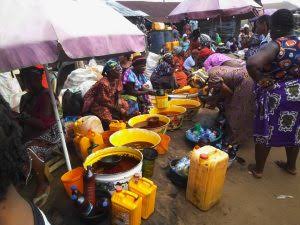
In a parallel development, Nigeria also spent about ₦23 billion importing crude palm oil within the same three-month period, despite being one of Africa’s leading producers of palm fruits and having favourable agro-climatic conditions for large-scale cultivation.
The combined figures highlight a troubling contradiction: a nation with significant agricultural endowment and industrial potential still relies heavily on imports for both basic consumer goods and agro-processed commodities.
Beyond these categories, the data further showed that Nigeria’s import bill for plastics, rubber and related products stood at about ₦827 billion in the same quarter, reinforcing concerns over the country’s growing appetite for imported industrial inputs and finished goods.
Analysts say the persistent surge in imports continues to exert pressure on foreign exchange reserves and complicates efforts by the Central Bank of Nigeria to stabilise the naira, which has faced sustained volatility in recent years.
The palm oil import bill is particularly striking given Nigeria’s historical position as one of the world’s largest producers of palm oil before being overtaken by countries such as Indonesia and Malaysia, which now dominate global supply through highly mechanised plantation systems and efficient processing capacity.
Industry experts attribute Nigeria’s reliance on imported palm oil to low domestic yields, ageing plantations, inadequate mechanisation, and insufficient investment in large-scale agro-processing infrastructure. Demand, however, continues to rise across food manufacturing, cosmetics, pharmaceuticals, and industrial applications such as soap and detergent production.
The situation is not isolated to 2026. Trade data shows a consistent upward trajectory in import dependency. In 2025 alone, Nigeria reportedly spent about ₦3.9 trillion on plastics, rubber and related products, while imports of consumer goods such as footwear, umbrellas and headgear stood at about ₦89.9 billion for the year.
A quarterly breakdown for 2025 further revealed that ₦22.1 billion was spent in the final quarter on similar consumer import categories, suggesting sustained demand regardless of seasonal fluctuations or policy interventions.
Over a three-year period, plastics and rubber imports rose sharply from about ₦1.2 trillion in 2023 to ₦3.4 trillion in 2024 and ₦3.9 trillion in 2025, pointing to what economists describe as a deepening import dependency trap.
Agricultural trade data also reflects similar pressures. In addition to palm oil, Nigeria reportedly spent about ₦9.55 billion importing cocoa powder in Q1 2026, despite being a major cocoa-producing country, further exposing gaps in domestic agro-processing capacity and value-chain development.
Economists warn that unless Nigeria significantly expands local manufacturing and agro-industrial investment, the country may continue to record high import bills even in sectors where it holds clear comparative advantage.
They further argue that the trend reflects weak linkages between raw material production and industrial processing, poor infrastructure, and limited access to long-term financing for manufacturers.
Despite successive government assurances to boost local production through policies such as import substitution frameworks and agricultural transformation programmes, the latest figures suggest that foreign goods continue to dominate key segments of the Nigerian market.
With foreign exchange pressures persisting and import bills rising across both consumer and agricultural sectors, analysts say Nigeria faces renewed urgency to translate its production potential into measurable industrial output—or risk further strain on its economy.
 '
' '
'Do you want to share a story with us? Do you want to advertise with us? Do you need publicity for a product, service, or event? Contact us on WhatsApp +2348183319097 Email: platformtimes@gmail.com
We are committed to impactful investigative journalism for human interest and social justice. Your donation will help us tell more stories. Kindly donate any amount HERE
