

Suliat Lawal
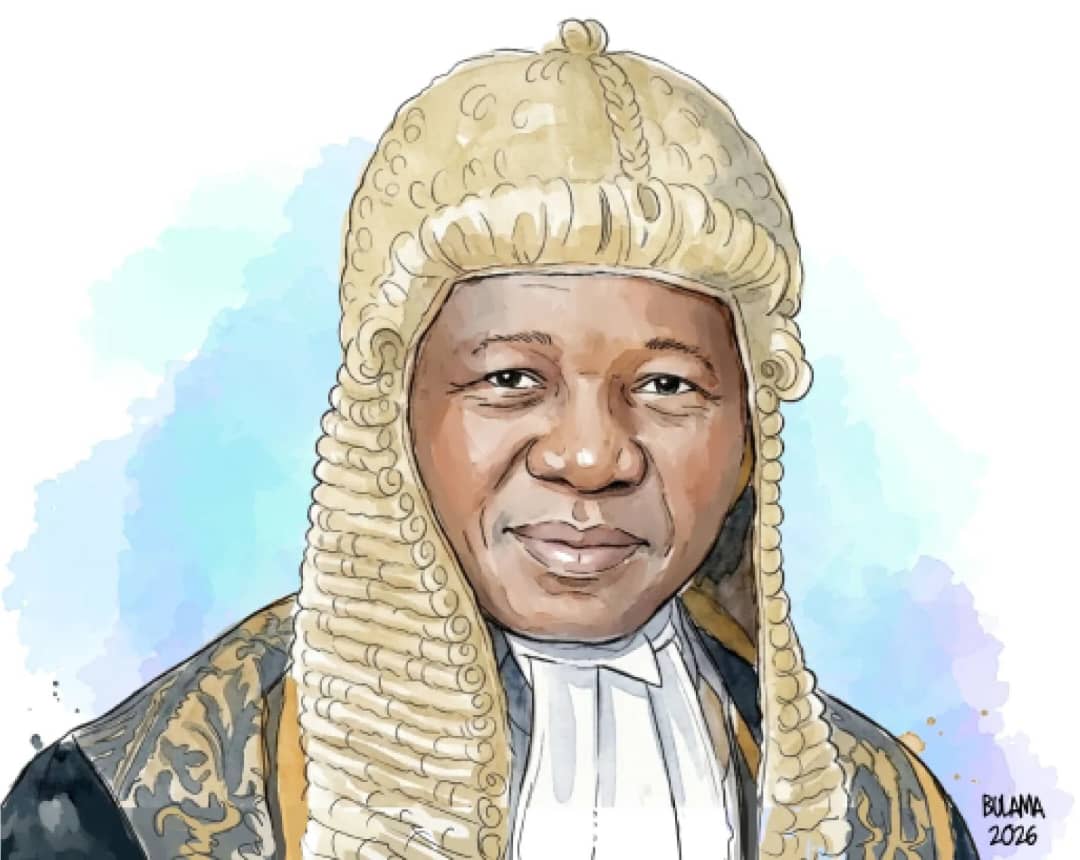
Justice Faruk Hassan Bunza of the Kebbi State High Court has recounted his nine-day ordeal in the hands of bandits, revealing how his abductors monitored news reports about his kidnapping and operated from a hilltop camp where they lived with their families.
The judge, who regained his freedom on August 3 after being abducted from his residence in Bunza, Kebbi State, said he was held about 49 kilometres from his hometown at Dutsen Bandan, a hill behind the permanent orientation camp of the National Youth Service Corps in Dakin Gari, Suru Local Government Area.
Justice Bunza said his abductors were armed and organised but relatively few in number, insisting that the bandits could be defeated if security agencies were given the opportunity and resources to confront them decisively.
The judge spoke about his ordeal while receiving a PLATFORM TIMES-style interview at his residence in Unguwar Chaki quarters, Bunza, where he was recovering from the experience.
He was abducted around midnight on July 26 when five armed men stormed his residence, fired shots into the air and ordered him to follow them.
According to him, he did not resist as the abductors moved him through paths around his residence before taking him towards a hill outside the town.
Justice Bunza said he trekked about 25 kilometres barefoot before reaching Tungar Bandan junction, where the abductors had parked their motorcycles to avoid detection.
He said they subsequently travelled another 24 kilometres by motorcycle before arriving at their main camp at Dutsen Bandan.
“I was kept about 49km away from my family for nine days. I suspect my abductors had been monitoring me for a long time. They have informants who gave them details about me,” he said.
The judge said his captors demonstrated an awareness of developments outside the camp, including reports concerning his abduction.
According to him, the bandits showed him photographs of himself and Nura Umar Abdullahi, chairman of Bugudu Local Government Area of Zamfara State, saying they had been ordered to abduct both men.
“They also showed me a newspaper report about my abduction. They said they heard President Bola Ahmed Tinubu had directed that N200m be paid for my release, but someone stopped it.
“That shows they monitor news and social media,” he said.
Justice Bunza said there were fewer than 20 bandits at the camp, while some of the other occupants were their wives and children.
He said the younger members of the criminal network appeared to serve as informants and errand boys, while older members functioned as armed operatives.
“Most of these informants are young children of bandits. From my observation, roles among the bandits depend on age. While the younger ones serve as informants and errand boys, the adults are the foot soldiers,” he said.
The judge’s family was initially asked to pay N200m for his release, but the demand was eventually reduced to N50m after negotiations.
He was released after the ransom was reportedly paid on August 3.
Justice Bunza said the abductors later abandoned him on the hill after most of them left the camp.
He said he eventually realised that only two guards remained with him and overheard them arguing over what to do with him.
“They eventually abandoned me and ran away,” he said.
After discovering that he was alone, the judge said he removed the covering over his face and descended the hill.
He trekked until he reached a village at night but remained hidden until morning because he feared the area could still be controlled by bandits.
The following day, he continued walking until he reached Kwanar Bandan, where he secured a commercial motorcycle.
He said a motorcyclist initially demanded N8,000 to take him to Bunza, but he later got a ride in a tinted Toyota Corolla carrying three passengers.
The driver initially agreed to take him for N2,000 before the fare was eventually settled at N3,000.
Justice Bunza said he bought firewood at Dakingari junction to persuade the driver to take him directly home.
On reaching his residence, relatives and sympathisers initially failed to recognise him because of the vehicle’s tinted windows.
“When I came out from the car, people started jubilating and sympathisers continued to troop to my house,” he recalled.
The judge said the bandits did not physically torture or humiliate him during his captivity, although the long trek and difficult climb were particularly challenging.
He said he was fed twice daily and given bottled water and Maltina, while two other captives, whom he identified as Fulani men, were allegedly denied similar treatment.
“The only things that troubled me were climbing the hill and the long trek. My face was covered anytime I ate so I wouldn’t see them,” he said.
He added that he was allowed to choose his meals, including tuwo shinkafa or semovita with okra soup.
Justice Bunza, however, said the bandits remained extremely cautious throughout his captivity.
“They were very scared because they thought I was coughing to alert people to our location,” he said.
The judge used his experience to renew calls for improved security for judicial officers, particularly at their residences.
He said judges were vulnerable because of the nature of their duties, especially their involvement in criminal cases involving kidnapping and banditry.
“When I was a magistrate and chief magistrate, I had permanent security at my house. Now I don’t. Security is on a shift basis.
“Despite the risk of our job, we are not provided with security at our residences. We are prone to attack. It is unfortunate and the government must do something urgently,” he said.
Justice Bunza urged the government to provide secured residential quarters for judges and ensure that judicial officers have adequate protection, particularly at night.
“Every judge should have security at his residence, at least at night. We are targets because we convict bandits in the courts,” he said.
‘Nothing will change my commitment’
Despite the trauma of his abduction, Justice Bunza said the incident would not affect his judicial responsibilities.
“Never. I swear to Almighty Allah, nothing on this earth can change my attitude and commitment to my duties as a judge,” he said.
According to him, the experience would instead strengthen his resolve to discharge his responsibilities without fear.
He attributed his survival and eventual freedom partly to the prayers of his family, friends and well-wishers.
“Here I am today a free man. I’m hale and hearty; nothing worries me,” he said.
Judge proposes education, jobs to tackle banditry
Justice Bunza also called for a broader strategy to tackle banditry and kidnapping, saying military operations alone would not address the root causes of the problem.
He identified poverty, unemployment and illiteracy as major factors fuelling recruitment into criminal gangs.
He urged the government to invest heavily in both Islamic and Western education, create jobs and expand economic opportunities for young Nigerians.
“If government tackles the problems of poverty, unemployment and education, the menace of banditry and kidnapping will be drastically reduced, if not completely wiped out,” he said.
The judge also urged security agencies to intensify efforts against informants who provide criminals with information about potential victims and movements in communities.
According to him, his experience showed that the criminal networks depend heavily on intelligence gathered from people within communities.
He said dismantling those information channels, alongside targeted security operations and investment in education and employment, would be critical to weakening kidnapping and banditry networks in the region.
 '
' '
'Do you want to share a story with us? Do you want to advertise with us? Do you need publicity for a product, service, or event? Contact us on WhatsApp +2348183319097 Email: platformtimes@gmail.com
We are committed to impactful investigative journalism for human interest and social justice. Your donation will help us tell more stories. Kindly donate any amount HERE
