

….Former Minister Links Poverty To Vote-Buying, Short-Term Electoral Inducements
…‘They Don’t Know They Are Voting For Four Years’ — Ex-World Bank VP
Daud Olatunji
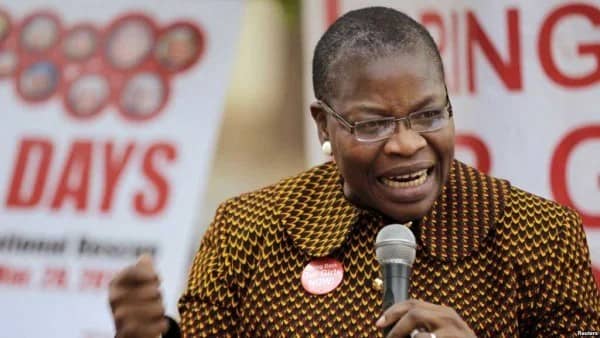
Former Minister of Education, Dr Obiageli Ezekwesili, has raised the alarm over the depth of poverty in Nigeria, saying about 145 million Nigerians are poor and many now see elections as an opportunity to make money rather than a process for choosing leaders who will govern them for four years.
Ezekwesili said the pervasive economic hardship had altered the attitude of many citizens towards elections, making immediate financial inducements more attractive than long-term governance issues.
The former minister spoke on Saturday while appearing on 60 Seconds with Kay, a television programme by News Central.
According to her, about 64 per cent of Nigerians are poor and largely preoccupied with daily survival.
She said such citizens were often less concerned about governance outside election periods because their immediate economic needs had become their priority.
“They don’t want to be disturbed by any other things. The only time that issues of governance matter to them is elections and the elections have become a market day to improve income by little bit of notches for that day,” Ezekwesili said.
The former Vice-President of the World Bank added that many poor Nigerians did not fully appreciate the long-term implications of their electoral choices.
“They don’t know they are voting for four years. They are voting for that day’s income and the additionality that they will get,” she said.
Her comments came against the backdrop of persistent concerns over vote-buying, poverty and the influence of financial inducements on electoral outcomes in Nigeria.
Ezekwesili’s assessment suggests that tackling electoral malpractice may require more than enforcement by electoral and security agencies, but also sustained efforts to reduce poverty and improve citizens’ economic independence.
Ezekwesili gives Tinubu qualified credit
While criticising aspects of the country’s economic management, Ezekwesili acknowledged that President Bola Tinubu’s administration had made progress in achieving macroeconomic stability.
She said the relative calm in the foreign exchange market was one area where the administration deserved credit, noting that the government had increasingly adhered to market principles in its foreign exchange policies.
“The only thing we can give to them is that we are getting a hold of macroeconomic stability,” she said.
“For example, the volatility we have with foreign exchange rates is quieter because they are abiding by market principles for FX policies.”
However, she argued that improved macroeconomic indicators had yet to translate into meaningful relief for the average Nigerian.
Ezekwesili said that although inflation figures had declined, the cost of living remained “pretty high”, stressing that the reduction in the headline inflation rate did not necessarily reflect the economic reality confronting households.
She also faulted the policy mix that contributed to the sharp inflationary pressure experienced by Nigerians.
“By the way, that inflation that spiked did not have to happen. It was a poor management of combination of policies that led to that runway kind of inflation that we have,” she said.
‘Nigeria suffering structural misalignment’
The former minister maintained that Nigeria’s economic challenges went beyond inflation and foreign exchange volatility, arguing that the country was suffering from structural misalignment caused by inappropriate economic policy choices.
“We are suffering from structural misalignment, coming from a lot of the things that are still not being done right in terms of economic policy choices,” she said.
Ezekwesili also identified the operation of multiple budgets as another problem affecting economic planning and management.
She further criticised what she described as the character of Nigeria’s upper class, saying that in a normally functioning society, the upper class would comprise distinguished and productive individuals.
In Nigeria, however, she argued that some people merely flaunted their social status without corresponding productivity.
“So, it is a very dodgy class to talk about,” she said.
Poor Nigerians still turn out to vote
Despite her criticism of the way poverty influences electoral behaviour, Ezekwesili noted that people in the lower economic class remained the Nigerians who “faithfully come out to vote” during elections.
Her remarks underscore the contradiction at the heart of Nigeria’s electoral system: citizens facing the greatest economic hardship constitute a significant part of the electorate, yet the same hardship can make them more vulnerable to short-term inducements from political actors.
The comments also renew the debate over the relationship between economic hardship and democratic accountability, particularly ahead of the 2027 general elections.
For Ezekwesili, however, improving the quality of Nigeria’s democracy cannot be separated from addressing poverty, fixing structural economic weaknesses and ensuring that citizens are able to make electoral choices without being driven primarily by immediate survival needs.
 '
' '
'Do you want to share a story with us? Do you want to advertise with us? Do you need publicity for a product, service, or event? Contact us on WhatsApp +2348183319097 Email: platformtimes@gmail.com
We are committed to impactful investigative journalism for human interest and social justice. Your donation will help us tell more stories. Kindly donate any amount HERE
