

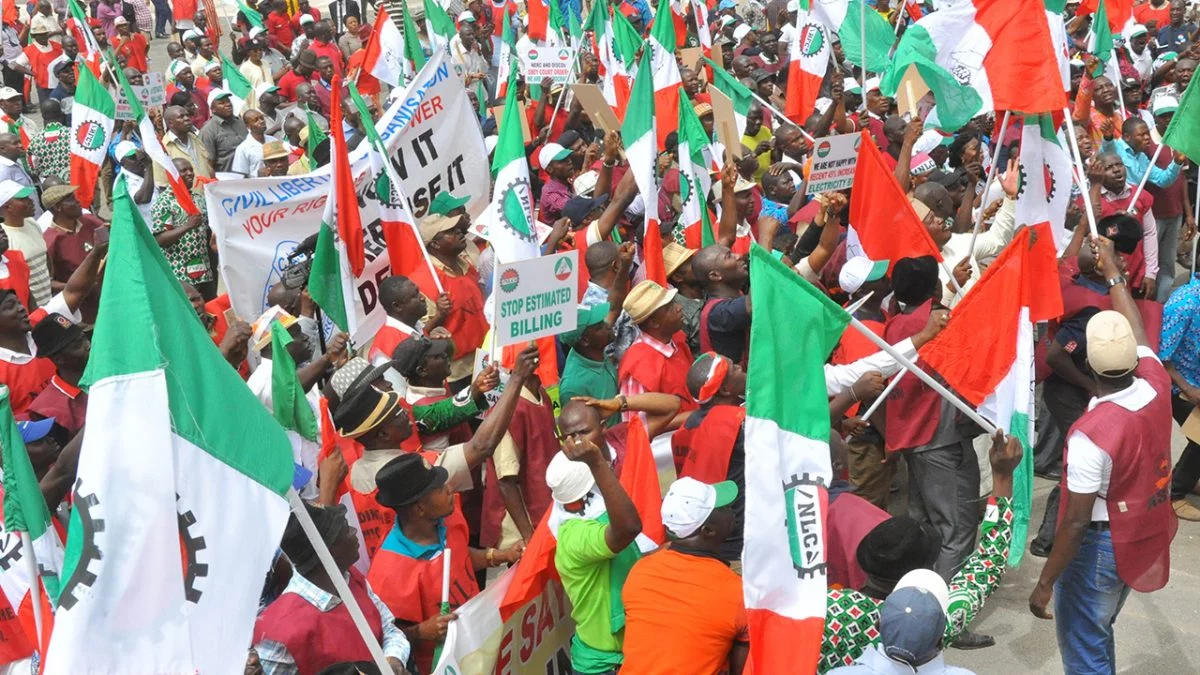
The Nigeria Labour Congress has demanded immediate wage awards for workers and other emergency measures to cushion Nigerians from the latest surge in the price of Premium Motor Spirit, popularly known as petrol.
The NLC said the Federal Government must act urgently as petrol prices rose to about N1,430 per litre in some major cities, with prices reportedly higher in less accessible locations.
The demand was contained in a statement titled “Save the Situation Now”, signed by the NLC President, Comrade Joe Ajaero, amid renewed pressure on households and businesses following the latest adjustment in petrol prices.
Recent checks reported by multiple media outlets showed petrol selling between about N1,395 and N1,430 per litre at some NNPCL outlets in Lagos and Abuja, while prices in some locations have moved even higher.
The development followed an increase in the petrol gantry price by Dangote Petroleum Refinery, amid a sharp rise in international crude oil prices and renewed concerns over disruptions to global oil supplies.
The labour centre warned that another increase in petrol and transportation costs would have consequences far beyond the filling stations, arguing that higher logistics expenses would feed into the prices of food, school fees, rents, tariffs and other essential goods and services.
“These new costs continue to inflict or deepen poverty among the populace, stressing the quality of life to the limits,” the NLC said.
Ajaero called for reasonable wage awards for workers, arguing that government must provide immediate relief as the latest fuel shock further erodes household purchasing power.
The NLC’s position comes against the backdrop of continuing concerns over the ability of workers and low-income households to absorb rising transportation and living costs.
Labour demands crude supply to local refineries in naira
Beyond wage awards, the NLC called on the Federal Government to ensure that sufficient crude oil is made available to Nigerian refineries in naira.
The union argued that an oil-producing country should be able to shield its citizens from the full impact of external energy shocks by strengthening domestic refining and petroleum supply chains.
It also demanded an expansion of Nigeria’s strategic petroleum storage capacity, saying larger reserves would improve the country’s ability to respond to emergencies and disruptions in international energy markets.
The NLC said such measures could also stimulate job creation, generate economic value and strengthen national energy security.
The labour union further argued that government intervention to protect citizens from sudden economic shocks should not be ruled out.
“There is nothing wrong with government subsidising the needs of citizens, especially in emergency situations like this,” the NLC said.
The position reflects the union’s argument that extraordinary circumstances require extraordinary interventions to prevent the burden of global energy-market volatility from being transferred disproportionately to ordinary Nigerians.
Ajaero also drew attention to what the union described as additional government revenue arising from crude oil prices trading substantially above the benchmark used in the national budget.
According to the NLC, the government was earning between $35 and $40 per barrel above the budget benchmark, which it argued could translate into substantial additional revenue.
The union said such a windfall should be deployed, at least in part, to protect citizens from the economic consequences of the fuel-price shock.
The claim about the precise fiscal gain is the NLC’s assessment; its actual value would depend on Nigeria’s realised crude price, production volumes, fiscal terms and other revenue variables.
The NLC also criticised the continued importation of crude oil by local refineries, describing the situation as contrary to the objective of developing domestic refining capacity.
It urged the government to address crude supply constraints affecting local refiners and ensure that Nigeria’s domestic refining infrastructure can operate with locally produced crude.
The union maintained that improving domestic refining would reduce exposure to international supply disruptions and help retain more economic value within Nigeria.
The labour centre also warned the Federal Government against allowing further increases in petrol prices to impose additional hardship on Nigerians under the banner of deregulation.
It argued that the impact of the latest increases must be considered alongside the broader cost-of-living pressures confronting workers and households.
The NLC said organised labour had a responsibility to speak out and take appropriate action if the worsening petrol-price situation continued to undermine the welfare of workers.
The union’s intervention comes as Nigerians confront another round of adjustments in the downstream petroleum market, with crude oil prices remaining elevated amid geopolitical tensions in the Middle East.
For consumers, the immediate concern is the likely knock-on effect of higher petrol prices on transportation, distribution and the prices of goods and services.
 '
' '
'Do you want to share a story with us? Do you want to advertise with us? Do you need publicity for a product, service, or event? Contact us on WhatsApp +2348183319097 Email: platformtimes@gmail.com
We are committed to impactful investigative journalism for human interest and social justice. Your donation will help us tell more stories. Kindly donate any amount HERE
