

Zainab Abioye
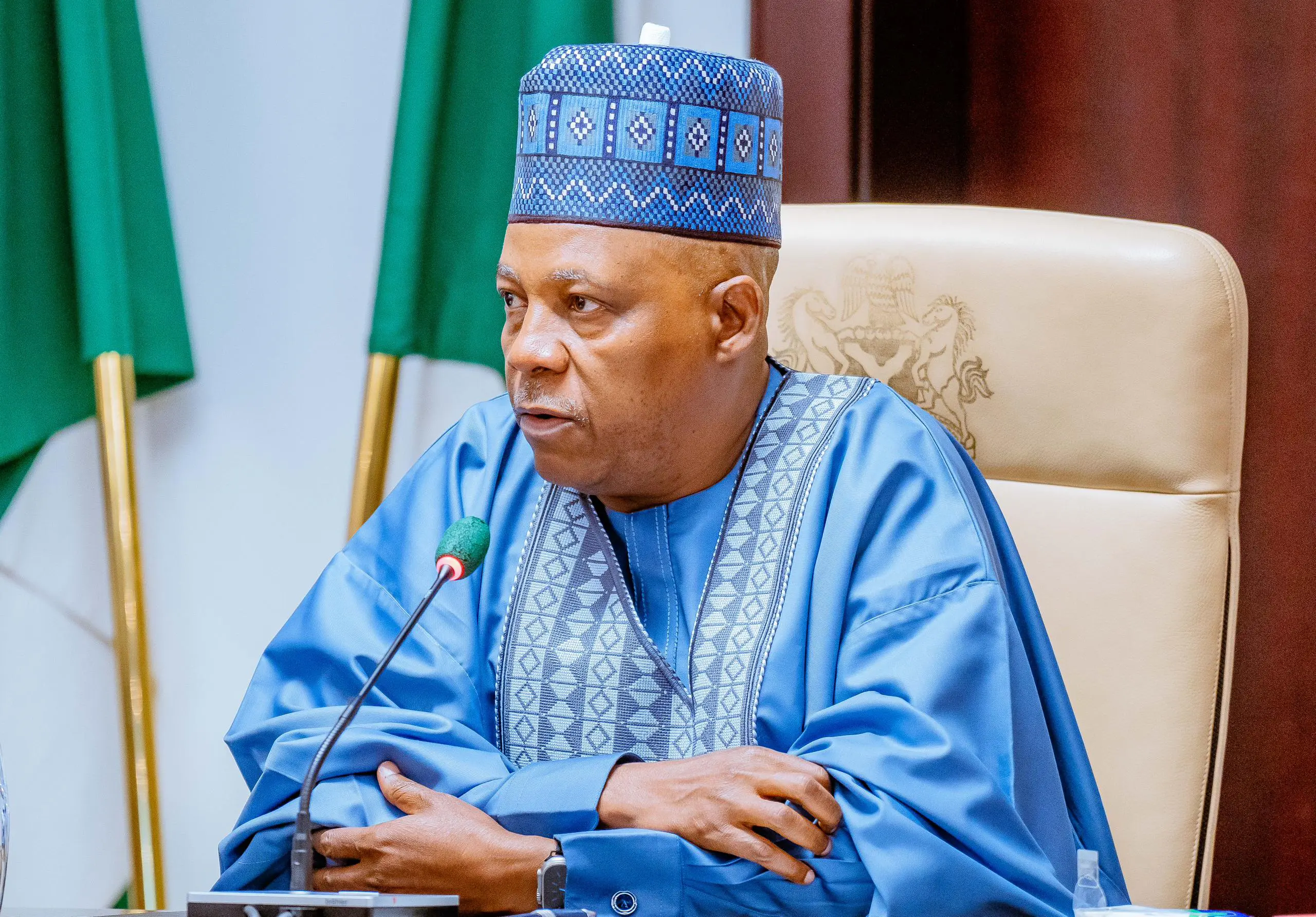
Vice President Kashim Shettima has challenged African countries to end the longstanding practice of exporting raw mineral resources and instead retain greater value through local processing, manufacturing and industrialisation.
Shettima said Africa could not continue to describe itself as rich in natural resources while communities sitting on mineral deposits remained poor and deprived of basic infrastructure and economic opportunities.
The Vice President made the call in New York while representing President Bola Tinubu at the third High-Level Roundtable of the Africa Minerals Strategy Group, held on the sidelines of the 81st United Nations General Assembly.
The roundtable, focused on continental cooperation for mineral value addition, brought together African governments, development finance institutions, multilateral organisations, investors and executives in the mining, technology and mineral-processing sectors.
Shettima argued that the real measure of Africa’s mineral wealth should not be the volume of resources extracted from the continent but the economic benefits that accrue to African people and mineral-producing communities.
He warned African countries against competing among themselves for investors by offering lower royalties, weakening local-content requirements or granting excessive concessions.
Instead, he advocated stronger continental cooperation, integrated markets, regional processing hubs and cross-border mineral corridors to enable African countries to negotiate from a stronger position in global mineral supply chains.
According to him, Africa must move from a model where raw resources are exported and finished products are imported at significantly higher values.
The Vice President said the continent’s vast mineral deposits should be used to stimulate industrial production, create skilled employment and build competitive African enterprises.
He said the success of Africa’s mineral strategy should ultimately be reflected in roads, railways, factories, skilled jobs and improved living conditions in communities where minerals are extracted.
“Mineral resources alone do not guarantee prosperity,” Shettima said, stressing that the benefits of extraction must be translated into tangible development.
He also highlighted Nigeria’s ongoing mining-sector reforms, including efforts to promote local value addition, improve geological information, formalise artisanal mining and strengthen the fight against illegal mining.
Shettima cited investments in lithium processing in Nasarawa State as part of the opportunities presented by domestic beneficiation.
He further backed the Africa Minerals Strategy Group’s Mutual Assured Development Framework, which seeks greater policy coordination, investment mobilisation, local value addition and stronger mineral supply chains.
The Vice President urged governments to provide predictable policies and credible institutions, while investors should bring responsible capital, technology transfer, local value and long-term commitment.
Shettima also called for the Continental Integration and Economic Assurance Declaration to move beyond a ceremonial signing and become an implementation programme backed by clear timelines, financing mechanisms and accountability.
The declaration is intended to establish a continental framework for cooperation on critical minerals, including value addition and policy coordination.
The call came as African countries seek to strengthen their position in the rapidly expanding global market for critical minerals used in energy, manufacturing and emerging technologies.
Meanwhile, Nigeria’s Minister of Solid Minerals Development and Chairman of the Africa Minerals Strategy Group, Dele Alake, called for the establishment of an African Artisanal Mining Formalisation and Safety Facility.
Alake said the proposed facility would help African countries bring artisanal miners into regulated systems while improving safety standards in mining communities.
He proposed support for cooperative formation and licensing, geological assistance, access to safer mining equipment, occupational health and safety training, environmental rehabilitation and emergency preparedness.
The minister raised concern over recurring mine-site disasters across the continent, citing fatalities linked to mining-site collapses in the Democratic Republic of Congo, Central African Republic and Sudan.
He said formalisation should enable legitimate artisanal miners to operate within a regulated framework while illegal mining remains subject to enforcement.
Alake’s proposal comes amid increasing calls for African governments to distinguish between informal miners dependent on mining for their livelihoods and criminal operators engaged in illegal exploitation of mineral resources.
The New York meeting also brought together representatives of the United States Government, including Chris Kulukundis, Special Adviser to the US State Department on the Bureau of African Affairs.
Kulukundis expressed the readiness of the United States to partner with African countries in harnessing the continent’s mineral resources.
The gathering also featured representatives of African governments, development finance institutions, multilateral organisations and companies involved in mining, technology and mineral processing.
The meeting culminated in the signing of the Continental Integration and Economic Assurance Declaration, which is expected to provide a framework for greater African cooperation on critical minerals.
For Nigeria, the development comes as the Tinubu administration continues to position the solid minerals sector as part of its broader effort to diversify the economy and promote domestic value addition.
 '
' '
'Do you want to share a story with us? Do you want to advertise with us? Do you need publicity for a product, service, or event? Contact us on WhatsApp +2348183319097 Email: platformtimes@gmail.com
We are committed to impactful investigative journalism for human interest and social justice. Your donation will help us tell more stories. Kindly donate any amount HERE
