

The Federal Government has dismissed claims that it spent more than ₦8 trillion outside the 2026 Appropriation Act, insisting that the allegation is a distortion of the International Monetary Fund’s 2026 Article IV Consultation Report.
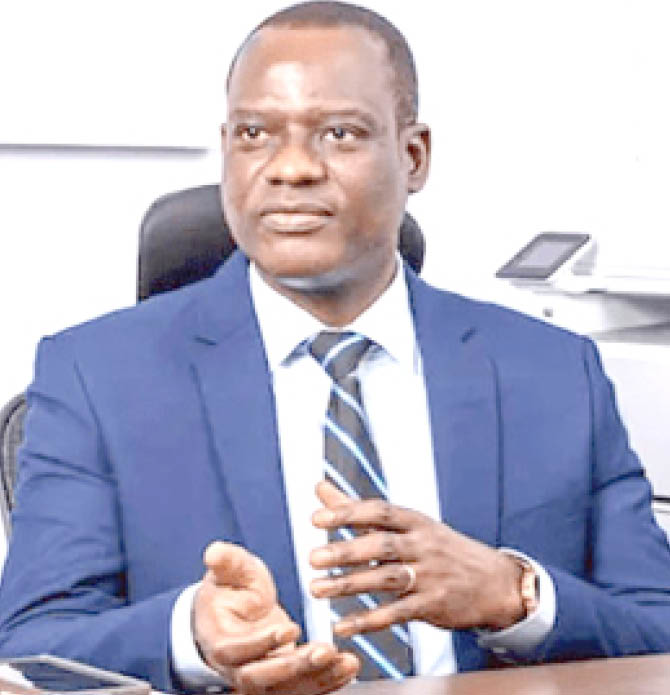
The Minister of Finance and Coordinating Minister of the Economy, Taiwo Oyedele, in a statement issued on Sunday, described the reports as inaccurate and misleading, stressing that the Federal Government does not operate a “shadow budget” or expend public funds outside constitutional and legislative approval.
The clarification followed widespread reactions to comments by the IMF Resident Representative in Nigeria, Christian Ebeke, who stated that government expenditure equivalent to about two per cent of Nigeria’s Gross Domestic Product had not been reflected in official budget reports.
According to the IMF, the omission understated Nigeria’s actual financing needs and made the country’s fiscal deficit appear lower than it should be.
“So far, we think that there are about two per cent of GDP of expenditure that were not reported, that should be reported and should be recorded, so that this statistical discrepancy will disappear,” Ebeke had said during a briefing in Lagos.
The IMF’s position triggered criticism from opposition leaders, including former Vice President Atiku Abubakar and the Labour Party’s 2023 presidential candidate, Peter Obi, who accused President Bola Tinubu’s administration of financial opacity and demanded a probe into the alleged off-budget expenditure.
Responding to the controversy, Oyedele said claims that over ₦8 trillion was secretly spent outside the approved budget were unfounded and lacked credible evidence.
“The Federal Government has noted recent public commentary alleging that approximately two per cent of GDP amounting to over ₦8 trillion was spent outside the approved budget based on references to the IMF Representative in Nigeria and the Fund’s 2026 Article IV Consultation Report.
“These claims are incorrect and risk misleading the public regarding the government’s financial management,” he said.
The minister explained that Sections 80 to 83 and 162 of the 1999 Constitution strictly regulate public spending, noting that government funds can only be withdrawn and expended through Appropriation Acts, Supplementary Appropriation Acts or other statutory approvals granted by the National Assembly.
He added that multi-year capital projects, approved budget rollovers and statutory expenditure frameworks were recognised components of Nigeria’s public financial management system and should not be interpreted as illegal or off-budget spending.
“It is inaccurate to suggest that trillions of naira have been secretly spent outside legislative approval. Such allegations should identify the specific projects purportedly executed without appropriation or legal authority and present credible evidence in support of the claim,” Oyedele stated.
The minister further explained that statutory transfers, debt servicing obligations, first-line charges and intervention funds established by Acts of the National Assembly are legitimate components of government expenditure.
He listed allocations to development commissions, revenue collection costs retained by designated agencies, separately approved capital budgets for certain agencies and the Federal Capital Territory, security interventions, disaster response programmes and debt servicing obligations among expenditures authorised by law.
“These expenditures are neither secret nor illegal. They are established by law, disclosed in various fiscal reports, and subject to applicable oversight, audit and accountability mechanisms,” he added.
Oyedele also rejected suggestions that the alleged unreported expenditure automatically translated into a wider fiscal deficit.
According to him, a fiscal deficit is determined by the difference between government revenue and expenditure, not by the financing mechanism adopted for approved projects.
He maintained that the IMF’s observations were aimed at improving the comprehensiveness and presentation of Nigeria’s fiscal reporting rather than questioning the legality of government spending.
The minister recalled that President Bola Tinubu, while presenting the 2026 Appropriation Bill to the National Assembly on December 19, 2025, had proposed the elimination of multiple and overlapping budgets in favour of a single harmonised budget framework to strengthen fiscal transparency.
He reaffirmed the Federal Government’s commitment to prudent fiscal management, transparency and accountability, saying ongoing reforms had improved budget credibility, revenue administration, treasury management and the digitalisation of public financial processes.
Oyedele urged Nigerians to rely on verified facts in assessing public finance issues, warning that misrepresenting technical observations as evidence of unlawful expenditure could undermine informed public discourse.
 '
' '
'Do you want to share a story with us? Do you want to advertise with us? Do you need publicity for a product, service, or event? Contact us on WhatsApp +2348183319097 Email: platformtimes@gmail.com
We are committed to impactful investigative journalism for human interest and social justice. Your donation will help us tell more stories. Kindly donate any amount HERE
