

Daud Olatunji
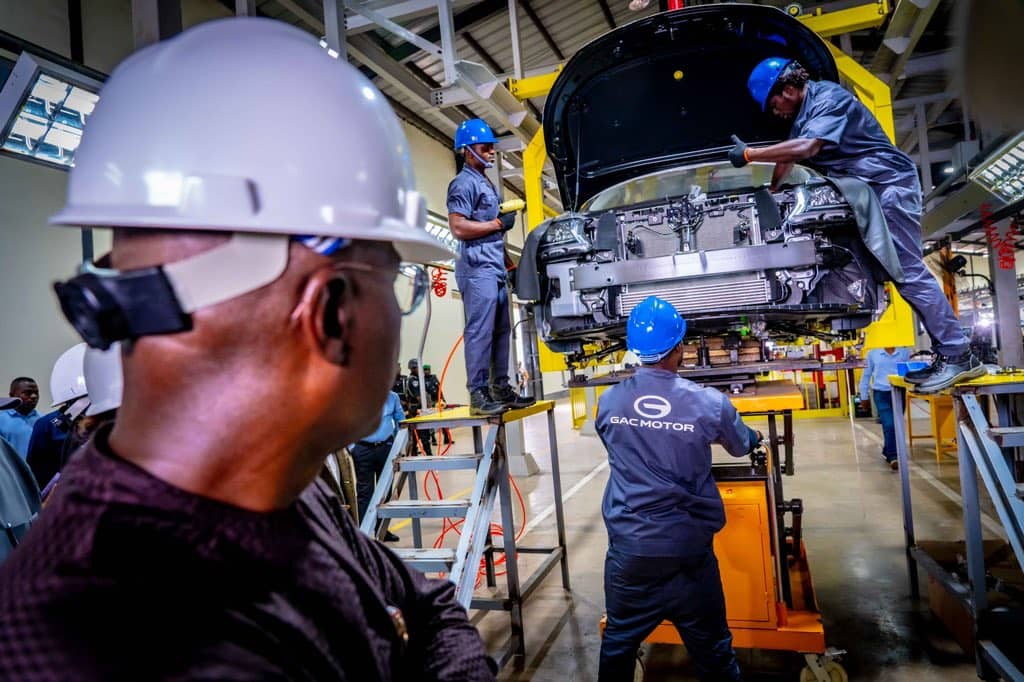
The Federal Government has directed all ministries, departments and agencies (MDAs) to purchase vehicles exclusively from licensed local assemblers or their authorised retailers, warning that any violation will attract sanctions, including blacklisting and revocation of operating licences.
The directive, announced on Friday in Abuja, is part of the government’s efforts to boost local manufacturing, create jobs, reduce dependence on imports and strengthen Nigeria’s automotive industry under its “Nigeria First” policy.
The Director-General of the National Automotive Design and Development Council (NADDC), Oluwemimo Osanipin, disclosed the decision during a joint press briefing with the Director-General of the Bureau of Public Procurement (BPP), Adebowale Adedokun.
Osanipin said the policy covered all vehicles procured by federal government institutions, including utility vehicles acquired for specific projects.
“We are fundamentally shifting the Nigeria First Policy. All vehicles procured by ministries, departments and agencies, including project utility vehicles, must be sourced exclusively from licensed local assemblers or their authorised retailers,” he said.
The NADDC chief said any government agency seeking to purchase a foreign-assembled vehicle must establish that no suitable locally assembled alternative was available and obtain direct presidential approval.
He added that all vehicles supplied to the government must have traceable Vehicle Identification Numbers (VINs), which would be verified through the council to ensure compliance.
“Any supply outside licensed local assembly lines will attract immediate regulatory sanctions, including blacklisting and licence revocation,” Osanipin warned.
The directive signals a tougher enforcement approach to local-content requirements in public procurement, with government agencies expected to prioritise domestically assembled vehicles over imported alternatives.
Osanipin said Nigeria’s vehicle assembly plants had a combined annual production capacity of 370,520 vehicles, arguing that increased government patronage could help local manufacturers expand production and strengthen the domestic automotive value chain.
He, however, challenged assemblers to move beyond producing expensive vehicles for high-income consumers and develop more affordable models for the wider population.
“There are vehicles that are for high-end people; continue to produce them, but let’s take advantage of the over 250 million Nigerians who need mobility at a very reasonable cost,” he said.
The NADDC director-general also urged manufacturers to increase local production of spare parts, describing the component manufacturing sector as a major potential beneficiary of the policy.
According to him, spending on spare parts represents a significant market opportunity that could support domestic businesses beyond the initial purchase of vehicles.
“The major beneficiary of the policy will be the local content manufacturers. We spend more on spare parts than even procurement of vehicles,” he said.
He added that greater government patronage of locally assembled vehicles would create sustained business opportunities for Nigerian companies involved in repairs, maintenance and servicing throughout the vehicles’ operational lifespan.
The BPP director-general, Adedokun, said the Federal Executive Council had designated the bureau to establish procurement standards across sectors and provide the institutional framework for implementing the Nigeria First policy.
He said the bureau had consulted local vehicle assemblers and other industry stakeholders to identify challenges confronting the sector, particularly concerns about whether Nigerian manufacturers would receive sufficient patronage from the government.
Adedokun said the consultations revealed that the availability of a dependable market was one of the industry’s major concerns, including among manufacturers of automotive components.
“We undertook what is usually not the norm, stakeholder consultation with the local assemblers. We understood their problems. Their biggest fear was market,” he said.
“Their biggest fear was that even if we continue to produce, will Nigeria patronise us, including those in the spare parts sector.”
He maintained that Nigerian manufacturers were already producing spare parts suited to the country’s operating conditions and consumer needs, adding that sustained demand could encourage further investment in local production.
Adedokun said the policy was also expected to stimulate industrialisation, generate employment for technicians and other skilled workers, and position Nigeria as a manufacturing hub serving the Economic Community of West African States and the wider African market.
However, he warned that local assemblers would be expected to maintain required standards, improve their products and comply with the government’s procurement guidelines.
The BPP chief said the bureau would deploy monitoring and evaluation mechanisms to ensure that manufacturers improved their technology, innovation and production standards.
“We have a mechanism called debarment; any assembler that violates this principle would be sanctioned in line with the provisions of the circular and government external guidelines,” he said.
He added that the government would monitor implementation to ensure that federal institutions complied with the directive while local manufacturers continued to improve the quality of their products.
“We are putting a strong monitoring and evaluation system to ensure that assemblers up their game, improve their innovation and technology. We will ensure that all federal government entities patronise made-in-Nigeria vehicles,” Adedokun said.
The Federal Executive Council approved the Nigeria First policy in May 2025 to prioritise locally produced goods and services in government procurement.
The latest directive places the automotive industry among the sectors expected to benefit from the government’s local-content drive.
If effectively implemented, the policy could provide local assemblers with a more predictable market, encourage investment in component manufacturing and reduce the government’s reliance on imported vehicles.
However, the success of the initiative will depend on manufacturers’ ability to supply vehicles that meet government requirements at competitive prices, alongside reliable access to spare parts, maintenance services and after-sales support.
The government’s insistence on presidential clearance for foreign-assembled vehicles also makes the availability, affordability and suitability of locally assembled alternatives central to implementation.
Neither the NADDC nor the BPP provided a breakdown of the number of vehicles federal institutions currently procure annually or the potential value of government contracts that could shift to local assemblers under the directive.
Such figures would help establish the likely scale of the policy’s impact on domestic production, employment and public procurement spending.
 '
' '
'Do you want to share a story with us? Do you want to advertise with us? Do you need publicity for a product, service, or event? Contact us on WhatsApp +2348183319097 Email: platformtimes@gmail.com
We are committed to impactful investigative journalism for human interest and social justice. Your donation will help us tell more stories. Kindly donate any amount HERE
