

….Patients, caregivers seek better support as traditional rulers pledge grassroots campaign against stigma
By Ayomide Awe
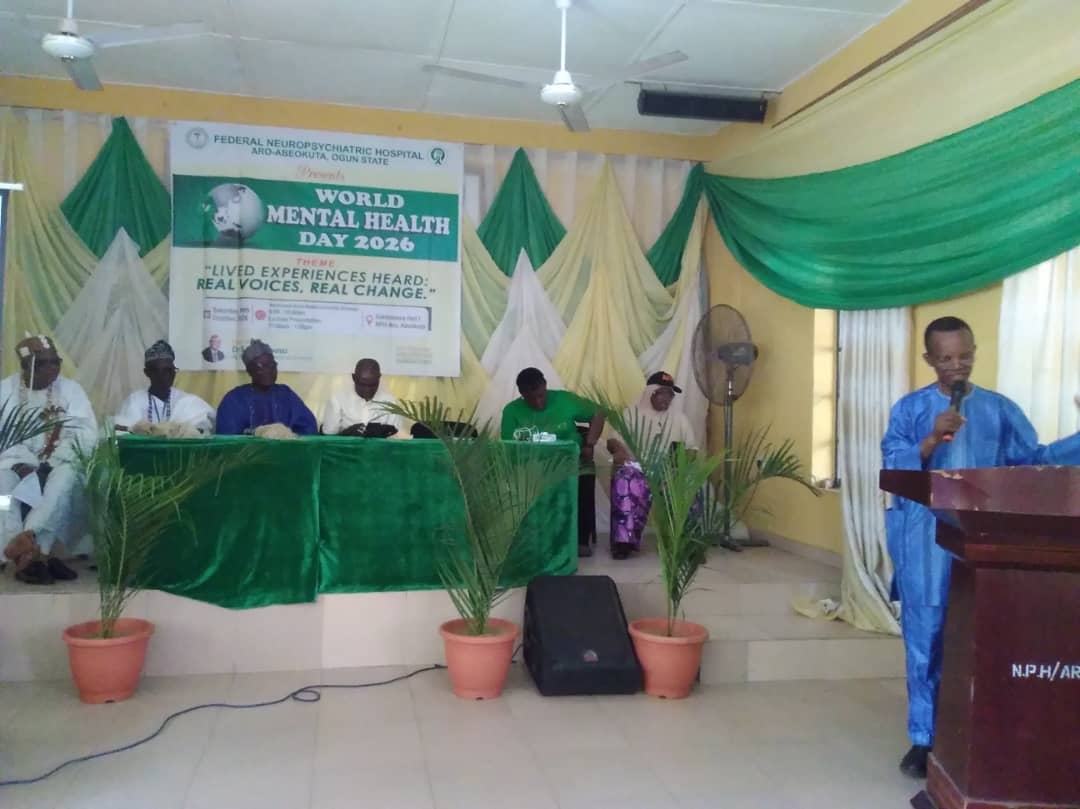
Survivors of mental illness have shared their experiences of recovery, stigma and the challenges of accessing care at the Federal Neuropsychiatric Hospital, Aro, Abeokuta, as the institution marked the 2026 World Mental Health Day with a call for patient-centred treatment and greater community support.
The survivors, caregivers and mental health professionals urged Nigerians to stop treating people living with mental health conditions as objects of discussion and begin listening to their experiences, concerns and needs.
The call formed the centrepiece of the hospital’s commemoration, themed, “Lived Experiences Heard: Real Voices, Real Change,” which featured an awareness road walk, community outreach and a lecture and panel discussion involving healthcare workers, traditional rulers and community leaders.
The awareness walk, which began at the hospital gate and proceeded to Ita-Oshin Garage, sought to educate residents about mental health, challenge discrimination and promote respect for the rights of people living with mental health conditions.
Speaking at the event, the Assistant Coordinator of the Faculty of Mental Health, Dr Ighoroje Maroh, said the theme was deliberately chosen to ensure that patients were not excluded from conversations and decisions concerning their treatment and recovery.
Maroh said the hospital had extended its advocacy to media organisations, including OGBC and Fresh FM, while deploying different local languages during the awareness campaign to make its message accessible to a wider audience.
He stressed that meaningful progress in mental healthcare required listening to patients, respecting their dignity and involving them in decisions affecting their lives.
According to him, the initiative reaffirmed the hospital’s commitment to quality mental healthcare and the principle that lasting change begins when people living with mental health conditions are genuinely heard.
Declaring the event open, the Medical Director and Acting Provost of the hospital, Dr Sunday Amosu, described mental health as a critical component of overall well-being and national development.
Amosu said the hospital remained committed to delivering quality mental healthcare, training professionals, conducting research and expanding community outreach.
He added that the theme aligned with the institution’s patient-centred approach, under which the experiences of patients should inform the delivery of services.
The medical director commended hospital staff, traditional institutions and community leaders for supporting the campaign, urging Nigerians to abandon stigmatising attitudes and seek professional help when mental health challenges arise.
“Mental illness is not a death sentence, neither is it an incurable illness,” Amosu said.
He called for greater public understanding of mental health conditions, stressing the importance of early intervention and appropriate treatment.
Similarly, the Coordinator of Mental Health, Dr Lucky Onofa, said the commemoration was intended to move mental health advocacy beyond public awareness to the active inclusion of patients and their caregivers.
Onofa explained that recovery was more likely to be effective and sustainable when patients, families and healthcare professionals worked together.
He said the faculty had continued to expand community psychiatric services, integrate mental healthcare into primary healthcare and strengthen support for caregivers in line with global best practices.
Listening to patients, he added, should not be regarded as an act of kindness but as an essential component of effective clinical care.
Survivor credits faith, medication, family support for recovery
A major highlight of the event was a panel discussion in which participants, who requested anonymity, shared personal experiences of mental illness, treatment and recovery.
A survivor attributed his recovery to faith, consistent use of prescribed medication, strong family support and the dignified treatment he received from healthcare workers at Aro.
His account highlighted the importance of combining appropriate medical care with emotional, social and family support in the recovery process.
A caregiver, however, drew attention to the difficulties families encounter while caring for people living with mental health conditions.
She identified transportation costs, financial pressure and inadequate guidance as some of the challenges confronting caregivers who must navigate the healthcare system while supporting their loved ones.
The caregiver urged healthcare professionals to intensify education for family members on how to identify early warning signs, respond appropriately and provide support at home.
She said better communication between professionals and caregivers would help families understand their responsibilities and respond more effectively to patients’ needs.
A social worker at the panel discussion shifted attention to the challenges survivors face after treatment, particularly social isolation, stigma and unemployment.
The social worker argued that mental healthcare should not focus solely on keeping patients stable but should also help them rebuild their lives, regain independence and reintegrate into society.
The social worker called on communities to provide supportive environments where survivors could participate in social and economic activities without fear of discrimination.
Other health professionals at the session emphasised the need to educate patients about their conditions, involve them in treatment decisions, maintain open communication and demonstrate unconditional positive regard.
The discussions underscored the importance of recognising patients as active participants in their recovery rather than passive recipients of medical care.
Monarchs seek mental health education at grassroots
Traditional rulers at the event called for stronger grassroots mental health education, expressing concern about the growing attention being given to depression and other mental health challenges in communities.
One of the monarchs also advocated mental health assessments for individuals seeking leadership positions, arguing that mental well-being deserved greater consideration in public life.
The Olu of Obada Oko, Oba Olufemi Solaja, and the Olu of Orile Opelifa, Obada-Oko, Oba Kasimawo Adisa Ogundare, alongside other traditional chiefs, pledged to take the advocacy beyond radio broadcasts to households, compounds and markets.
They noted that effective public enlightenment could no longer depend exclusively on radio, stressing the need to engage Community Development Associations, Baales, chiefs and traditional rulers who maintain direct contact with residents.
The monarchs said traditional institutions could play a significant role in correcting misconceptions, encouraging people to seek professional help and reducing discrimination against people living with mental health conditions.
Their intervention highlighted the importance of community-based advocacy in reaching residents who might otherwise have limited access to reliable mental health information.
….Psychiatrist highlights benefits of listening to survivors
Delivering the keynote lecture, a Senior Consultant Psychiatrist, Dr Ibrahim Oyetola, highlighted the importance of listening to people living with mental health conditions and incorporating their experiences into healthcare delivery and policymaking.
Oyetola traced the origins of World Mental Health Day to the global mental health advocacy movement, describing the observance as an opportunity to raise awareness, challenge stigma and mobilise support for equitable mental healthcare.
He said listening to the pain and experiences of people affected by mental illness was essential to improving treatment outcomes and protecting their rights.
According to him, giving patients a voice could contribute to better healthcare, reduced stigma, stronger policies, improved support for caregivers and the expansion of mental health services at primary healthcare and community levels.
He noted that these were areas in which the Aro hospital had continued to champion improved access and community engagement.
Oyetola stressed that mental health services must be responsive to the realities of patients and their families, adding that policies and interventions would be more effective when informed by the people directly affected.
The event was attended by a former Provost and Professor of Community Psychiatry, Dr Timothy Olaoluwa; the Head of Research and Training; the Director of Nursing Services; other directors; members of the Top Management Committee; and community representatives.
Others present included the Baale of Aro Community, Chief Bello Jelili; the Chief Imam of Aro Muslim Community, Mr Alaran Alaran; and leaders of Abeokuta North Metro ACDC, led by Comrade Ade Taylor and other executives.
The commemoration ended with renewed calls for a mental healthcare system that combines professional treatment with dignity, family support, community inclusion and the active participation of survivors in decisions affecting their recovery.
 '
' '
'Do you want to share a story with us? Do you want to advertise with us? Do you need publicity for a product, service, or event? Contact us on WhatsApp +2348183319097 Email: platformtimes@gmail.com
We are committed to impactful investigative journalism for human interest and social justice. Your donation will help us tell more stories. Kindly donate any amount HERE
