

Suliat Laaal
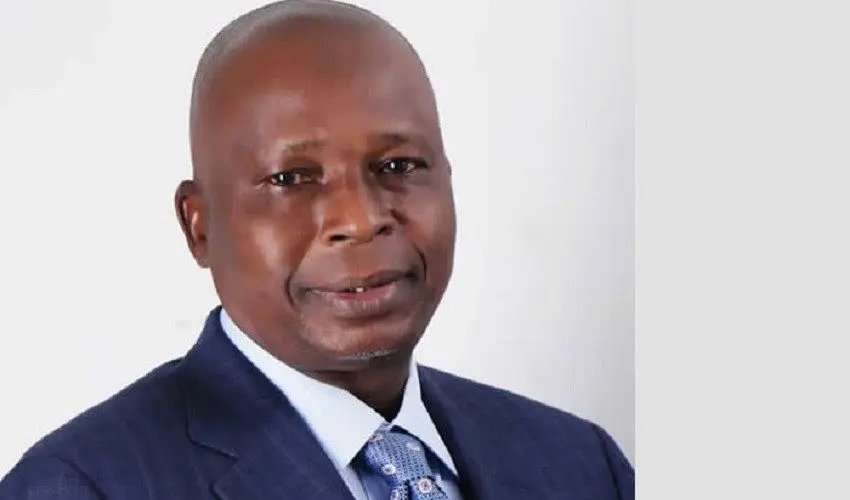
The Attorney-General of the Federation and Minister of Justice, Lateef Fagbemi, has warned that the controversial damages awarded against Nigeria in the Process and Industrial Developments Ltd. (P&ID) arbitration could have crippled the country’s economy if allowed to stand.
Fagbemi said the case exposed serious weaknesses in the international investor-state dispute settlement system, particularly the lack of clear and predictable rules for determining damages in arbitration proceedings.
The minister spoke on Thursday at the Heads of Delegations’ Roundtable of the Chief Legal Advisors Forum 2026 in Singapore, where he called for far-reaching reforms of the international investment dispute-resolution framework.
According to him, Nigeria’s experience in the P&ID dispute reinforced the need for greater transparency, consistency and accountability in international arbitration.
Fagbemi said the use of compound interest in calculating the damages in the P&ID case could have pushed Nigeria’s liability into billions of dollars, with potentially devastating consequences for the economy.
“States consistently express concern about the opacity of arbitral proceedings and the unpredictability of awards. Nigeria continues to support reforms that enhance transparency of proceedings, consistency in arbitral reasoning, and predictability in outcomes,” he said.
The AGF added, “For example, in the notorious case of P&ID, damages were calculated on the basis of compound interest, which would have had a crippling effect to the tune of billions of dollars.”
The P&ID dispute arose from a failed gas processing agreement between the Federal Government and P&ID. The long-running arbitration and subsequent legal battles attracted international attention because of the enormous financial liability initially sought from Nigeria.
Fagbemi said Nigeria’s position was that the international investment dispute system required more than minor adjustments, insisting that structural reforms were necessary to correct what he described as imbalances in the existing framework.
“Many states, Nigeria included, believe that incremental adjustments will not address the structural imbalances embedded in the current system,” he said.
“There is increasing support for systemic reform, including clearer treaty standards, improved procedural safeguards, stronger accountability mechanisms, and more balanced rights and obligations for investors and states.
“This reflects a desire for a dispute-settlement system that is durable and future-proof.”
The minister disclosed that Nigeria had already amended its arbitration law to promote greater transparency and was exploring dispute-resolution mechanisms beyond traditional arbitration.
He also said the Federal Government had reviewed its investment obligations since he assumed office, including establishing a committee of experts to examine the country’s bilateral investment treaties and commitments under multilateral treaties and conventions.
Fagbemi further advocated stronger Nigerian courts and judicial institutions, saying domestic capacity must be strengthened to reduce the country’s dependence on external arbitration.
“Strengthening national judicial institutions is central to building long-term rule-of-law capacity and reducing over-reliance on external arbitration,” he said.
The minister also called for public-interest considerations to be incorporated into investor-state dispute settlement, arguing that investment protection should not prevent governments from regulating in the interest of citizens.
He said such considerations should include climate action, environmental protection, human rights, community welfare and sustainable development.
“Nigeria strongly supports reforms that ensure investment protections do not undermine legitimate public-interest regulation,” Fagbemi said.
He noted that the position was reflected in Nigeria’s 2016 Model Bilateral Investment Treaty, which he said was currently under review after a decade in operation.
The AGF said the review of the international investment regime must ultimately produce a system that protects legitimate investors while preserving the ability of governments to act in the public interest.
“There is a growing recognition that the challenges are shared, solutions must be collective, and reform must balance the needs of capital-importing and capital-exporting countries,” he said.
 '
' '
'Do you want to share a story with us? Do you want to advertise with us? Do you need publicity for a product, service, or event? Contact us on WhatsApp +2348183319097 Email: platformtimes@gmail.com
We are committed to impactful investigative journalism for human interest and social justice. Your donation will help us tell more stories. Kindly donate any amount HERE
