

…How Multiple Tickets, Space Charges, Taxes, Levies, Market Contributions Burden Traders Despite Govt’s Ban On Illegal Collections
Daud Olatunji
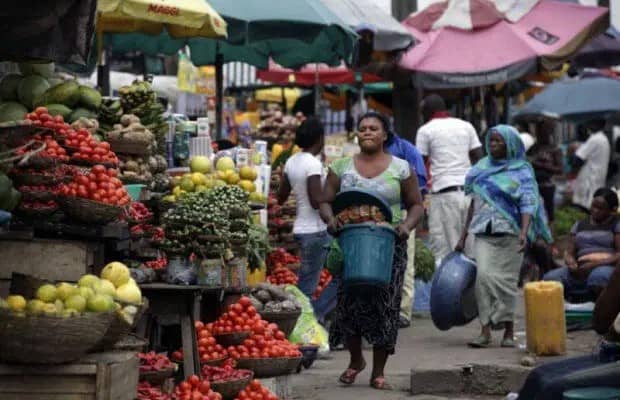
In the bustling markets of Ogun State, where traders are already battling inflation, declining purchasing power and rising operating costs, a maze of tickets, levies, space charges, taxes and other payments appears to be adding to their burden.
An investigation by PLATFORM TIMES across Sango Main Market, Ifo Main Market, Agbado Main Market, Lafenwa Main Market, Kuto Main Market, Panseke Main Market, Tube Main Market, Lusada Main Market, Sagamu Main Market and Ita-Osu Main Market in Ijebu-Ode found traders operating under different payment structures, with some alleging that receipts were not issued for certain collections.
The investigation is particularly significant because the Ogun State Government has publicly declared that illegal market levies and tickets are prohibited.
Yet, interviews with traders in Lafenwa, Kuto, Omida, Panseke and other markets revealed varying accounts. While some traders said they paid only approved government charges, others reported payments to market committees, Iyaloja structures, local government collectors and other groups.
The findings also exposed a major accountability gap: some traders could not explain what certain payments were meant for.
At Lafenwa Market, Mrs Kushimo, who said she had traded there for 10 years, told PLATFORM TIMES that she paid ₦100 daily for her trading space, but receipts were no longer issued.
“They used to give us receipts, but they no longer give us receipts.”
Another trader, who said she had been in the market for more than 45 years, also reported paying ₦100 daily for space.
Asked whether she received receipts, she replied:“No, they do not give me a receipt.”
Some traders also reported paying taxes on top of tickets and space charges.
An anonymous Lafenwa trader said she paid ₦2,500 yearly tax, while Friday Chukwuemeka said he paid ₦5,200 yearly tax, alongside ₦100 daily for space and another ₦100 daily for tickets.
“I pay ₦100 every day for the space where I operate. I also pay ₦100 for tickets every day, and I pay tax,” he said.
Kuto, Omida, Panseke reveal multiple charges
At Kuto Market, a roadside provision seller said traders paid Iyaloja money, local government charges, tax, space and environmental fees.
“I pay Iyaloja money and local government money. I also pay tax, space fees and environmental fees.”
The trader said the payments included ₦200 every five days for Iyaloja and local government, ₦500 every five days for space, ₦1,000 yearly tax and ₦200 environmental charges.
But when asked what some of the payments were used for, the trader admitted:
“I do not know what the other fees are used for.”
A clothes seller at Kuto reported paying ₦100 per market day for a ticket, ₦2,500 yearly tax, ₦100 daily for space and ₦200 monthly for environmental charges. The trader also mentioned a ₦500 payment sometimes made for sacrifice.
At Omida, a foodstuff seller reported paying ₦50 per market day as ticket, in addition to ₦1,600 yearly.
A corn seller said:“We pay a lot of fees. We pay money to the Iyaloja and also make other payments.”
The trader said ₦200 was paid to the Iyaloja every five days, another ₦200 to government every five days, while space charges depended on the size of the trading area.
At Panseke, a pepper seller reported paying ₦1,000 monthly for environmental services, including cleaning. Another trader said she paid ₦1,000 monthly to the local government, while a plastic seller reported ₦2,600 monthly tax, in addition to security and shop-related payments.
However, the investigation also found that the practice was not uniform. Some traders, particularly at Lafenwa, said they were not subjected to additional illegal payments.
NUMTEN: “A lot of things were happening”
The State Secretary of the National Union of Market Traders Employers of Nigeria, NUMTEN, Comrade Kazim Kolawole, said the problem was widespread.
“Yes, I am aware,” Kolawole said when asked whether he knew about alleged exploitation and multiple levies in Ogun markets.
He said the Ministry of Industry, Trade and Investment had previously directed the union to monitor markets across the state, with union executives and media representatives from OGTV and OGBC participating.
“We interviewed traders, and they confirmed that a lot of things were happening in the markets,” he said.
According to Kolawole, the monitoring exercise uncovered charges beyond what traders understood as government-approved levies.
At Lafenwa, he said, traders reported paying ₦700 for each bowl placed on top of a gutter.
“If a trader had four or five bowls, the trader would pay ₦700 for each one,” he said.
He further alleged that traders displaying goods along roadsides were sometimes charged as much as ₦15,000, while some Hausa traders reportedly said they paid ₦10,000 for similar displays.
“There were also allegations of other payments,” he said, noting that some traders who already paid ₦100 daily tickets complained of additional road-related charges of ₦1,000 to ₦1,500.
Kolawole also alleged that some traders were compelled to buy ceremonial materials.
“During celebrations, some traders were reportedly compelled to buy aso ebi or other materials for as much as ₦9,000. They were also allegedly made to contribute ₦1,500 for entertainment.”
Government ban on illegal levies
The findings are at odds with a public declaration by Governor Dapo Abiodun banning illegal market levies.
According to a government document obtained by PLATFORM TIMES, the governor, at a meeting with market leaders including the Iyaloja-General, Chief Yemisi Abass, and NUMTEN representatives, said only development and environmental levies should be allowed.
“From now on, we are putting a ban on such illegal levies in any market in Ogun State.”
He specifically mentioned loading, discharge and offloading taxes as illegal charges that must stop.
“The only levies that will be allowed are what they call the Development levy and the Environmental levy.”
He said even those levies must be agreed upon and made public.
The governor also announced plans for a market enforcement task force at state and local government levels to stop illegal levies, coercion and intimidation.
His warning was unequivocal:“Any person found collecting money illegally by way of tolls will be arrested and made to face the full wrath of the law.”
The declaration raises a fundamental question: If illegal collections have been banned, why are traders still reporting multiple payments?
Government knew about the problem
PLATFORM TIMES also obtained a 2025 letter from the Ogun State Ministry of Industry, Trade and Investment acknowledging NUMTEN’s proposed monitoring and collation exercise on market levies and taxes.
The ministry acknowledged the importance of the exercise in:“curbing unauthorized collections and protecting traders from exploitation.”
The document demonstrates that concerns over unauthorised collections were known to government and were not merely allegations raised by traders or journalists.
However, the ministry urged NUMTEN to follow due process and maintain communication with relevant government agencies.
The question remains whether government monitoring and subsequent pronouncements translated into sustained enforcement at market level.
Union wants permanent monitoring presence
Kolawole argued that government could not effectively eliminate illegal collections without allowing recognised traders’ unions to maintain a permanent presence in markets.
“What the government can do to end this illegality is to allow the union to perform its functions inside the markets.”
He added:“Without the union being present in the markets, it will be difficult to stop these practices. We are the ones who can help monitor and stop them.”
He said NUMTEN had attempted to establish its presence since 2024 and had intervened in disputes over excessive charges.
“There was a particular case where traders complained about an amount being demanded from them. We intervened and told the Yaloja that the money was too much. They stopped the collection at that time.”
But he warned:“If we stop an illegal practice today and there is no monitoring tomorrow, it may resume.”
NUMTEN’s proposed ₦100 check-off also raises accountability questions. In a July 31, 2026 letter to the Commissioner of Police, the union requested protection for a statewide market compliance audit and collection of its dues.
Kolawole, however, said the union was cautious about adding to traders’ financial burden.
“At the moment, we are trying not to add to the burden of traders.”
He said the union had considered collecting ₦100 every five days rather than daily.
“We do not want to collect ₦100 from traders every day because we do not want to increase their financial burden.”
Alleged ₦100,000 demand
Kolawole also narrated an alleged case involving a ₦100,000 demand by a Iyaloja from a trader. He said the police became involved and the matter was subsequently reported to NUMTEN.
“We went to meet the Yaloja and expressed our concerns. Eventually, they agreed to return the money.”
The allegation could not independently establish whether the demand was authorised or whether the money was returned, but it illustrates the need for credible complaints mechanisms for traders.
PLATFORM TIMES’ calculation shows that a trader paying ₦100 daily for space and another ₦100 daily ticket would spend about ₦73,000 annually on those two charges alone, before taxes, environmental fees, security, rent and other contributions.
The proliferation of charges also has wider implications. Stakeholders warned that additional costs can eventually be transferred to consumers through higher prices.
The investigation observed, for instance, that a basket of tomatoes selling for about ₦3,500 could attract transport demands of up to ₦7,000 in some circumstances.
Market leaders reject extortion claims
Market leaders, however, rejected allegations that traders are routinely subjected to exorbitant or exploitative levies.
The Secretary-General of the Market Women and Men Association of Nigeria, Alhaji Mutiu Ajepeaye, dismissed claims that roadside traders were charged as much as ₦10,000 for wheelbarrows and bowls.
“They can’t be collecting such an amount. That is a lie.”
He said the normal stand levy could range from ₦500 to ₦1,000, depending on the arrangement.
“The stand levy is around ₦500 to ₦1,000, and it is not necessarily collected every time.”
Ajepeaye said roadside trading could also involve an agreement between shop owners and traders using spaces in front of their shops.
“If you place goods in front of my shop, I may allow you if I am satisfied with the arrangement. But if I am not satisfied, I will charge you based on our agreement.”
He questioned whether such private arrangements should automatically be treated as government levies.
Security, sanitation charges defended
Ajepeaye also defended security charges, saying markets had been forced to employ night guards because of burglary.
“If we employ three night guards, and the three guards are collecting ₦50,000 each, and we also have to provide other things for them, how can we not charge ₦1,000 or ₦2,000 as a night-guard levy?”
He said traders stood to lose far more from burglary.
“Those who steal from them are taking goods worth more than ₦200,000 from their shops in some cases.”
On environmental charges, Ajepeaye said the approved payment was ₦200 and was connected to waste-management services provided through the Ogun State Waste Management Authority, OGWAMA.
He said some markets paid between ₦50,000 and ₦100,000 monthly for environmental services.
“It is a well-designed and not accidental” arrangement, he said.
Sacrifice payments spark controversy
Ajepeaye acknowledged concerns over payments connected to traditional sacrifices at Lafenwa.
“We later discovered that those organising the sacrifices wanted to turn them into a source of income.”
He said the practice was subsequently restricted.
“That is why we said that, regardless of who comes for the sacrifice, it must not be done more than once a year.”
He added that the police and DSS were aware.
“The CP is aware of what I have just told you, and the DSS is also aware because it is a critical issue.”
He also said market leaders reduced anniversary celebrations from annually to once every three years.
“Regarding the anniversary they celebrate every year, we changed it to once every three years.”
“NUMTEN is not acceptable here”
Ajepeaye strongly rejected NUMTEN’s attempt to establish itself within Ogun markets.
“That union, National Union of Market Traders of Nigeria, is not acceptable here.”
He said market leaders had told Governor Abiodun that they already had a recognised association.
“We have told our governor that we have our association that is duly registered with CAC. We don’t need any other union.”
He argued that market leadership was rooted in traditional structures.
“In our case, it is about women and you know it is about tradition. It has traditional connection.”
He added:“No market leader without getting approved by a traditional ruler.”
Ajepeaye also rejected the suggestion that the levy system was new.
“All the funds that are being collected are not new.”
According to him, traditional market leaders historically collected contributions in cash and kind.
“The traders, whenever they could not pay, used their wares such as garri and others instead.”
The investigation reveals that Ogun’s markets operate through multiple layers of authority: local government revenue collectors, environmental agencies, market committees, Iyaloja structures, traders’ unions, security arrangements and, according to NUMTEN, informal groups and touts.
The competing accounts show that not every charge reported by traders is necessarily illegal, and not every market operates in the same manner.
Market leaders insist that many payments fund legitimate services such as security, sanitation and market administration. Traders and NUMTEN, however, say the absence of uniformity, receipts and transparent schedules creates room for exploitation.
At the heart of the controversy is a simple question: What exactly should a trader pay, to whom, for what service, and with what receipt or evidence of payment?
Until government provides a publicly accessible and uniformly enforced schedule of approved charges, identifies authorised collectors, strengthens complaints mechanisms and sustains monitoring, the gap between its ban on illegal levies and the experiences reported by some traders is likely to remain.
For traders already struggling with inflation and weak consumer purchasing power, the cost of that uncertainty is not merely administrative. It can become another cost of doing business—and ultimately another cost passed on to consumers.
The question on the lips of the helpless traders is when will Ogun state governent come tk their rescue either by regulating the activitoes of the matkets leaders or empower the union to begin operation and ensure orderliness and accountability.
The Commissier for Industry, Trade and Investment in Ogun, Adebola Shofela refused to speak with PLATFORM TIMES despite efforts to reach out to hom as both calls and messages sent to his mobile phone were ignored .
 '
' '
'Do you want to share a story with us? Do you want to advertise with us? Do you need publicity for a product, service, or event? Contact us on WhatsApp +2348183319097 Email: platformtimes@gmail.com
We are committed to impactful investigative journalism for human interest and social justice. Your donation will help us tell more stories. Kindly donate any amount HERE
