

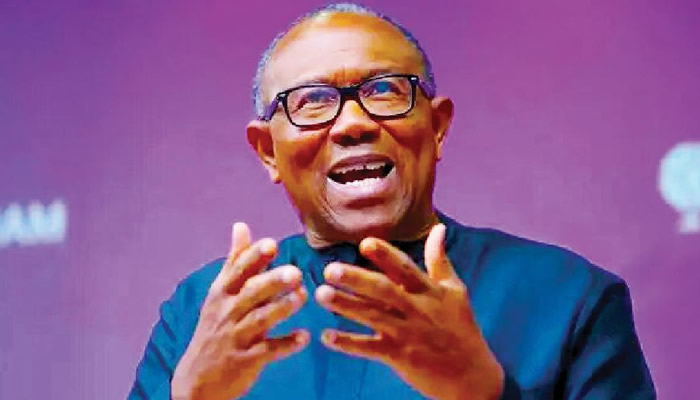
The presidential candidate of the National Democratic Congress, Peter Obi, has said he will retain the naira’s free-floating exchange rate policy introduced under President Bola Tinubu if elected president in the 2027 general elections.
Obi, however, said his administration would focus on boosting productivity to strengthen the value of the naira and improve the purchasing power of Nigerians.
The former Anambra State governor stated this on Thursday during an interview with Arise TV, while responding to a question on the Tinubu administration’s policies he would retain if elected president.
Asked to identify one policy he would keep, Obi said, “Yes. One. It’s floated in naira. I’m not going to defend it, but I’m going to put productivity to make it more valuable to the people.”
The naira float is one of the major economic reforms undertaken by the Tinubu administration after the President assumed office in May 2023.
The Central Bank of Nigeria introduced the “willing buyer, willing seller” model on June 14, 2023, effectively unifying the country’s multiple foreign exchange market segments and allowing market forces to play a greater role in determining the value of the naira.
The policy was designed to address distortions created by multiple exchange-rate windows, improve transparency and strengthen price discovery in the foreign exchange market.
However, the naira depreciated significantly following the reform.
According to CBN data cited in the report, the exchange rate at the Investors’ and Exporters’ window closed at N770.88 per dollar at the end of June 2023, compared with N460 per dollar at the end of December 2022.
Despite the impact of the reform on the currency, Obi said he would not reverse the floating exchange-rate regime if elected, but would seek to make the economy more productive.
He argued that increased domestic production would be central to improving the strength of the naira and the welfare of Nigerians.
The NDC candidate has also expressed support for the removal of the petrol subsidy, another major economic policy of the Tinubu administration.
On August 24, Obi said he supported subsidy removal but faulted the management of the proceeds recovered from the policy.
According to him, his own administration would have removed the subsidy in an “organised manner” and invested the savings in areas that would directly benefit Nigerians.
Obi’s latest position indicates that while he has criticised aspects of the Tinubu administration’s economic management, he would not necessarily reverse all of its major reforms if elected.
Instead, he has advocated complementing the reforms with measures aimed at increasing productivity, strengthening domestic production and improving the economic value of the naira..
 '
' '
'Do you want to share a story with us? Do you want to advertise with us? Do you need publicity for a product, service, or event? Contact us on WhatsApp +2348183319097 Email: platformtimes@gmail.com
We are committed to impactful investigative journalism for human interest and social justice. Your donation will help us tell more stories. Kindly donate any amount HERE
