

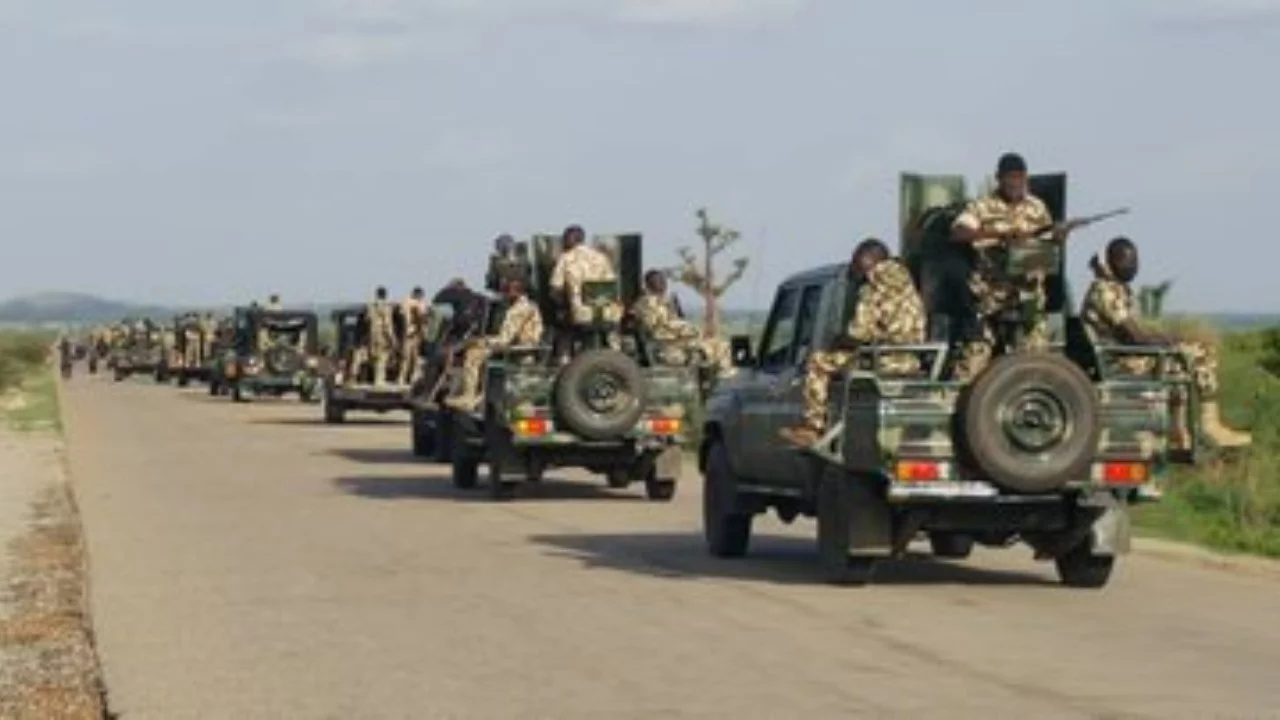
The Nigerian military and the United States Africa Command (United States Africa Command (AFRICOM)) have strengthened their counter-terrorism partnership, confirming expanded intelligence sharing, training programmes and joint military operations aimed at degrading terrorist networks across Nigeria.
Senior officials from both sides disclosed the development during a virtual X Space session on Tuesday titled “Strengthening Security Through Strategic Information Sharing: United States and Nigerian Military Partnership Against Terrorism.”
The engagement brought together representatives of the Nigerian Armed Forces, AFRICOM, and members of the public, amid renewed scrutiny of foreign military involvement in Nigeria’s internal security operations.
The partnership, which gained momentum following heightened global attention on Nigeria’s insurgency crisis, has evolved beyond advisory and training roles into coordinated battlefield actions, according to military authorities.
Director of Public Affairs at AFRICOM, Col. Rebecca Heyse, insisted that all U.S. military engagements in Nigeria are guided strictly by respect for national sovereignty and bilateral agreement.
“Our operations and cooperation with Nigeria are rooted in fundamental respect for Nigerian sovereignty,” she said. “We operate strictly by invitation and under the U.S.–Nigeria Joint Working Group framework.”
She added that Washington’s support would continue as long as both countries consider the partnership effective in addressing shared security threats.
However, she declined to comment on recent political controversies surrounding claims of targeted religious violence in Nigeria.
On his part, the spokesperson for Defence Headquarters, Maj.-Gen. Samaila Uba, confirmed that cooperation between both militaries has expanded into joint operational strikes against terrorist groups in the North-East.
He explained that while initial arrangements limited U.S. involvement to training, intelligence and technical support, operational realities had necessitated deeper coordination.
“We have carried out joint strikes in addition to intelligence sharing and other forms of cooperation,” Uba said. “As long as we require those capabilities, we will continue to engage our partners.”
His remarks mark a shift from earlier official positions which suggested that foreign troops would not be involved in direct combat operations.
From intelligence sharing to battlefield coordination
Security sources disclosed that the collaboration has contributed to recent high-impact operations against insurgent factions, including Islamic State West Africa Province (ISWAP), with several commanders reportedly neutralised in coordinated raids.
Military officials said the partnership has improved real-time intelligence gathering, surveillance capabilities, and precision targeting of terrorist hideouts in the North-East theatre of operations.
Participants at the X Space further noted that offensive operations against insurgent strongholds have intensified in recent months, reflecting improved coordination between Nigerian forces and international partners.
Beyond combat operations, the Nigerian military confirmed that hundreds of personnel are currently undergoing specialised training programmes under the bilateral security arrangement.
According to Maj.-Gen. Uba, the training covers counter-insurgency tactics, intelligence analysis, and operational planning aimed at strengthening Nigeria’s long-term security response.
“The Armed Forces of Nigeria is benefiting immensely from this collaboration, including skills development and specialised training,” he said.
Officials also stressed the importance of non-military strategies in addressing insecurity, warning that terrorism cannot be defeated through kinetic operations alone.
Uba said Nigeria’s counter-terrorism strategy now integrates a “whole-of-society approach” involving traditional rulers, religious leaders, civil society organisations, and economic empowerment programmes to address radicalisation drivers.
“Terrorism cannot be defeated by kinetic means alone,” he said. “Non-kinetic measures such as community engagement, economic empowerment and strategic communication are equally important.”
Presidential spokesperson, Sunday Dare, also praised the collaboration, describing intelligence sharing with the United States as a key factor in recent gains against insurgents.
He said the partnership had improved the tempo and coordination of military operations across conflict zones.
“We want to thank the U.S. government for the active collaboration they have had with our military,” Dare said. “Nigeria has seen increased momentum in the war against terror, with notable operational successes recorded.”
The partnership has, however, continued to generate public debate, particularly over concerns about sovereignty and the extent of foreign military presence in domestic operations.
It followed earlier geopolitical tensions triggered by allegations from former U.S. President Donald Trump suggesting a “Christian genocide” in Nigeria—claims firmly rejected by the Federal Government, which insists that insecurity affects citizens across all religious and ethnic lines.
Despite the controversies, both militaries maintain that the Joint Working Group framework remains strictly cooperative, mission-specific, and driven by Nigeria’s operational requirements.
 '
' '
'Do you want to share a story with us? Do you want to advertise with us? Do you need publicity for a product, service, or event? Contact us on WhatsApp +2348183319097 Email: platformtimes@gmail.com
We are committed to impactful investigative journalism for human interest and social justice. Your donation will help us tell more stories. Kindly donate any amount HERE
