

Ayomide Awe
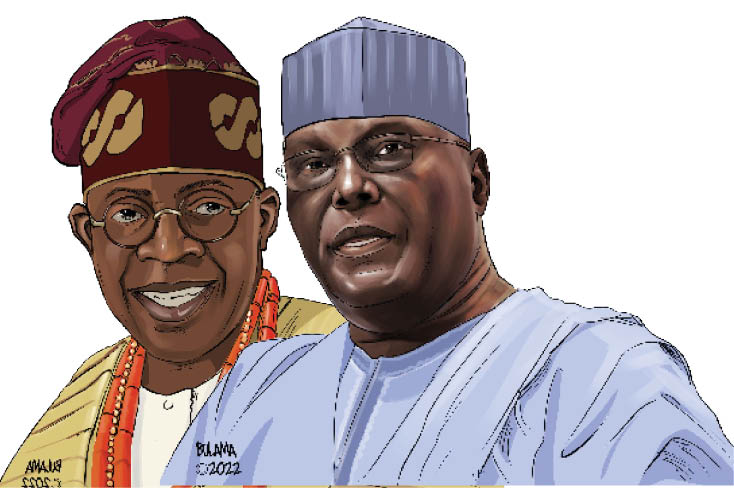
Former Vice-President Atiku Abubakar has challenged President Bola Tinubu’s administration to give Nigerians a detailed account of the country’s N166.79tn public debt, while demanding an apology over the economic hardship experienced since 2023.
Atiku’s demand came as fresh figures from the Debt Management Office showed that Nigeria’s total public debt rose by N7.44tn between March and June 2026, from N159.35tn to N166.79tn.
The DMO report, published on September 25, 2026, put domestic debt at N91.59tn, representing 54.91 per cent of the total, while external debt stood at N75.20tn. In dollar terms, the country’s total public debt was $120.93bn as of June 30, 2026.
Atiku, in a statement issued by his Director of Strategic Communications, Phrank Shaibu, said the debt figure required greater explanation from the Federal Government, particularly in view of increased government revenues.
He asked the administration to disclose the composition of the debt, including old obligations captured in the latest figures, the effect of exchange-rate movements on foreign debt and details of new loans contracted since Tinubu assumed office.
The former Vice-President also demanded information on the amount of debt repaid and the outstanding balance.
“A government that says more money is coming in must explain why it keeps borrowing and why the people paying for its policies cannot see the promised gains,” Atiku said.
The DMO figures show that the Federal Government accounted for N152.77tn of the N166.79tn total debt as of June 30, comprising N86.99tn in domestic debt and N65.77tn in external obligations. States and the Federal Capital Territory accounted for N14.01tn.
Atiku argued that the debt burden should be examined alongside the rising cost of living, saying Nigerians were yet to feel sufficient benefits from the government’s economic reforms.
He particularly criticised the removal of petrol subsidy, naira depreciation and increases in electricity and transportation costs, arguing that the measures had placed additional pressure on households and businesses.
The former Vice-President said economic indicators such as higher government revenue, improved foreign reserves or changes in macroeconomic statistics should not, on their own, be treated as proof of improved living conditions.
“An economy cannot be declared successful simply because government revenue is rising, reserves are improving or official statistics look better while the purchasing power of ordinary citizens is being destroyed,” he said.
Atiku said the real test of economic policy should be whether Nigerians could afford basic necessities, including food, transportation, housing, education, healthcare and electricity.
He also raised concerns about the cost of servicing Nigeria’s debt.
Citing a BudgIT analysis, Atiku said debt servicing had reached N12.52tn by the third quarter of 2025 against revenue of N18.63tn, representing 67.2 per cent of the revenue figure.
BudgIT separately reported the same figures, noting that debt service of N12.52tn against N18.63tn in revenue amounted to 67.2 per cent during the period.
Atiku warned that the growing cost of servicing existing obligations could constrain government spending on other priorities.
“Money committed to debt service is money unavailable for competing public needs. Nigerians were told to endure the pain because there would be gains. Where are those gains?” he asked.
He further demanded greater disclosure of Nigeria’s debt-service obligations, including the external debt-service schedule for the second quarter of 2026.
According to the DMO, the latest debt figures represent a 4.7 per cent increase from the N159.35tn recorded at the end of March 2026 and a 9.4 per cent increase from N152.40tn recorded in June 2025.
Atiku also linked the debt question to what he described as a widening gap between official claims of economic recovery and the experiences of households.
He said Nigerians who had been asked to make sacrifices through major economic reforms deserved to know how those sacrifices had translated into improved living conditions.
“Nigerians were asked to sacrifice. Fuel subsidy was removed. The naira was allowed to depreciate sharply. Electricity and transportation costs rose. Government revenues increased, yet borrowing continued,” he said.
The former Vice-President consequently demanded that Tinubu explain how government revenue had been deployed and account for funds borrowed by the administration.
He also called on the President and the All Progressives Congress to apologise to Nigerians over the hardship which he attributed to the administration’s economic policies.
Atiku said the government should account for its borrowing strategy and demonstrate how the additional revenues generated since 2023 had been used.
“Good economics must ultimately improve human life. If government revenue rises while families become poorer; if debt rises while public services remain inadequate; if citizens surrender subsidies, pay higher prices and endure declining purchasing power while government continues borrowing, then Nigerians have every right to demand a full account of where their sacrifice has gone,” he said.
He concluded by urging Tinubu to account for the funds borrowed and collected by the government, apologise over the hardship and reconsider seeking another mandate if his administration could not make life more affordable for Nigerians.
 '
' '
'Do you want to share a story with us? Do you want to advertise with us? Do you need publicity for a product, service, or event? Contact us on WhatsApp +2348183319097 Email: platformtimes@gmail.com
We are committed to impactful investigative journalism for human interest and social justice. Your donation will help us tell more stories. Kindly donate any amount HERE
 '
'