

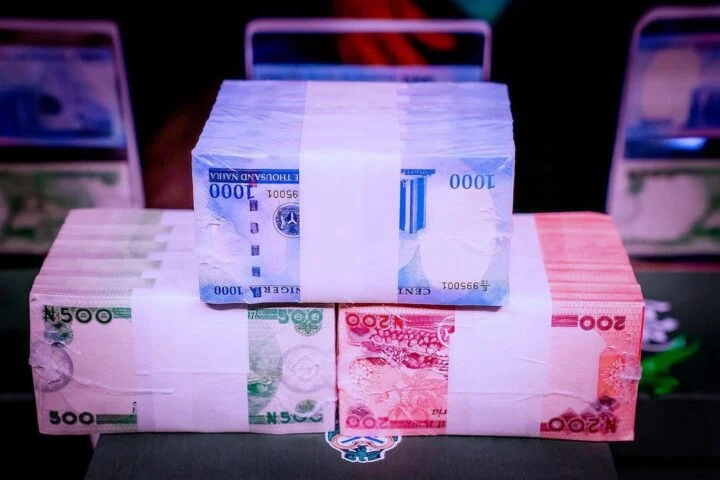
…. Victims count losses as counterfeit notes spread across Biu, Kwaya Kusar markets
Daud Olatunji
Traders in parts of Borno State have raised the alarm over the alleged circulation of counterfeit ₦1,000 notes, saying the development is causing financial losses, disrupting commercial activities and eroding trust between buyers and sellers.
The traders, particularly those operating at the Kwaya Kusar Grains Market, said the alleged circulation was not restricted to Kwaya Kusar but had also been noticed in markets across Biu and Bayo Local Government Areas.
They made the disclosure in separate interviews with the News Agency of Nigeria in Kwaya Kusar on Saturday.
The traders called on the government, the Central Bank of Nigeria and security agencies to urgently investigate the source of the suspected counterfeit notes, intensify surveillance in rural markets and educate traders on how to distinguish genuine currency from fake notes.
One of the traders, Ibrahim Yusuf, a grain dealer from Gombe Main Market, said he had fallen victim to counterfeit currency twice, including an incident in which he allegedly received four fake ₦1,000 notes while buying maize at Biu Grain Market.
Yusuf said he only discovered the suspected counterfeit notes while travelling after the transaction.
He said, “About three weeks ago, I went to Biu Grain Market to buy some bags of maize, and I was given four pieces of fake ₦1,000 notes.
“I did not realise it until I was in transit. It was when I was about to pay the driver that I noticed that one of the new ₦1,000 notes was very light and felt unusual in my hand.
“I suspected it was fake, and when I checked the money, I discovered three other pieces of the same notes.”
According to Yusuf, the development had eaten deeply into his profit margin, leaving him to bear losses that could significantly affect small-scale traders.
He explained that he normally made between ₦3,000 and ₦4,000 profit on each bag of grain after deducting transportation expenses.
“My profit is not much. I make between ₦3,000 and ₦4,000 per bag after taking out transportation costs.
“Now, I bought three bags, meaning I was expecting roughly ₦12,000, but I had ₦4,000 in counterfeit notes. That means my profit margin has been reduced,” he said.
Yusuf urged relevant authorities to extend their investigations beyond major markets to rural trading centres, where many traders have limited capacity to detect counterfeit currency.
He said the need for urgent action had become more pressing as farmers entered the harvest season, which would increase the volume of cash transactions across grain and agricultural markets.
“This is highly imperative, especially now that farmers have started harvesting their produce, which will surely increase the volume of trade in the markets.
“Urgent action from relevant agencies is necessary to protect traders from making huge losses,” he said.
Another trader, Hassan Mai-Dawa, said he had also received suspected counterfeit ₦1,000 notes from a Point of Sale operator in Kwaya Kusar.
Mai-Dawa said he only discovered the problem when he attempted to deposit the money in a bank.
He explained that many traders in the area preferred cash transactions because some customers and businesses did not accept transfers.
“Many traders do not collect transfers, so I had to withdraw from a POS to be able to buy my goods.
“I think this is something the government should come in because I also faced similar issues in Biu Market.
“Many of the traders do not know the difference between the fake and original notes, so we sometimes use the fake notes alongside the original ones,” he said.
A rice trader, Hauwa Aminu, said she had repeatedly noticed unusually new ₦1,000 notes among the cash received from customers but did not initially suspect that they could be counterfeit.
Aminu said the issue later caused a confrontation with a customer who returned to her shop after discovering that some of the money he had received from her was allegedly fake.
She said the incident damaged her relationship with the customer and created suspicion around her business.
“I gave him the cash I had, and he rejected some of the notes. I insisted that I was not the one printing them.
“It was an intense argument, and since then, that buyer has never returned to my shop to buy from me,” she said.
Aminu appealed to the government and relevant agencies to deploy officials to rural markets to monitor the situation, trace the source of the suspected counterfeit currency and take appropriate action against those responsible.
Other traders who spoke on the issue but declined to disclose their identities said they had also suffered losses because they could not easily distinguish counterfeit notes from genuine ones.
They called for sustained public sensitisation, particularly in rural markets, to equip traders with basic knowledge and tools for identifying suspected counterfeit currency.
The traders warned that if the alleged circulation was not checked, it could worsen losses among small-scale businesses and further undermine confidence in cash transactions in the affected communities.
They therefore urged the authorities to investigate the alleged circulation across Kwaya Kusar, Biu, Bayo and other neighbouring markets and take measures to prevent further losses to traders and consumers.
 '
' '
'Do you want to share a story with us? Do you want to advertise with us? Do you need publicity for a product, service, or event? Contact us on WhatsApp +2348183319097 Email: platformtimes@gmail.com
We are committed to impactful investigative journalism for human interest and social justice. Your donation will help us tell more stories. Kindly donate any amount HERE
