

Daud Olatunji
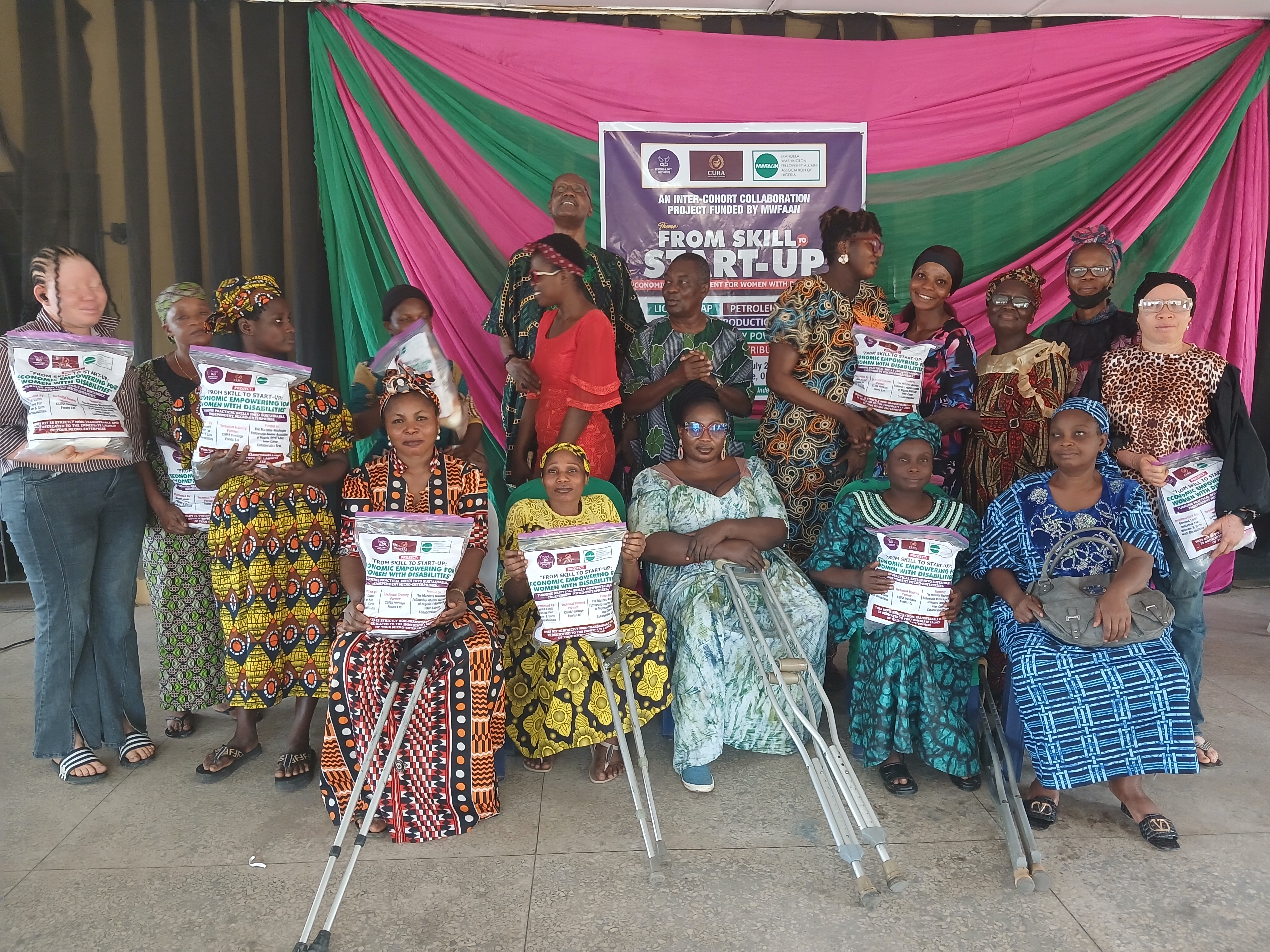
An advocacy group, Beyond Limits Initiative for Women and Girls with Disabilities, has trained 10 women with disabilities in Ogun State in vocational skills and provided each beneficiary with start-up materials worth ₦25,000 to promote economic independence.
The three-day programme, tagged “Skill to Start Up: Economic Empowerment for Women with Disabilities,” was organised to equip participants with practical business skills and discourage dependence on charity.

Speaking during the programme, the Executive Director of the organisation, Oluwatomisin Adeyefa Olatayo, said the initiative was funded through a grant secured in partnership with the founder of CURA Heritage Foods Limited, Omolara Daniel.
Olatayo who is a member of the Mandella Washington Fellowship Alumni Association of Nigeria, explained that the project was designed to enable women with disabilities establish small businesses and earn sustainable incomes.
According to her, the participants received training in the production of liquid soap, petroleum jelly, natural curry powder and natural fruit drinks.
She added that each participant was also presented with start-up kits valued at ₦25,000 to enable them to begin production immediately after the training.
Olatayo said the beneficiaries comprised women with different forms of disabilities, including albinism, visual impairment, hearing impairment, intellectual disability, spinal cord injury and other physical impairments.
“Our goal is not just to train them but to ensure they leave with the tools they need to start earning a living instead of waiting for handouts,” she said.
Also speaking, a development advocate and journalist, Gbenga Gbesan, urged governments at all levels to distinguish genuine empowerment from charity.
He argued that sustainable empowerment should focus on equipping people with disabilities with education, vocational skills, business support and continuous mentorship rather than distributing cash or relief materials.
“Empowerment is not charity. It is not about giving people money today and abandoning them tomorrow. Empowerment means creating a sustainable means of livelihood that allows people to support themselves,” Gbesan said.
He lamented that governments had yet to develop a coordinated system that guarantees long-term economic inclusion for persons with disabilities.
According to him, the training should be followed by business development support, mentoring and access to finance to enable beneficiaries grow viable enterprises.
“The participants have acquired skills, but they also need business knowledge. They should be guided on how to run businesses successfully, after which banks, development partners and other organisations can support them with funding,” he added.
Also speaking at the event, two resource persons, Oluwatuminishe Adebukola Abosede, and Head of Programmes, Splash 106.7fm, Abeokuta, Ms Maryam Ogunremi, encouraged the beneficiaries not to see their disabilities as barriers to success.
Ogunremi in her remarkss, urged them to embrace social media to promote what they do.
Abosede in her remarks, urges them to remain determined, hardworking and resilient, expressing confidence that opportunities would come to those who persevered.
The resource person also called on governments, philanthropists and other non-governmental organisations to invest more in sustainable empowerment initiatives for persons with disabilities instead of one-off charitable interventions.
She stressed that proper monitoring of beneficiaries after training was essential to ensure the programme achieved lasting impact.
The Chairman of New Era Initiative for Persons with Disabilities, Adeyinka Adekunle, described government support for persons with disabilities as inadequate.
He attributed the situation largely to poor commitment and the exclusion of persons with disabilities from policy formulation.
“There are many employable persons with disabilities with certificates, while others have vocational skills. With modest start-up capital, many can become self-reliant instead of depending on government,” he said.
Adekunle disclosed that his organisation had, over the past four years, supported members with equipment such as sewing machines, deep freezers and small business capital through funds sourced from charitable individuals.
He noted that beneficiaries were closely monitored to ensure the support translated into sustainable businesses.
Also speaking, the Women Leader of the Joint National Association of Persons with Disabilities in Ogun State, Mrs Olayinka Adeyemi, decried the numerous challenges confronting persons with disabilities, particularly women.
She listed inaccessible public infrastructure, discrimination, high transportation costs and limited access to education and vocational training among the major obstacles facing members of the community.
According to her, women with disabilities are particularly vulnerable to poverty, exploitation and gender-based violence due to inadequate economic opportunities.
She appealed to the Ogun State Government to strengthen disability inclusion policies and provide greater support for skills acquisition and economic empowerment programmes.
Adeyemi also called on more development partners and civil society organisations to collaborate in expanding livelihood opportunities for persons with disabilities, saying sustainable empowerment remained the most effective pathway out of poverty.
 '
' '
'Do you want to share a story with us? Do you want to advertise with us? Do you need publicity for a product, service, or event? Contact us on WhatsApp +2348183319097 Email: platformtimes@gmail.com
We are committed to impactful investigative journalism for human interest and social justice. Your donation will help us tell more stories. Kindly donate any amount HERE
