

Toyyibat Qasim & Firdaus Obiremi
A Professor of Estate Management at the University of Lagos, Timothy Gbenga Nubi, has declared that Ogun State could become one of the richest and most prosperous states in the world if it properly harnesses its industrial potential and embraces effective physical planning.
Nubi, however, warned that the state risks becoming a dumping ground and residential extension of Lagos if successive governments fail to prioritise urban planning, infrastructure development and the regeneration of emerging settlements.
The don said Ogun’s strategic location, growing industrial base and proximity to Lagos, Nigeria’s commercial hub, presented enormous opportunities that could transform its economy and living conditions if properly managed.
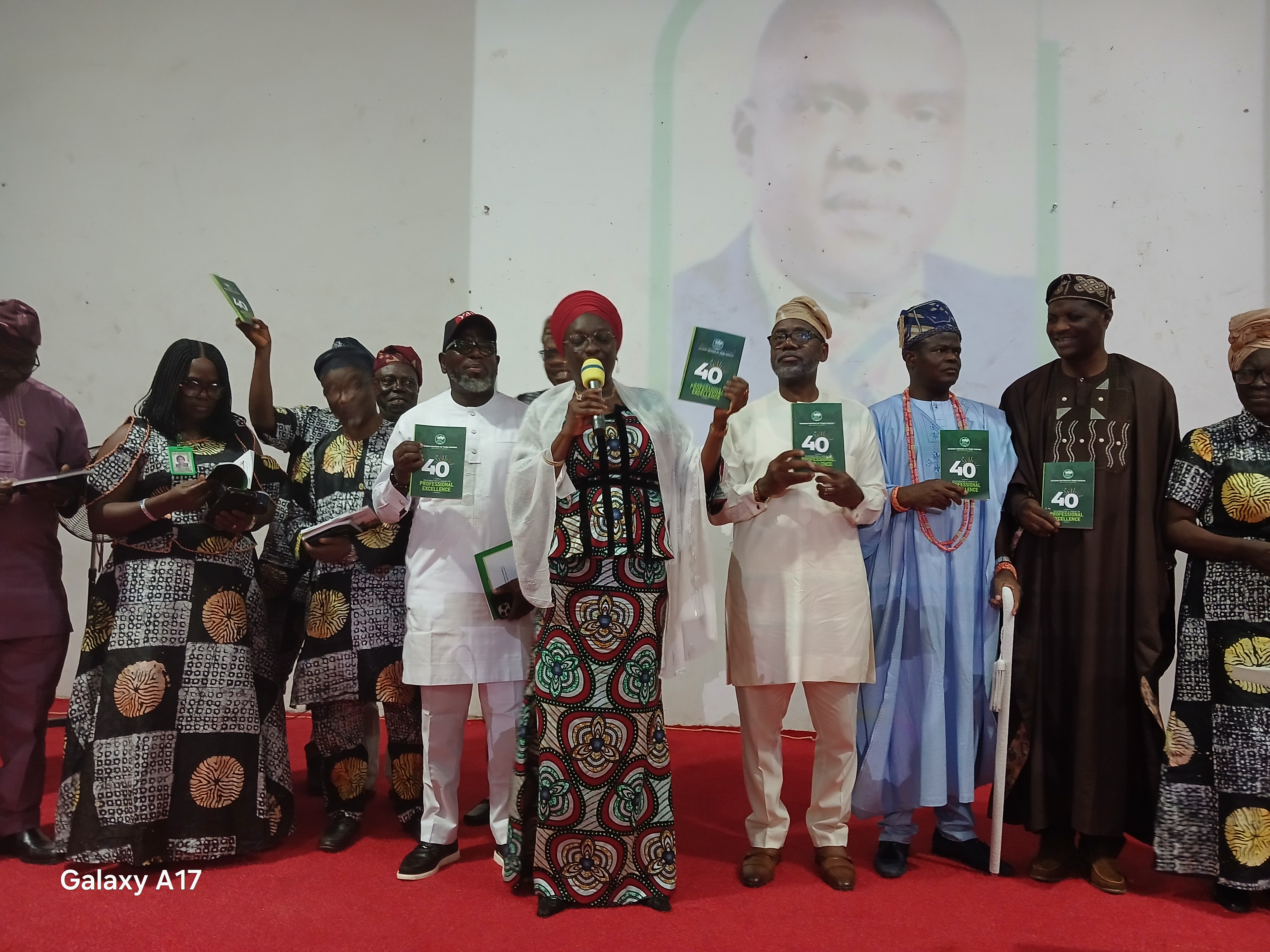
He spoke on Thursday during the 40th anniversary of the Ogun State chapter of the Nigerian Institute of Town Planners, held at the June 12 Cultural Centre, Abeokuta, with the theme, “Honouring the Past: Designing the Future.”
Speaking with journalists after the event, Nubi said the state’s industrial expansion, particularly along the Lagos-Ibadan Expressway corridor, placed it in a favourable position to achieve unprecedented economic growth.
He, however, stressed that industrial development without comprehensive planning could undermine the state’s long-term prosperity.
“Ogun State will be one of the richest, most prosperous states in the entire world. Not in Africa,” he said, adding that the state must harness its industrial potential and ensure that physical planning becomes central to its development agenda.
Nubi argued that Ogun’s economic future would depend largely on the ability of successive administrations to integrate industrial expansion with urban renewal, housing, transportation, environmental protection and other essential infrastructure.
He lamented that physical planning started late in the state, noting that Ogun was created in 1976, while town planners began organising themselves in 1986.
According to him, the 10-year gap between the state’s creation and the emergence of an organised town-planning profession contributed to the challenges confronting its urban development.
He said, “Planning came late, to start with. The state was created in 1976, and town planners started organising themselves in 1986.
“This means that for 10 years after the state’s creation, what ought to be the first thing was not in existence. Planning, by its name, is foundational. Planning is what comes first.
“It’s like having a state where there are no medical doctors. So, we have not really done well. We came late.”
The professor further criticised successive administrations for failing to give physical planning the priority it deserved, pointing out that the Ogun State Regional Development Plan, introduced in 2005, came nearly three decades after the state was established.
He said the delay was compounded by the lack of political will to implement the plan effectively, leaving several communities exposed to uncoordinated development.
According to him, the existence of development plans on paper would not translate into meaningful results without deliberate implementation, adequate funding and institutional support.
Nubi, however, expressed optimism that Ogun could correct past mistakes by strengthening its planning institutions and ensuring that development decisions were guided by long-term strategies rather than immediate political considerations.
He said the establishment of new agencies to address urban development challenges was a positive step but insisted that such institutions must be adequately empowered to deliver on their mandates.
He added, “So, going forward, we can redeem. We can rebuild. We can replan.
“And I have very good news. Agencies have been established recently, so it should not just be on paper. They must empower them. We must be able to maximise the opportunities.”
The don said the next 40 years should be devoted to building a more organised, prosperous and environmentally sustainable Ogun State, warning that the failure to plan ahead could worsen existing urban problems.
He identified the rapid growth of settlements along the Lagos-Ogun boundary as a major concern, particularly in areas such as Mowe, Ibafo and other communities experiencing increasing population pressure.
Nubi said these settlements could be transformed through deliberate urban regeneration, improved infrastructure and effective land-use management.
He maintained that communities currently struggling with inadequate infrastructure and unplanned development could become better organised urban centres if the government adopted and implemented a comprehensive renewal strategy.
“There were slums in America. There were slums in China. They rolled their sleeves and regenerated them,” he said.
He urged the Ogun State Government to empower its urban renewal institutions to tackle the challenges confronting rapidly expanding settlements, stressing that the state must begin planning for the next four decades.
Nubi also called for stronger coordination between Ogun and Lagos states to manage the consequences of rapid urbanisation along their shared boundary.
In his keynote address, titled “Repositioning Physical Planning for Ogun State’s Next Forty Years,” the professor warned that Ogun’s proximity to Lagos would not automatically translate into prosperity without deliberate planning.
“Proximity does not create prosperity; it has to be planned,” he said.
He noted that Ogun occupied a strategically important position within the Lagos metropolitan region but had yet to fully convert that geographical advantage into a coordinated development strategy.
According to him, rapid urbanisation along the Lagos-Ogun frontier has created serious planning challenges, particularly along the Isheri-Ibafo-Mowe-Sagamu Interchange corridor.
He observed that although the state had previously introduced development initiatives, including the Ogun State Regional Development Plan 2005-2025 and its Development Pressure Area framework, implementation gaps had continued to encourage uncoordinated expansion.
Nubi warned that without a clear development strategy, Ogun could increasingly function as a residential extension of Lagos rather than an independent economic powerhouse with well-developed cities and industrial centres.
He advocated a complementary metropolitan development strategy that would establish a hierarchy of cities, designate growth centres, develop transport corridors, provide affordable housing and protect environmentally sensitive and agricultural areas.
The professor also called for updated master plans for Abeokuta, Sagamu, Ijebu-Ode, Ilaro and other strategic urban centres, supported by a comprehensive spatial development framework covering the entire state.
He identified integrated transport and land-use planning, informal settlement upgrading, environmental resilience, digital planning systems and sustainable financing as critical priorities for Ogun’s development over the next 40 years.
.In her remarks, the Deputy Governor of Ogun State, Noimot Salako-Oyedele, described the anniversary theme as timely, stressing that town planning was essential to creating communities where residents could live, work and move safely while enjoying a good quality of life.
She warned that development decisions taken today could become tomorrow’s problems if authorities failed to consider their long-term consequences.
Salako-Oyedele said the services of town planners had become increasingly important as major investments by the administration of Governor Dapo Abiodun continued to attract more people from Lagos into Ogun State.
She cautioned that without proactive planning, the growing population could worsen traffic congestion, flooding, environmental degradation and the spread of unplanned settlements.
The deputy governor assured participants that concerns raised at the event, including complaints about the Sango-Ota Road, had been noted and would be addressed.
She emphasised the need for collaboration between government institutions and professional bodies to ensure that the state’s development remained orderly and sustainable.
Also speaking, the National President of the Nigerian Institute of Town Planners, Chime Ogbonna, represented by the Chairman of the Lagos State chapter, David Olawale, described Ogun as a major industrial centre whose development would influence the future of town planning across the South-West.
Ogbonna said the way major towns and emerging development corridors were planned would determine the liveability and economic prospects of the region over the next four decades.
He noted that rapid urbanisation, climate change and the housing crisis had made it necessary for town planners to rethink conventional approaches and develop solutions that responded to the changing needs of communities.
The NITP president commended the Ogun State chapter for its contributions to the implementation of the state’s Urban and Regional Planning Law, advocacy for inclusive housing and mentorship of younger professionals.
He urged planners to sustain their commitment to building cities that were economically productive, environmentally sustainable and accessible to residents across different income groups.
Meanwhile, the Ogun State Commissioner for Physical Planning and Urban Development, Olatunji Odunlami, disclosed that the government had employed 140 town planners and expanded its planning offices to more than 40 locations across the state.
He said the government had also enacted one principal law and five regulations to strengthen the administration of physical planning and urban development.
According to the commissioner, six new district offices have been established to improve planning administration and extend regulatory oversight to more communities.
Odunlami also announced the establishment of the Ogun State Building Production Management Authority, describing it as a pioneering initiative designed to strengthen the state’s building management framework.
He urged members of the NITP to take advantage of the reforms to promote orderly development, improve building standards and support the government’s efforts to create a more resilient state.
The commissioner said effective collaboration between the government and town-planning professionals remained essential to addressing the challenges associated with rapid urban expansion.
Earlier, the Chairman of the Ogun State chapter of the NITP, Olusola Odukoya, said the institute’s 40-year journey should be measured not merely by the passage of time but by its impact on communities, the challenges overcome and the legacy established for future generations.
Odukoya paid tribute to the institute’s founders for sustaining its vision despite difficulties and urged members to remain committed to advancing the profession.
He said the future of urban development in Ogun would require fresh ideas, bold leadership and sustained commitment from both government and professionals.
The chairman added that building well-planned communities would require a collective effort to translate development visions into practical solutions capable of improving the lives of residents.
The anniversary brought together government officials and town-planning professionals to reflect on the achievements and challenges of physical planning in Ogun State while charting a course for sustainable urban development over the next 40 years.
 '
' '
'Do you want to share a story with us? Do you want to advertise with us? Do you need publicity for a product, service, or event? Contact us on WhatsApp +2348183319097 Email: platformtimes@gmail.com
We are committed to impactful investigative journalism for human interest and social justice. Your donation will help us tell more stories. Kindly donate any amount HERE
 '
'