

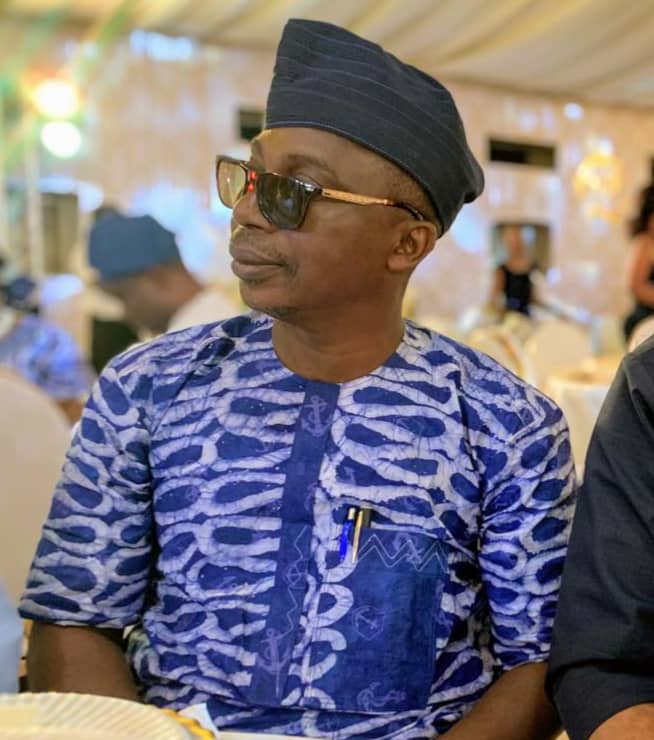
By Bashir Adefaka
The Yoruba people have, for centuries, maintained a rich cultural and religious heritage shaped by diversity, coexistence and mutual respect. Across generations, Yoruba communities have accommodated different religious traditions, including Isese, Islam and Christianity, while preserving a shared cultural identity rooted in language, customs, family values and communal bonds.
However, growing instances of inflammatory rhetoric and religious provocation from individuals who claim to speak in the name of Isese or Christianity are raising concerns about the future of peaceful coexistence among Yoruba Muslims, Christians and traditional worshippers.
Traditional rulers, religious leaders and community authorities have an important responsibility to address such tendencies before they degenerate into religious hostility, social division or violence.
The issue is not about questioning the legitimacy of Isese, Christianity or Islam. Rather, it is about drawing a clear line between genuine religious and cultural expression and the deliberate use of religion or culture as a platform for incitement against another faith community.
A Shared Yoruba Heritage
Yoruba society has never been defined by a single religious identity. Islam has existed among the Yoruba for centuries, while Christianity also became deeply established in the region. At the same time, traditional religious practices and cultural institutions remain an important part of Yoruba heritage.
Many Yoruba families reflect this diversity. It is not uncommon to find members of the same extended family who practise Islam, Christianity or traditional religion. In many communities, Muslims, Christians and trad isitional worshippers attend one another’s ceremonies, maintain family relationships and participate together in cultural events.
This history of coexistence should not be sacrificed to the rhetoric of a few individuals who seek to portray one religious group as an enemy of another.
Yoruba traditional rulers, in particular, occupy a unique position in maintaining social harmony. Their palaces are expected to serve as centres of peace, justice and cultural unity rather than platforms for religious confrontation.
The Danger of Religious Provocation
When individuals use the language of war, hatred or collective punishment against Muslims because they disagree with Islamic beliefs, practices or institutions, they move beyond legitimate religious debate.
The same principle applies when Muslims or Christians attack traditional worshippers or denigrate their cultural practices.
Freedom of religion and expression allows people to defend and explain their beliefs. It does not give anyone the moral authority to incite violence or encourage hostility against an entire religious community.
Yoruba traditional and religious leaders must therefore be vigilant whenever individuals attempt to hide behind the name of Isese, Christianity or any other faith to promote hatred against Muslims.
The overwhelming majority of Yoruba traditional worshippers and Christians should not be held responsible for the actions of a few provocateurs. However, responsible leaders must also ensure that those who claim to represent their communities do not exploit religious identity to inflame tensions.
Traditional Rulers Must Speak Clearly
Yoruba traditional rulers have historically played a significant role in preserving peace and resolving conflicts. Their influence extends beyond their immediate religious or cultural affiliations.
They should therefore speak clearly against any attempt to turn Yoruba religious diversity into a source of conflict.
A traditional ruler who presides over a community with Muslims, Christians and traditional worshippers has a duty to protect all residents equally. Such leadership requires neutrality, fairness and a commitment to peaceful coexistence.
Traditional institutions should not permit their platforms to become vehicles for religious hate speech. Where inflammatory statements are made in their names or within their domains, they should distance themselves from such statements and, where necessary, sanction those responsible in accordance with established laws and customs.
Religious Leaders Must Also Take Responsibility
Christian and Muslim leaders equally have a role to play.
Christian leaders should not allow individuals who identify as Christians to use the faith as a cover for attacks against Muslims. The same responsibility rests with Muslim scholars and leaders who must discourage members of their communities from responding to provocation with counter-provocation.
Religious leadership is not merely about defending one’s faith. It is also about teaching followers restraint, dignity, compassion and respect for the rights of others.
In a religiously diverse society, responsible leaders should focus on what unites communities rather than what divides them.
The Yoruba Muslim Question
Yoruba Muslims are an integral part of Yoruba society. They are not outsiders to Yoruba culture, nor should they be portrayed as such because of their religious beliefs.
Yoruba Muslims speak the Yoruba language, participate in Yoruba cultural traditions and contribute to the development of their communities. They are found across the region and have played significant roles in education, commerce, politics, public service and community development.
Any attempt to portray Yoruba Muslims as enemies of Yoruba culture is therefore historically and socially misleading.
Being a Muslim does not make a Yoruba person less Yoruba. Similarly, being a Christian or a traditional worshipper does not make anyone less Yoruba.
Yoruba identity is broader than religious affiliation.
Isese Must Not Become a Tool for Religious Conflict
The revival of interest in Isese and Yoruba traditional culture can be a positive development when it promotes cultural preservation, historical awareness and respect for indigenous heritage.
However, cultural revival should not be transformed into a campaign against Muslims or Christians.
The strength of Isese does not depend on the persecution or humiliation of another faith. Likewise, the preservation of Yoruba culture does not require the exclusion of Yoruba Muslims, who are themselves part of the historical and cultural fabric of the Yoruba people.
Traditionally and constitutionally, freedom of religion practice is assured. This is in tandem with Islamic teaching of “Lakum deenukum waliyadeen (Your religion is yours and our religion is ours)” – Qur’an 109, which further states that “Muslims will not worship what Isese people or Christians worship neither will Isese people or Christians worship what the Muslims worship and this has no reason for conflict.
Traditional leaders and custodians of Yoruba heritage should therefore ensure that cultural platforms are used to promote knowledge, identity and peaceful coexistence rather than hostility.
The Same Warning Applies to Christianity
Christianity has also played an important role in the development of Yoruba society, particularly in education, healthcare and social services.
But Christian leaders must ensure that individuals do not exploit the name of Christianity to demonise Muslims or traditional worshippers.
The Christian faith should not be used as a weapon for religious confrontation like its members spreading fake information and distortions of Qur’anic and Hadith teachings via social media broadcast, just as Isese should not be used as a weapon against Islam.
The same standard must apply to everyone.
Dialogue, Not Religious Warfare
Differences in religious beliefs are inevitable. What matters is how societies manage those differences.
Yoruba traditional rulers and religious leaders should encourage interfaith dialogue and establish mechanisms for addressing grievances before they escalate.
Where disagreements arise over religious practices, public ceremonies, traditional institutions or cultural matters, they should be resolved through dialogue, law and mutual respect.
The language of war has no place in a society where Muslims, Christians and traditional worshippers live side by side and share common ancestry.
A Call for Responsible Leadership
The current generation of Yoruba leaders has a responsibility to preserve the peaceful coexistence inherited from previous generations.
Traditional rulers should publicly condemn inflammatory statements made in the name of Isese. Christian leaders should reject attempts to use Christianity to incite hatred against Muslims. Muslim leaders should equally condemn provocative rhetoric from within their communities.
No religious group should be collectively blamed for the actions of individuals.
The Yoruba people have too much history, culture and shared identity to allow religious extremists and provocateurs to destroy their social bonds.
The responsibility lies with all leaders—traditional, religious, political and community—to draw a firm line between legitimate religious expression and dangerous incitement.
The message should be clear: Isese must not be weaponised against Islam. Christianity must not be weaponised against Islam. Islam must not be weaponised against Christianity or Isese.
Yoruba society can accommodate all three traditions without allowing any of them to become a vehicle for hatred.
The future of the Yoruba people depends not on religious uniformity, but on mutual respect, responsible leadership and peaceful coexistence.
Those who truly love Yoruba culture should therefore reject every attempt to turn religion into a battlefield. The preservation of Yoruba identity should be a unifying project—one that recognises the dignity and belonging of every Yoruba person, regardless of whether they practise Isese, Islam or Christianity.
*Adefaka, a Prince of two Ondo State kingdoms, is a media proprietor and publisher of The DEFENDER Newspaper.
 '
' '
'Do you want to share a story with us? Do you want to advertise with us? Do you need publicity for a product, service, or event? Contact us on WhatsApp +2348183319097 Email: platformtimes@gmail.com
We are committed to impactful investigative journalism for human interest and social justice. Your donation will help us tell more stories. Kindly donate any amount HERE
